Keep conversations flowing with strategic reply moves
Master conversation momentum by matching her energy, asking the right questions, and knowing when to pivot topics before things stall.
Conversations die when replies feel like dead ends. She gives you something to work with, and you either build on it or leave her hanging with nothing to say back. The difference between texting that goes nowhere and texting that builds is in how you respond to what she's actually telling you.
Good replies do two things at once. They prove you read what she said and show you're interested in her as a person, not just keeping the thread alive. Then they give her a clear reason to text back. That means you're not just asking questions. You're taking what she offered, adding something of yourself, and creating a new opening.
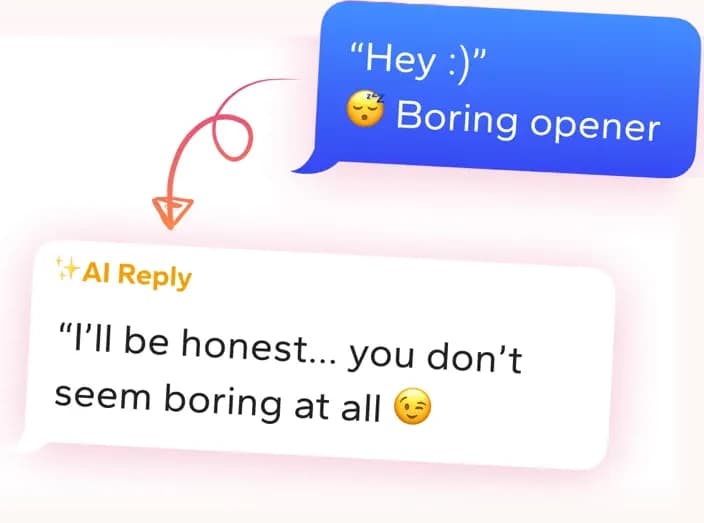
Get replies that sound like you
Screenshot the conversation in WingAI. It reads the vibe and gives you natural replies for this exact situation.
Try for freeRizz AI Screenshot the chat and get the next message for this person.
The difference between active and checked-out replies
When someone tells you about their day or feelings, they're signaling what's on their mind right now. An active reply shows you actually understand the detail she shared. A checked-out reply is something you could send to anyone and it would still fit.
If she says work was stressful and nothing went right, she's given you texture. She's not just complaining. She's telling you multiple things fell apart. The reply that keeps momentum going doesn't just sympathize. It either asks about the specific breakdown or connects to something she's revealed about how she handles stress. That makes her feel like you heard her, not like you're going through the motions.
Mirror the emotion before you steer the conversation
Your first move is acknowledgment. Spend one sentence actually meeting where she is right now. Not a canned sympathy line, but something that proves you took in what she said. Then shift. Ask something that either digs slightly deeper into what happened or pivots toward what comes next, like how she's recovering or what she's doing to reset.
The timing of the pivot matters. If she's mid-vent, dig in. If she's already over it and mentioned it in passing, move toward something lighter or forward-looking. Read the weight in her message. A short complaint needs a different response than a long explanation of a bad day.
Send back before the conversation window closes
Texting momentum is real. If she texts you something real or vulnerable, the moment to reply is within an hour or two while you're both still in that headspace. Waiting until the next day to respond to a venting message makes it feel like an afterthought. She's already moved on to something else.
If she doesn't reply to your follow-up message, don't send another one for at least 24 hours. One unreturned message is normal. Two in a row reads like you're chasing. If she goes silent for several days after you sent something thoughtful, that's information. You don't force it back to life by trying harder. You shift to a lighter topic next time or wait for her to text you first.
Why these replies fail
“Damn that sucks”
It's generic and offers nothing for her to build on. She has to do all the work to continue.
“Oh man, my week has been insane too. We had this huge meeting and I thought I bombed it but actually...”
She opened up and you immediately pivoted to yourself instead of staying with her for one more exchange.
“That's rough. Want to come over and I can take your mind off it ;)”
It dismisses what she said and jumps to logistics when she needs to feel understood first.
Common mistakes
- Responding with just 'that sucks' or 'sorry to hear that' with no follow-up question
- Asking a generic question like 'what happened' when she already showed her mood
- Pivoting away from what she said to talk about yourself instead
- Waiting too long to reply, letting the moment pass
- Sending a wall of text when she's clearly tired and venting
Questions people ask
- How do I ask questions without making it feel like an interrogation?
- Mix questions with statements. Start with one thing that relates to what she said, then ask one forward-looking question. 'That sounds brutal. I've been there with that feeling. What's your plan to recover tonight' is better than firing off three questions in a row.
- What if she gives short replies but seems interested?
- Short replies often mean she's busy or tired, not uninterested. Keep your replies shorter too. Match her energy for a few exchanges. If she's giving one-liners, don't send paragraphs. When she has more time, she'll open back up.
- When should I change the subject instead of staying on the same topic?
- Shift topics after you've acknowledged what she said and asked one follow-up. If she answers that follow-up with something positive or brief, that's your signal to move forward. Staying on a bad day too long can drag the mood down. Give her an off-ramp.
- How long should I wait if she doesn't respond?
- Wait at least 24 hours before sending anything else. If she replies after a day or two, that's still fine. Text back. If it's been a week with no response to something you sent, stop initiating. Let her come to you or start fresh with something low-pressure much later.
What people say after using WingAI
“I overthink every text. Having three options and picking the one that sounds like me cut that spiral short.”
Sam R.
“I was skeptical at first. Then I tried it on a dry chat and the replies actually sounded like me, not a chatbot.”
Mazoonx
“I always freeze on the first sentence. This gets me past that blank box so I actually hit send.”
joejoe4567
Get replies that sound like you
Screenshot the conversation in WingAI. It reads the vibe and gives you natural replies for this exact situation.
Try for free