How to be supportive over text with real examples
Send supportive texts that actually help. Learn what to say when she's stressed, sad, or going through something hard.
When someone tells you they're struggling, your text reply sets the tone for whether she feels alone or backed up. A supportive message does two things at once. It shows you actually heard what she said, not just skimmed it. And it gives her something concrete to hold onto, not empty reassurance.
Most people pivot too fast. She mentions something hard and you immediately try to fix it or make her laugh it off. What she needs first is to know you registered the weight of what she said. That takes maybe one sentence of acknowledgment. Then you can offer something useful. Maybe a specific offer to help, a question that shows you're thinking about her situation, or just space to talk more.
Texting support is different from in-person support because you can't read her mood or tone. That means you have to be clearer about what you're offering and why. A vague "let me know if you need anything" makes her feel more alone because it puts the work back on her to reach out. A specific offer, question, or acknowledgment shows you're already thinking about her.
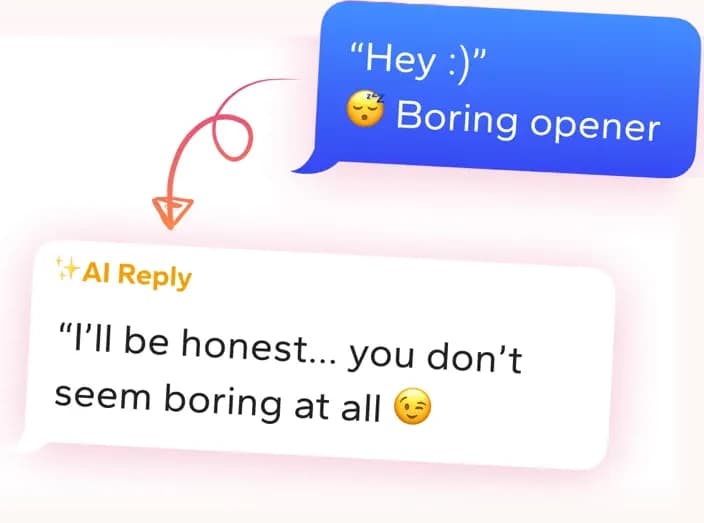
Get replies that sound like you
Screenshot the conversation in WingAI. It reads the vibe and gives you natural replies for this exact situation.
Try for freeRizz AI Screenshot the chat and get the next message for this person.
The difference between sympathy replies and ones she actually feels
When she says something went wrong, she's signaling that the thing matters to her and she wants to talk about it. A sympathy reply reads the room. It doesn't tell her to calm down, that it'll blow over, or that she's overreacting. It also doesn't immediately jump to solutions or why she shouldn't be upset.
What she's actually looking for is: did you hear me specifically, or are you sending a template? A template sounds like 'that sucks' or 'sorry that happened' or 'you'll feel better tomorrow.' A real reply references something about what she actually said. It shows you understand the particular thing that made her mad or sad, not just that something bad happened. That's the difference between feeling supported and feeling like you're being tolerated.
What your supportive text actually needs to do
A good supportive reply accomplishes two moves. First, it shows specific understanding of what she told you. You might reflect back what she said in your own words, or ask a follow-up question that proves you heard the details. This takes one or two sentences.
Second, it gives her something concrete. That could be a specific offer (not 'let me know if you need anything' but 'want to vent over the phone tonight?'). It could be a question that helps her think through the situation in a way that matters. Or it could be quiet confidence that she can handle this. But only if you've already done the first part. Without the specific understanding first, confidence sounds like you're dismissing the problem.
Send it soon, but not right away if you're upset
Reply within a few hours if you can, especially if she sent it during a day when she's obviously struggling. A long delay signals that you didn't think it was important. But if you're angry on her behalf or you're emotional, take twenty minutes before you write it. A reply written when you're fired up comes across as about your feelings, not hers.
If she doesn't reply to your supportive message, don't send a follow-up immediately. Give her at least a day. She might be dealing with the original problem, or she might just need to sit with it. If you don't hear back after a few days and you're actually worried, one check-in is okay. Keep it simple: 'thinking of you, hope things got a little easier.' After that, let her come to you. Pushing harder can feel like pressure when she's already depleted.
Why these replies fail
“aw that's rough. bosses can be so annoying lol. anyway how was your weekend?”
It validates the problem for half a second then immediately abandons it, making her feel like you don't actually care about what you just said you understood.
“honestly that happens to me all the time and i just remind myself that it doesn't really matter in the long run”
It centers your experience instead of hers and dismisses her frustration as something she shouldn't be feeling, even though you're claiming to relate.
“that's so messed up. let me know if you need anything and i'm here for you”
The second part is generic and puts all the work back on her to ask. It sounds supportive but doesn't actually offer anything she can grab onto.
Common mistakes
- Jumping straight to advice or solutions before acknowledging how she feels
- Sending a generic 'you got this' message that could apply to anyone's problem
- Asking 'how are you?' when she just told you how she is
- Making it about your own similar experience instead of staying focused on hers
- Waiting too long to reply, which signals you didn't think it was important
Questions people ask
- How do I show I'm listening without just repeating what she said back?
- Reflect the feeling or the stakes, not the facts. If she said her boss undermined her, you might say 'that would make me question myself too' or 'no wonder you're frustrated.' That shows you understood the impact, not that you're just mimicking her words.
- Is it okay to offer advice when someone's upset?
- Only after you've acknowledged how she feels and she's had room to vent. And phrase it as a question, not a directive. 'Have you thought about...?' or 'What if you...' gives her agency. Launching into advice before she's ready feels like you're trying to rush her past the problem.
- What do I say if she tells me something really serious and I don't know how to help?
- Say that. 'I don't know what to say, but I'm listening' is honest and better than pretending you have answers. Then ask what would actually help her right now. Sometimes it's talking, sometimes it's just knowing someone knows. Let her tell you.
- Should I wait for her to text me first if I know she's going through something?
- Not if she already told you. Sending a 'thinking of you' message after a day or two shows you're still holding the thing she shared. But keep it simple and don't demand a response. If she's dealing with something heavy, a pressure-free check-in feels way better than nothing.
What people say after using WingAI
“I overthink every text. Having three options and picking the one that sounds like me cut that spiral short.”
Sam R.
“I was skeptical at first. Then I tried it on a dry chat and the replies actually sounded like me, not a chatbot.”
Mazoonx
“She went cold mid-week and I had no idea what to say. The reply I sent felt natural and she picked the chat back up.”
Marcus T.
Get replies that sound like you
Screenshot the conversation in WingAI. It reads the vibe and gives you natural replies for this exact situation.
Try for free