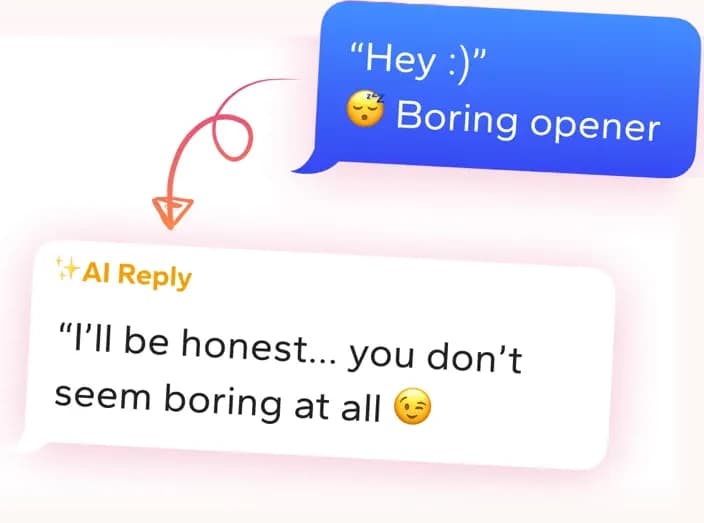
Rizz GPT Stanford was a student demo from 2023. A group of Stanford students built clip-on glasses with a tiny display that listened to a conversation and showed suggested responses as it happened. A video of it went viral, and the name stuck. If you searched rizz gpt stanford hoping for something to buy or install, there is nothing to download. It is a demo, and it lives in that video.
This page explains what the project was, why it looked so good on camera, and what to do with the idea.
What the demo was
The setup was small. Glasses with a display clipped on, a language model behind them, and a live conversation going in. The model listened, then put a suggested line in front of the wearer's eye. That is the whole trick.
The video worked because the premise is funny. Anyone who has frozen mid-conversation can picture the appeal of a hint appearing in the corner of their vision. A name that pairs "rizz" with "GPT" did the rest.
It was a research-style project shown in a clip. There is no store listing, no pair of glasses to order, and no subscription.
Why it looked better than a chatbot
The glasses could hear the conversation. That single detail separates the demo from a blank text box. A chatbot with nothing to read has to guess, and a guess sounds like a stock line. A tool that sees what the other person just said can answer her.
That is also why the demo is easy to over-credit. A suggestion appearing in real time looks like magic on video, and the video does not show whether the lines were any good once the novelty wore off. Wearing a display in a real conversation means you glance at it, and she sees you glance. The idea is clever. The daily-use version is harder.
Why people still search for it
The clip keeps circulating, so a new batch of viewers searches the name every time it resurfaces. The wording also got crowded. Rizz GPT now also means a phone app and a way of using ChatGPT, and the three share a search box. One sentence settles the overlap: the store app that uses the Rizz GPT name is a different product, and the rizz gpt page sorts all three out.
What you cannot get
You cannot buy the Stanford glasses. You cannot install the demo on a phone. A page that offers a download, a file, or a "web version" of the glasses is not offering the student project. It is borrowing the name, and you have no way to know what it does with the screenshots you upload.
Treat those pages the way you would treat any unofficial app that asks for screenshots of a private chat: close the tab. The real thing exists as footage, and the footage is free to watch.
The demo also never became a product line. Different people made it, it was shown as a demo, and the shared name is the entire source of the confusion.
What survives from the idea
The useful part of the demo was never the hardware. It was the input. A live conversation goes in, a short suggestion comes out, and the wearer accepts or ignores it. You can recreate that loop on a phone with a screenshot.
Crop the last few messages so they are readable and include her words. Ask for a reply to her last message, since a new opener ignores everything she just said. Read what comes back next to what she wrote. If the suggestion could go to anyone, throw it out. If it picks up something specific, edit it into your own voice and send it.
ChatGPT rizz covers the version where you paste the messages yourself. A screenshot app skips the transcribing, and WingAI is the app on this site that does that, as an ordinary phone app with nothing to wear and no link to the Stanford project.
Quick answers
- Can you buy the glasses? No. It was a student demo.
- Is there an app version of the glasses? No. The demo never shipped as an app, and a store download with a similar name is a separate product.
- Is there a web version or a file download? No. Anything offering one is borrowing the name.
- When was it made? 2023, by Stanford students, and it reached most people through a viral video.
The short answer
If the question was "is there a gadget that talks for me," the answer is no, not as a product you can own. If the question was "I saw the video and I want help with this chat," the screenshot is the part of the demo that carries over.