How to tell a guy his behavior made you uncomfortable
Tell him clearly without attacking. Keep it factual, name what bothered you, and watch how he responds to know if he's worth your time.
You've noticed something he did that crossed a line, felt off, or made you pull back. Maybe he pushed past a boundary you set, said something that stung, moved too fast physically, or ignored something you told him. Now you're deciding whether to say something or just fade.
Saying it directly early is actually a filter, not a risk. A good guy will hear you, take it seriously, and change. A bad guy will get defensive, minimize it, blame you, or ghost. You learn what you're dealing with fast.
Your message needs to be calm and specific. Not angry, not soft. Just factual. You're not asking permission to feel uncomfortable. You're telling him what happened and how it landed. His response tells you everything about whether this is worth continuing.
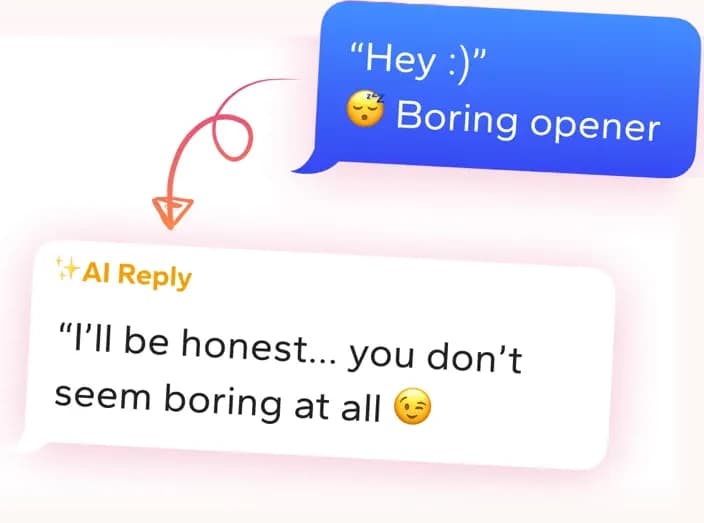
Get replies that sound like you
Screenshot the conversation in WingAI. It reads the vibe and gives you natural replies for this exact situation.
Try for freeRizz AI Screenshot the chat and get the next message for this person.
What he did and why it matters now
In early dating, behavior shows character fast. If he's pushy about sex, dismissive of what you say, or testing your boundaries, that's who he is. Early is when people are still on their best behavior. If this is his best, it's a signal.
You're not overreacting if something felt wrong. Trust that feeling. Early discomfort usually gets worse, not better. He won't suddenly respect you more after you've slept with him or invested more time. The thing that bugged you will probably show up again in different ways.
Say it plainly and let him choose his response
State what happened and how it made you feel. Use his exact words or actions if you can. 'When you asked for nudes after our second date, it made me uncomfortable. I'm not comfortable with that.' Full stop. No explaining why you feel that way. No softening it. No asking if he understands.
Then wait for his response. If he apologizes without making excuses, takes it seriously, and doesn't do it again, he heard you. If he gets mad, says you're being uptight, blames you, or disappears, you have your answer. Don't negotiate, convince him, or prove your point. His reaction is the data you need.
Send it soon and don't reopen it
Say it within a day or two of the thing that bothered you. Don't wait a week. Fresh timing keeps it from feeling like you've been secretly upset. Send it during the day when he's awake and thinking clearly, not late at night when he might snap back defensively.
After you send it, give him at least 24 hours to respond. If he doesn't reply, that's a response. If he comes back defensive or minimizing, don't keep going. You've done your part. If he actually apologizes and respects the boundary going forward, you can keep dating. But don't let one apology erase the pattern if similar stuff keeps happening. Second instance means it's who he is.
Why these replies fail
“Hey, I don't want to make this weird but I think I might've been a little sensitive the other night when you asked for that photo... I'm just not super comfortable with it but maybe I'm being crazy?”
Apologizing for your own boundary and giving him an out to convince you it wasn't that bad kills your credibility and invites him to debate you.
“What you did was really disrespectful and rude and honestly it shows a lot about your character. I'm not into guys who don't respect women. I think we need to talk about your behavior.”
Attacking his character instead of naming his specific action makes him defensive and focused on defending himself instead of hearing what you're actually saying.
“So like when you grabbed my hand and pulled me into your lap without asking, I felt like you weren't listening to me because I've told you I like to go slow, and also that whole thing with the late-night texting and how you kept insisting on coming over last week...”
Piling multiple grievances into one message dilutes your point and makes it feel like you've been keeping score instead of addressing one clear boundary.
Common mistakes
- Leading with apologies or hedging, which makes him think you're unsure and gives him room to argue
- Listing multiple complaints at once instead of naming the one thing that actually bothered you most
- Framing it as your problem instead of his behavior, like 'I'm just sensitive' or 'maybe I overreacted'
- Waiting too long to say it, which makes it feel like you've been stewing and makes the conversation heavier
- Asking him to explain himself or defend it, which turns it into a debate instead of a boundary
Questions people ask
- What if he gets angry or defensive after I tell him?
- That's your answer. A secure person says 'I didn't realize, I'm sorry' even if he's confused. Anger or defensiveness means he's more focused on not being criticized than on understanding you. That won't change. You can acknowledge it ('okay, sounds like you feel differently') and step back. You don't owe him another conversation.
- Should I give him a chance to change before deciding to end it?
- One boundary violation plus a real apology is worth one more chance. But watch closely. If the same behavior or something similar shows up again, that's the pattern. Don't keep giving chances expecting different results. One true apology and one change attempt is enough proof. After that, recurring behavior is a choice.
- What if he says 'all my exes were fine with that' or makes it about my issues?
- That's him refusing to take responsibility. You're not his exes. You're telling him your boundary now. Making it about your insecurity or comparing you to others is a deflection tactic. It doesn't matter why he thinks it's fine. He knows now that you don't. His next move shows you who he is.
- Is it mean to end things right after calling out his behavior?
- No. You're not rejecting him as punishment. You're responding to information. If he can't hear a boundary without imploding or getting hostile, he's not safe to date. That's not mean. That's you protecting yourself. You don't owe him multiple chances to prove he respects you.
- Should I text this or say it in person?
- Text is fine for early dating. It gives you a record and gives him time to think before he responds instead of reacting in the moment. If you see each other in person soon and he hasn't texted back, you can bring it up then. But don't wait for in-person if you're uncomfortable. Saying it now matters more than the method.
What people say after using WingAI
“I was skeptical at first. Then I tried it on a dry chat and the replies actually sounded like me, not a chatbot.”
Mazoonx
“I overthink every text. Having three options and picking the one that sounds like me cut that spiral short.”
Sam R.
“She went cold mid-week and I had no idea what to say. The reply I sent felt natural and she picked the chat back up.”
Marcus T.
Get replies that sound like you
Screenshot the conversation in WingAI. It reads the vibe and gives you natural replies for this exact situation.
Try for free