What to text when she asks if you're patient enough for her
She asked if you're patient enough for someone who needs time to open up. Here is how to answer in your own words, what to include, and what to skip.
When she asks whether you can handle someone who needs time to open up, she is rarely asking about your mood today. She is asking about a pattern she has probably lived through. Maybe someone said they were fine with a slow pace and then sulked when she kept her guard up. Maybe someone drifted off the moment her replies got shorter. The question is a small, risky disclosure, and she is watching to see what you do with it.
Your aim is to answer in a way that lowers her guard without making her feel like a project. That means taking the question seriously and answering it like an adult, not reciting a promise. A reply that sounds rehearsed, or that arrives wrapped in big declarations, tends to raise her suspicion because it sounds like what a person would say to get the door open. Calm, specific, and a little understated reads as more believable than devoted.
Timing and medium matter here. This is a text exchange, so she cannot hear your tone, and a short reply can read as cold while a long one can read as anxious. Reply within a few hours, not a few minutes, and not the next day. Instant, lengthy answers can feel like pressure. Silence for a day can feel like the question made you flinch. Aim for a reply that sounds like you thought about it for a moment and meant it.
The usual ways this goes wrong are predictable. People turn the answer into a speech about their own capacity for patience. They attach a condition, like a timeline or a hint that they expect progress. They start analyzing her, offering theories about why she is guarded, which makes her feel diagnosed. Or they overcorrect into total surrender, agreeing to wait indefinitely, which sounds like you have no needs and makes her wonder how long that will really last.
After you send it, read her next message for temperature, not content. If she warms up, shares something small, or asks you a question back, she is testing the water and you can match her depth without overshooting it. If she replies briefly or changes the subject, she may have wanted the answer without wanting to dwell, so let it rest. If she goes quiet, give it room. The reply earns trust only if your later texts stay steady, light, and unpushy.
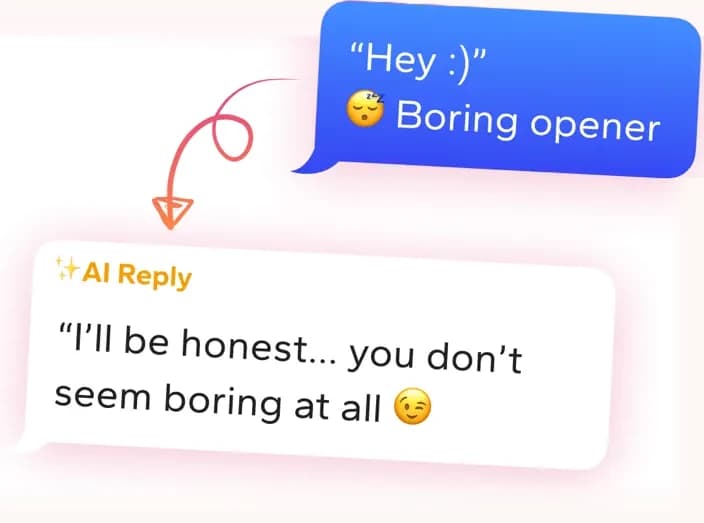
Get replies that sound like you
Screenshot the conversation in WingAI. It reads the vibe and gives you natural replies for this exact situation.
Try for freeAnswer her question before reassuring her
Start by responding to what she actually asked, which is whether you can be patient with this particular trait. Say yes or say what is true, then give one grounded reason it is not a burden to you. A message that names a real preference, like liking when conversations build slowly or not needing to know everything early, lands better than a vow. Keep it to a few sentences. Do not stack three reassurances on top of each other. One honest statement about how you handle slower pacing, followed by an easy return to normal conversation, shows her you are not rattled by the question and not performing for her approval.
Use a callback to something real
One angle is a light callback to something she has already shared, however small. If she mentioned taking a while to warm up with new friends, or liking quiet evenings, or being careful about who she lets in, tie your answer to that. It shows you have been listening and that patience is a response to her specifically, not a generic virtue you are advertising. Keep the callback casual and brief. Do not quote her words back like evidence in a case. A passing reference is enough to make the reply feel personal without making her feel studied.
Keep your own pace visible
Patience that costs you nothing sounds hollow, so let her see you have a life and preferences of your own. An honest acknowledgment that you also like knowing where things are going, paired with the plain fact that you are comfortable letting that unfold, reads as trustworthy. It tells her you are not pretending to be endlessly flexible. Avoid over-apologizing or praising her for being open about this. Gratitude on a loop makes the exchange feel heavy. Aim for the tone of a person who heard the question, found it reasonable, and is happy to keep texting like normal.
Frequently asked
- How soon should I reply when she asks if I'm patient enough?
- Within a few hours is a good range. Answering in seconds can feel like pressure, and waiting a full day can read as hesitation. If you need time to word it well, take it, but do not disappear. A steady, unhurried response matches the pace she is asking you to respect.
- Should I ask why she needs time to open up?
- Not in your first reply. Asking for her reasons can feel like probing or trying to fix her. Answer her question, keep texting normally, and let her offer context when she wants to. If she brings it up herself later, listen without turning it into a project.
- What if I'm not sure I can be patient?
- Then say something true instead of promising what you cannot deliver. You can honestly say you are comfortable with a slower pace for now without claiming it will never bother you. Being accurate about your limits earns more trust than a perfect-sounding yes that you later cannot keep.
- What if she goes quiet after I answer?
- Give her a few days before sending anything light and low-pressure. Silence after a vulnerable exchange is often her processing, not rejecting you. If you reach out once and nothing comes back over a couple of weeks, stop chasing. Patience does not mean being the only one making effort.
What not to send
“Of course, I'll wait as long as it takes. You're worth it.”
An open-ended promise made in one text sounds like something said to close the deal, and it gives her no reason to believe you understand what waiting would cost.
“Sure, but how long are we talking? I don't want to be stuck in limbo.”
Putting a timer on her openness confirms the exact fear behind her question, that your patience has an expiry date you are quietly tracking.
“That's okay, a lot of people with trust issues are like that. I'll go easy on you.”
Labeling her and offering to handle her gently turns a vulnerable question into a diagnosis, and it makes her feel managed instead of met.
Mistakes to avoid
- Turning the reply into a long speech about how patient you are, which makes the answer about you and puts pressure on her to respond in kind.
- Hinting at a timeline or expectation, even softly, which tells her your patience is conditional and that she is being measured.
- Offering theories about why she is guarded or what she has been through, which makes her feel analyzed instead of understood.
Real user feedback
“I was skeptical at first. Then I tried it on a dry chat and the replies actually sounded like me, not a chatbot.”
Mazoonx
“Used it for a couple hours and set up a date the same night. Not even kidding.”
Nikola2214
“She went cold mid-week and I had no idea what to say. The reply I sent felt natural and she picked the chat back up.”
Marcus T.
“I overthink every text. Having three options and picking the one that sounds like me cut that spiral short.”
Sam R.
Get replies that sound like you
Screenshot the conversation in WingAI. It reads the vibe and gives you natural replies for this exact situation.
Try for free