What to text back when she apologizes for leading you on
She said sorry for leading you on or being unclear. Here is the tone, content and timing for your reply, plus what to skip so you don't undo your own footing.
When a woman apologizes for leading you on, she has usually just noticed that her behavior and her words stopped matching. Maybe you went quiet, maybe a friend pointed it out, maybe she reread the thread and winced. The apology often arrives because the discomfort became hers, not because she has reached any decision about you. That distinction matters, because a clean sorry can feel like an answer when it is really just a gesture.
Your aim is modest. You want to receive the apology in a way that lets you keep your dignity, say where you stand in plain terms, and leave her room to act differently if she wants to. You are not trying to extract a confession, win an argument about who was confusing, or rescue the connection with a clever line. A reply that does the first part well tends to make the rest unnecessary.
Timing and medium change the weight of what you send. An apology over text lands in a space where tone is easy to misread, so brevity helps. Replying within seconds can look like you were hovering over the phone, while waiting two days can look like a punishment. A gap of a few hours, answered in your normal voice, reads as someone with a life who took the message seriously. If the apology came after a long silence, a short reply is even more fitting, since a long one implies the silence hurt more than you want to admit.
Most backfires come from reaching for a feeling instead of a position. Sarcasm tells her you are still stung. Gushing forgiveness tells her the confusing behavior cost her nothing. A reply that explains your own side at length hands her a second topic to manage, and now she is soothing you rather than considering her own conduct. Even a warm, generous message can collapse into a request for reassurance if the last line asks where things stand. Leave questions out and let your words end on a full stop.
How she responds will tell you more than the apology did. A reply with specifics, such as what she was feeling, what she wants now, or a concrete plan, is worth meeting halfway. A reply that thanks you and changes the subject is a polite close. A second apology with no new information means she is managing guilt, not offering direction. Silence is also information, and it needs no chasing. Watch what she does over the following weeks, because behavior is the only thing in this exchange that can actually clear things up.
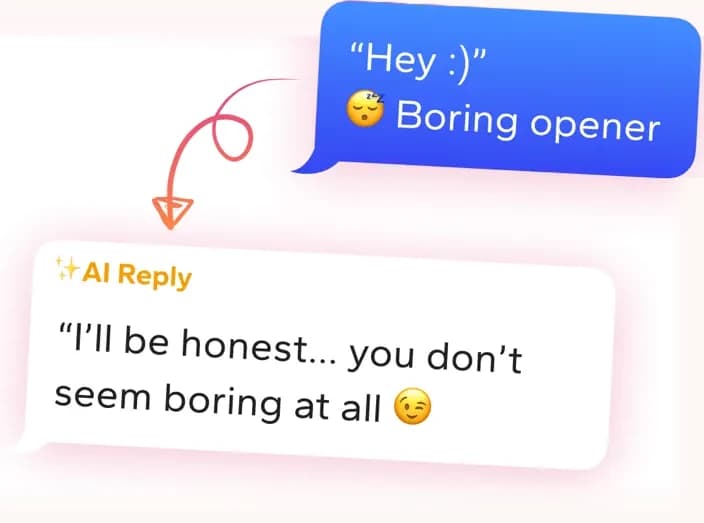
Get replies that sound like you
Screenshot the conversation in WingAI. It reads the vibe and gives you natural replies for this exact situation.
Try for freeMessages that backfire
“No worries at all, honestly it's fine. We should grab drinks again this week and just forget it happened.”
It erases the apology the moment she offers it and invites her back into the same ambiguity with no change in how she behaves.
“Thanks for saying that. I was confused too and I'm sorry if I made things awkward, I hope you're not mad at me.”
Her apology becomes a shared confession, and you end up asking her to reassure you about a confusion she created.
“Wow, okay. Weeks of mixed messages and now you're sorry? I guess better late than never.”
The sarcasm shows you are still wounded and gives her a reason to defend herself instead of reflect on what she did.
Accepting the apology without absolving her
Receiving an apology is different from declaring everything fine. Say that you heard her and that you appreciate her saying it, in your ordinary speaking voice. Skip phrases that wipe the slate, like telling her it was nothing or that you never minded. If it did bother you, pretending otherwise teaches her that mixed signals carry no price with you, and it also makes your later boundary harder to believe. You can be gracious and still leave a small amount of weight in the reply. Think of the way you would thank a coworker who admitted a mistake: courteous, unhurried, no performance of either hurt or relief.
Stating where you stand going forward
A boundary here is a statement about your own conduct, not a rule for hers. You might say that you are happy to keep talking if things are clear, or that you would rather step back than stay in a gray area, or that you are open to seeing her again only if she wants the same thing you do. Pick whichever matches what you actually feel. Keep it to a single sentence in plain words, with no ultimatum and no deadline. If you cannot say it without a tremor of anger, wait a day and write it again. The version you send should sound like a decision you already made.
Reading her reply, or her silence
If she responds with detail, such as why she pulled back or what she would like now, you can answer like a normal person and let the conversation breathe. If she sends a short thanks, treat it as a graceful ending. If she apologizes again without adding anything, you can leave it unanswered, since a third round of reassurance helps neither of you. When she goes quiet, resist the urge to send a follow-up that tests whether she saw the message. Silence after a boundary is common and often means she heard you. Judge her by what she does across the next few weeks, not by what she types tonight.
Where people go wrong
- Using the reply to rewrite the history of the situation, listing every moment she was unclear instead of accepting the apology and moving on.
- Closing the message with a question about what she wants, which hands her another chance to answer vaguely and keeps you waiting.
- Reading her apology as a sign she is ready for more and rushing to propose plans before she has shown any change in how she acts.
Common questions
- What does 'sorry for leading you on' actually mean?
- It usually means she knows her behavior suggested more interest than she felt, or that her signals were inconsistent. It is an acknowledgment, not a confession of romantic feelings and not a promise to change. Read it as her closing a loop, then decide what you want based on her behavior.
- Should I reply right away or wait?
- Wait a few hours if you can. An instant answer can look anxious, and a delay of days can look like punishment. Reply when you can write calmly in your normal tone. The goal is a message you will not wince at tomorrow, so give yourself the space to draft it once.
- Do I have to forgive her in my reply?
- No. Accepting an apology means acknowledging it, not declaring that nothing mattered. You can thank her for saying it and still be honest that it affected you. Forgiveness can develop later through her actions, and rushing it often invites the same unclear behavior again.
- Can I stay friends with her after this?
- Maybe, but only if you can be around her without hoping the situation reverses. Staying close while quietly waiting for a change tends to drain you. If friendship appeals, say so plainly and give yourself some distance first. If it would hurt too much, stepping back is a fair choice.
From our users
“I was skeptical at first. Then I tried it on a dry chat and the replies actually sounded like me, not a chatbot.”
Mazoonx
“She went cold mid-week and I had no idea what to say. The reply I sent felt natural and she picked the chat back up.”
Marcus T.
“I overthink every text. Having three options and picking the one that sounds like me cut that spiral short.”
Sam R.
Get replies that sound like you
Screenshot the conversation in WingAI. It reads the vibe and gives you natural replies for this exact situation.
Try for free