What to text after an awkward date to salvage the connection
Not sure what to text after a stiff, stalled date? Learn the tone, content and timing that reopens the door without over-apologizing or pretending.
Stalled conversation on a first date rarely feels the same from both chairs. You might replay every pause and decide it was a disaster, while the other person drove home thinking the same thing about their own performance. Nerves make people quiet, quiet gets read as disinterest, and both of you walk away guessing. Your follow-up lands in the middle of that guessing. It will be read through whatever story they have already told themselves about the evening, which is why a message that ignores the stiffness often feels strangely hollow.
What you are aiming for is small. You are not trying to rescue the whole date or prove you are secretly charming. You are trying to make replying feel easy. The goal is a message that lowers the stakes, shows you noticed the evening for what it was, and leaves a door open without leaning on it. Think of it as a handshake after an awkward introduction rather than a speech.
Timing matters more here than on a smooth date. A message that arrives the same night or the next morning reads as relaxed, because only someone unbothered would write so soon. Wait several days and the pause itself becomes the story, with each silent hour adding weight to the awkwardness. Text length works the same way. A short note feels like confidence, and a long paragraph feels like you spent the weekend composing it, which tells them you are still stuck in the moment.
The common failures are predictable. Gushing praise skips past what both of you felt and sounds rehearsed. Heavy apology turns your discomfort into their job, since now they have to reassure you. Analyzing the date like a project review makes a casual evening sound like a performance evaluation. Each of these backfires for the same reason: they make the other person do work, and tired, slightly embarrassed people rarely volunteer for that.
How they answer tells you more than the message you sent. A reply that mirrors your lightness, adds a detail of their own, or offers a reason to meet again means the stiffness was shared and survivable. A polite, clipped answer with no question attached usually means they are being kind while stepping back. Silence for a couple of days is an answer too. Match their energy, resist the urge to chase, and treat one follow-up as the limit.
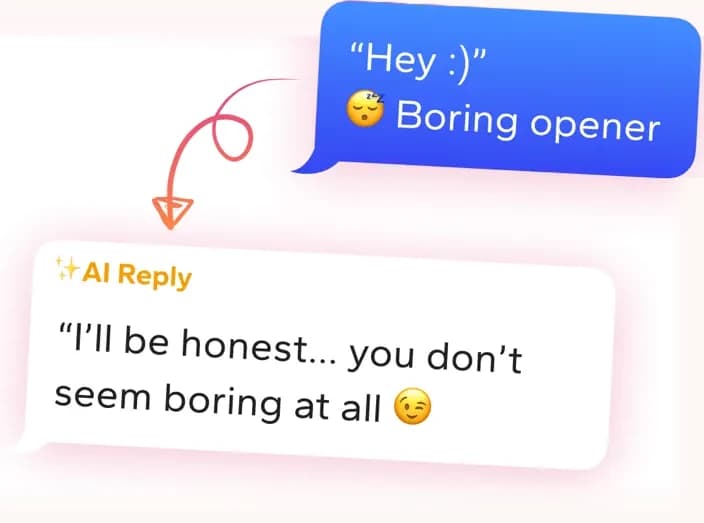
Get replies that sound like you
Screenshot the conversation in WingAI. It reads the vibe and gives you natural replies for this exact situation.
Try for freeReading how the date actually went
Awkward and uninterested are different things, and your message should depend on which one you saw. Think back to concrete behavior. Did they ask follow-up questions even when the silences stretched? Did they laugh at something, lean in, or linger when the check came? Stiff but warm is recoverable. Someone who answered in single words, checked their phone, and left quickly gave you a different answer. Be honest with yourself here, because writing a cheerful reset to someone who was plainly checked out only adds to the discomfort. Your message is a bet that they felt the same stiffness you did, so place that bet only if the evidence supports it.
Naming the stiffness without dwelling on it
The strongest approach acknowledges the strange energy in a single light touch and then moves on. You are giving them permission to admit they felt it too, which is a relief for someone who spent the drive home wincing. Keep the acknowledgment short, ideally a clause rather than a paragraph. Pair it with something specific from the evening, such as a joke that landed, a story they told, or a detail about the venue that went sideways. A specific callback proves you were paying attention, and humor aimed at the situation rather than at yourself keeps the mood easy. Skip the long confession.
Matching your next move to their reply
If they respond with warmth, a joke of their own, or a mention of trying again, you can suggest something concrete and different from the first setting, since a change of scene often fixes what bad small talk could not. If they answer politely but briefly, send one easy reply at most and let the thread breathe. If they bring up the awkwardness themselves, follow their lead and keep it light rather than turning it into a conversation about the conversation. And if two days pass without a response, accept it. A single gentle follow-up with a fresh, specific hook is fine. Anything beyond that starts to look like pressure.
Why these replies fail
“That was such a great time! So glad we met, let me know when you're free again.”
Both of you sat through the dead air, so pretending it never happened sounds either dishonest or oblivious and gives them nothing real to respond to.
“I'm so sorry if I was weird tonight. I was just really nervous and I hope I didn't ruin everything.”
Heavy apology turns the evening into your anxiety and hands them the job of comforting you before they have decided how they feel.
“I think we should talk about why the conversation felt so forced and what we each could do differently.”
Treating one stiff evening like a relationship problem to be workshopped feels intense and makes a casual second try sound like homework.
Common mistakes
- Writing a long, carefully polished message that shows how much you replayed the evening, when a short, loose one would read as calm.
- Joking at your own expense so heavily that they feel obliged to reassure you, which turns a reset into a request for comfort.
- Following up two or three times when the first message went unanswered, which converts a minor awkward date into a pattern of pursuit.
Questions people ask
- Should I text about the awkwardness or just act like it was fine?
- Mention it briefly and lightly. A quick acknowledgment tells them you noticed and are not rattled, which makes it easier for them to relax. Pretending nothing happened sounds hollow because they felt it too. Keep it to a passing clause, then move on to something specific.
- How soon should I message after a stiff first date?
- The same night or the next morning works best. That window feels relaxed and keeps the evening fresh enough to reference. Waiting several days lets the awkwardness harden and makes your message look overthought. Sending within minutes of leaving can look anxious, so give yourself a short breather first.
- What if they take a day to reply or give a short answer?
- Do not read too much into a slow reply, since people get busy or need time to decide how they feel. A brief answer with no question back usually means they are being polite but cooling off. Respond once, easily, and let them lead after that.
- Is it worth trying again if the date was really bad?
- Only if something real happened between you. If they asked questions, laughed, or showed curiosity, the stiffness was probably nerves and can be reframed. If they seemed distant throughout, a second attempt rarely changes that. Trust what you saw in the room over what you hope was true.
What users say
“She went cold mid-week and I had no idea what to say. The reply I sent felt natural and she picked the chat back up.”
Marcus T.
“I overthink every text. Having three options and picking the one that sounds like me cut that spiral short.”
Sam R.
“I was skeptical at first. Then I tried it on a dry chat and the replies actually sounded like me, not a chatbot.”
Mazoonx
“I always freeze on the first sentence. This gets me past that blank box so I actually hit send.”
joejoe4567
Get replies that sound like you
Screenshot the conversation in WingAI. It reads the vibe and gives you natural replies for this exact situation.
Try for free