What to text a girl going through something difficult
Learn how to text her with real support. Avoid common mistakes and know when to back off.
When a girl mentions stress, loss, illness, work drama, or family trouble, most guys either vanish or try to fix it. Neither works. She's not asking you to solve anything. She's testing whether you'll stick around when things get messy.
A good text here does two things at once. It shows you actually heard her, and it gives her space to breathe. You're not therapy. You're not her problem solver. You're the person who doesn't disappear when life gets hard.
Timing matters here more than word choice. Waiting too long looks like you didn't care enough to respond quickly. Sending too many messages makes it about you needing to help, not about what she needs.
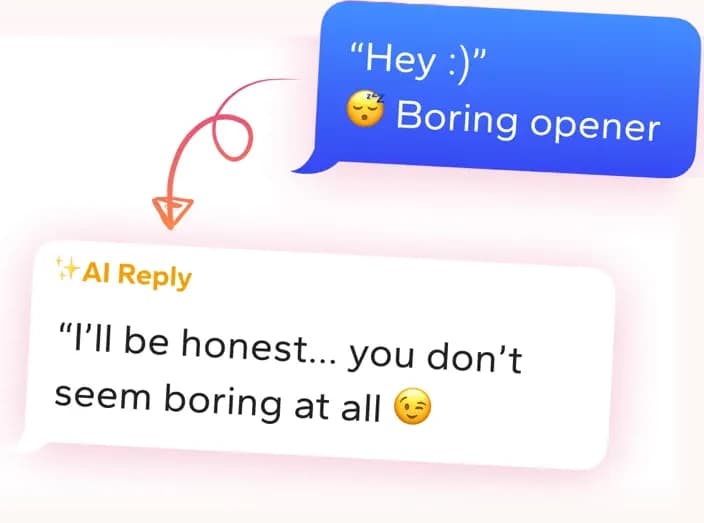
Get replies that sound like you
Screenshot the conversation in WingAI. It reads the vibe and gives you natural replies for this exact situation.
Try for freeRizz AI Screenshot the chat and get the next message for this person.
She's not asking you to understand her situation
When someone tells you they're going through something hard, they're usually not asking for advice or deep analysis. They're checking if you'll flinch. Most people do. They get quiet, or they overcorrect and try to cheerleader their way through it.
What she's actually communicating is: this is happening and I need to tell someone I like about it. That's a filter. She's seeing if you can handle the real version of her life, not just the weekend version. Pay attention to how specific or vague she is. If she just says 'rough week,' she wants acknowledgment, not interrogation. If she gives details, she's already decided you're safe enough to know more.
Acknowledge it, then get out of her way
Your reply has one job: show you heard her and that you're not running away. That's it. You're not trying to be her therapist or her knight. You're just staying put.
Make your response short and honest. Name what she said. Tell her you're there if she needs anything. Then actually mean it. Don't ask what happened, don't offer solutions, don't pivot to something happy. Those moves feel like you're uncomfortable with her being sad. Instead, stay steady and let her decide what comes next. If she wants to talk more, she'll tell you. If she wants distraction, she'll hint at it. Your job is to not make it weird.
Wait at least a day before you try anything else
Send your reply within an hour or two of her telling you. After that, leave it alone. Don't check if she read it. Don't send a follow-up the next morning asking how she's doing. That reads as you needing reassurance that she's okay, not her needing you.
Wait for her to reply or bring it up again. If she goes silent for days, send one low-key message asking if she's around, but don't keep pushing. If she never replies, she either needed to vent to someone and move on, or you said something that made her uncomfortable. Don't spiral trying to fix it. If she comes back, she's interested. If she doesn't, accept it and move on.
Why these replies fail
“Ugh that's so hard, I totally get it. My grandpa passed away two years ago and it was the worst thing ever. I know exactly what you're feeling.”
You made her problem about your problem, and now she has to comfort you instead of being comforted.
“Okay but what exactly happened? When did this start? Have you tried seeing a doctor or talking to someone professional? Let me know what I can do.”
You came in hot with questions and solutions, turning her distress into a checklist. She feels interrogated, not supported.
“that sucks :/ anyway are you free saturday? we should do something fun to take your mind off it”
The emoji and quick pivot say you're uncomfortable with her sadness and want her to stop being real with you.
Common mistakes
- Writing a long message about your own health scare or family drama, turning her struggle into a chance to bond over shared pain
- Asking follow-up questions immediately, turning her venting into an interrogation
- Offering to fix it or telling her what to do, when she just needed to say it out loud
- Going silent, thinking space is the same thing as ghosting
- Bringing up happy plans right away, signaling that her bad news doesn't matter to you
Questions people ask
- Should I ask her what happened or let her bring it up?
- Let her bring it up. If she wanted you to know details, she would have told you in that first message. A simple 'I'm here if you want to talk about it' opens the door without forcing her to relive it just because you're curious.
- Is it okay to send a longer, more thoughtful message?
- Longer usually backfires. Long messages feel like you're trying to prove something or fix the unfixable. Keep it short enough that it fits in one text bubble. She'll remember that you showed up, not that your message was eloquent.
- When should I ask her out again or try to move forward?
- Don't push anything for at least a week. Let her come to you when she's ready to do something. If she's dealing with real stuff, dates aren't on her radar yet. When she does reach out, normal plans are fine. You don't have to treat her like she's fragile.
- What if she doesn't respond to my supportive message?
- That's okay. She might not be ready to text anyone. Leave it. Send one casual check-in a few days later if you want, then actually leave it alone. Non-response doesn't mean she hates you. She's just dealing with her own stuff and may not have bandwidth for texting.
What people say after using WingAI
“I overthink every text. Having three options and picking the one that sounds like me cut that spiral short.”
Sam R.
“I was skeptical at first. Then I tried it on a dry chat and the replies actually sounded like me, not a chatbot.”
Mazoonx
“She went cold mid-week and I had no idea what to say. The reply I sent felt natural and she picked the chat back up.”
Marcus T.
Get replies that sound like you
Screenshot the conversation in WingAI. It reads the vibe and gives you natural replies for this exact situation.
Try for free