What to say when she says she's fine
She texted that she's fine and you're not sure it's true. Here is how to read the situation and reply without prying, sulking, or changing the subject.
Fine is a small word that carries a lot of different loads. After a long shift, it means she's tired and the question was a bit boring. After an argument, it can mean she's still stinging and doesn't want to type out her feelings with her thumbs. Between two people who barely know each other, it can be polite deflection, because explaining a bad day to someone she's still sizing up feels like too much. So the first thing to settle is what fine is doing in this particular message, and that depends almost entirely on what came right before it.
Your aim is to stay warm and available without turning her answer into a case to be reopened. If she's truly okay, you want to keep chatting like a normal person. If something is off, you want her to feel that the door is open and nobody is going to drag her through it. Both situations call for the same starting posture: take her words at face value, then let your tone show you're paying attention. That posture works whether she's fine or not, which is why it beats guessing.
Text changes the picture. She can't hear your voice, and you can't see her face, so every short reply gets read through whatever mood you each brought to the screen. A message that would sound caring out loud can look like suspicion in print. Timing matters too. A reply that lands within a few minutes feels like a conversation. A reply that shows up after an hour of visible silence feels like you've been composing a strategy, and she'll sense the calculation even if she can't name it.
Most of the damage happens in a few familiar ways. Pressing her to confirm she's fine tells her you don't trust what she said. Retreating into wounded politeness makes her responsible for your feelings on top of her own. Bolting to a new topic too quickly feels like you were relieved to be let off the hook. Even an apology can backfire if you haven't done anything specific, because it forces her to either reassure you or invent a grievance she didn't have.
When her reply comes, read its shape as much as its words. Longer, looser messages, a joke, a question back to you, all suggest the mood has lifted and you can follow her lead. Replies that stay clipped, arrive slowly, or answer only the literal question suggest she wants room. Don't chase it. Leave one easy opening, then let the conversation rest, and pick it up when she's lighter or when you're face to face.
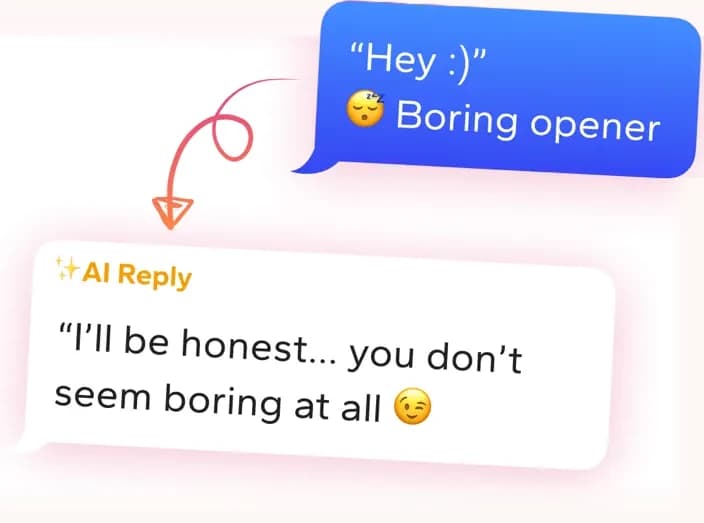
Get replies that sound like you
Screenshot the conversation in WingAI. It reads the vibe and gives you natural replies for this exact situation.
Try for freeWhy these replies fail
“Okay, if you say so. Just let me know if you want to talk about it.”
The first half sounds like you've decided she's lying, and the second hands her a job to do before you'll be warm again.
“Are you sure? You don't sound fine.”
She just gave you an answer, and challenging it tells her you think she's hiding something, which makes her likelier to go quiet and dig in.
“Cool cool cool. So anyway, did you see that new show everyone's talking about?”
Swerving to a fresh topic in the same breath makes her feel the moment was an inconvenience you were glad to skip.
Check what came before fine
Scroll up before you type anything. If your last message was a casual question about her afternoon, fine is probably just a flat answer from someone who doesn't feel like narrating. If the previous stretch included a cancelled plan, a slow reply from you, a teasing comment that landed wrong, or an argument from earlier in the week, fine is carrying weight. Notice her punctuation and pacing too. A sudden period, a missing emoji she normally sends, or a reply that arrives after a long gap all point toward hurt rather than contentment. You're not hunting for proof she's lying. You're deciding how much care the situation deserves, and the conversation history usually tells you.
Match her energy, then add warmth
The tone you want is calm, short, and slightly softer than her message. If she was brisk, don't answer with a paragraph. If she was flat, don't answer with exclamation marks. Acknowledge what she said in a few plain words, then add one small piece of warmth that fits the moment. That could be a light callback to something she mentioned earlier in the day, like the presentation she was dreading or the friend she was meeting. A callback proves you were listening without asking her to explain anything. Skip heavy sympathy if nothing has been confirmed. Over-concern about a problem she hasn't admitted to feels like pressure.
When she stays short with you
If her next reply is another few words, take it as information about her bandwidth tonight, not about you. Send nothing that demands an answer. A relaxed, low-stakes message that acknowledges you'll be around is enough, and then stop. Doubling up with extra texts reads as anxiety. If the cool tone carries into the next day, raise it once, honestly and without accusation, by saying you noticed things felt a bit off and you're happy to talk whenever she wants. If she then says she's fine again, believe her for now, watch the pattern over the coming week, and save the real conversation for a call or in person.
Common mistakes
- Treating fine as a puzzle to crack immediately, which turns a flat answer into an interrogation she didn't sign up for.
- Apologizing in vague terms for something you can't name, which forces her to either reassure you or invent a complaint.
- Sending follow-up messages before she has replied to the first one, which reads as anxiety and gives her more to manage.
Questions people ask
- What does it mean when a girl says she's fine over text?
- It depends on what happened just before. After a casual question, it usually means exactly that. After tension, a cancelled plan, or a noticeable change in her tone, it can mean she's hurt or tired and doesn't want to explain it by text yet. Read the context first.
- Should I ask if she's sure after she says she's fine?
- No. Asking if she's sure tells her you doubt her word, and people usually respond to that by repeating themselves more firmly. Accept the answer, keep your tone warm, and let her bring up anything more if she wants to.
- What if she's clearly upset but keeps saying she's fine?
- Mention what you've noticed once, gently, without demanding an explanation, and make it clear you're around when she wants to talk. Then drop it. Some people need a few hours or a face to face setting before they can say what's bothering them.
- How long should I wait before checking in again?
- Give it until the next natural opening, often the next day, or until you see her in person. A quick, light message later is fine. Sending several in a row to get a real answer tends to make her withdraw further, so one calm check-in is plenty.
What users say
“I overthink every text. Having three options and picking the one that sounds like me cut that spiral short.”
Sam R.
“I was skeptical at first. Then I tried it on a dry chat and the replies actually sounded like me, not a chatbot.”
Mazoonx
Get replies that sound like you
Screenshot the conversation in WingAI. It reads the vibe and gives you natural replies for this exact situation.
Try for free