What to say when he says he's worried he'll mess things up
How to respond when a guy expresses anxiety about ruining your relationship. Build trust without reassuring him out of the conversation.
When a guy tells you he's worried about messing things up, he's doing something real. He's admitting vulnerability instead of hiding it. This isn't neediness. It's actually him choosing to be honest about what matters to him.
He's also testing the waters. Does this relationship feel safe enough to admit fear? Will you panic at his doubt, or will you meet it with something steady? Your reply sets the tone for whether he keeps showing up like this or starts hiding things.
A good reply doesn't dismiss his worry or flood him with reassurance. It acknowledges what he said, shows you're not scared of the worry itself, and keeps the momentum forward. You're not managing his feelings. You're just being direct about what you see.
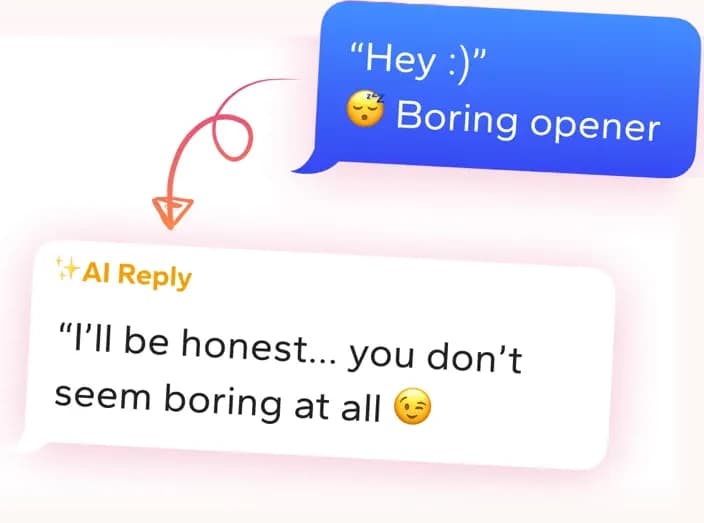
Get replies that sound like you
Screenshot the conversation in WingAI. It reads the vibe and gives you natural replies for this exact situation.
Try for freeRizz AI Screenshot the chat and get the next message for this person.
Vulnerability means he's already invested
A guy who says this is telling you the relationship matters enough to risk looking bad. He could have stayed cool and distant. Instead he admitted fear. That's the real message, separate from the content of his worry.
This isn't a sign things are broken. It's a sign he's already invested. He cares about the outcome. The fact that he's saying it out loud, to you, means he trusts you more than the anxiety itself. Don't treat his honesty like a problem you need to solve. It's actually a good sign about how he sees you.
Reassure him you're steady without guaranteeing perfection
Your job is to signal back that you can handle what he's telling you. Don't promise he won't mess up, because people do mess up and saying he won't makes you both liars. Instead, show that the worry itself doesn't scare you off. Make it clear you're still there and still engaged. Keep your reply short and direct. A few strong sentences beat a paragraph of reassurance. Say what's true about how you see things or what you want from him moving forward. Then give him room to respond. You're not managing his feelings. You're just showing up as someone who can hear him.
Answer quickly then let him lead
Send your reply within a few hours if possible. He just put something on the line and waiting too long reads as distance. Your response doesn't need to be long, but it needs to be there. After you reply, let him carry the next part of the conversation. If he goes quiet after you respond, that's on him. Don't chase it or send a follow-up. You showed up. If he keeps the thread alive, he's still in it. If this was a one-off anxiety dump that he needed to get out, your steady reply was all that was needed and that's fine too.
Why these replies fail
“You won't mess it up, don't worry about it. I'm not going anywhere.”
This closes the door on the conversation by promising something neither of you controls and assumes he just needs reassurance instead of being heard.
“Why do you think that? What specifically are you worried about?”
Turning his vulnerability into a therapy session shifts the burden back to him to explain and justify his feelings in real time.
“I worry about that too sometimes...”
Matching his anxiety with your own amplifies the worry instead of offering any ground to stand on, and centers your feelings instead of acknowledging his.
Common mistakes
- Over-reassuring with 'You won't mess it up' or 'I'm not worried', this stops the conversation and makes his worry feel wrong to have expressed
- Turning it into couples therapy by asking what specifically he's worried about, he doesn't need to solve this in text right now
- Matching his anxiety with your own worry, 'I worry about that too' spirals rather than steadies
- Going silent or taking a long time to reply, he just told you something hard and radio silence reads as rejection
- Making it about you with 'That makes me sad' or 'Don't do that to me', his vulnerability isn't about fixing your emotions
Questions people ask
- Should I tell him he won't mess things up?
- No. That's a promise neither of you can keep and it dismisses what he just said. Instead, acknowledge that he's telling you something that matters and show you're not scared of it. You can say something about how you see things or what you want, but skip the false certainty.
- What if he's asking for reassurance because he's insecure?
- There's a difference between insecurity and vulnerability. Someone telling you they're worried is being vulnerable. Reassuring him over and over becomes a pattern that proves nothing. One solid reply that doesn't collapse under his worry is worth more than ten rounds of 'everything's fine.'
- How long should I wait before replying?
- Don't wait. If you see it within a few hours, reply within a few hours. He's already nervous. Letting it sit makes it worse. Quick doesn't mean careless. A three sentence reply sent fast is better than a long reply sent tomorrow.
- What if he says this multiple times?
- If it's a pattern, you can gently point that out. But the first time, just reply straight. If he keeps cycling through the same worry after you've shown up steady, that's him managing his anxiety, not you failing to reassure him enough.
What people say after using WingAI
“I overthink every text. Having three options and picking the one that sounds like me cut that spiral short.”
Sam R.
“I was skeptical at first. Then I tried it on a dry chat and the replies actually sounded like me, not a chatbot.”
Mazoonx
“I'm busy and half the profiles give you almost nothing to work with. WingAI gets me a solid first line fast without me staring at the screen for ten minutes.”
Ralph
Get replies that sound like you
Screenshot the conversation in WingAI. It reads the vibe and gives you natural replies for this exact situation.
Try for free