What to say when he's not responding to your texts
Not sure what to say when he's not responding? Learn the tone, content, and timing for one follow-up that's easy to answer, plus what to skip.
A quiet phone after a conversation was going well is uncomfortable, and the discomfort usually comes from not knowing which story to believe. He could be buried at work, away from his phone, interested but bad at replying, or drifting. From where you sit, those look identical. The first thing to accept is that his silence tells you very little about your worth or his feelings, and the message you send next shouldn't depend on a guess you can't verify.
What you're really after is a reply that works in every version of the story. If he's busy and still keen, it should be easy to pick up with half a minute of attention. If he's lukewarm, it should let him either re-engage or fade without drama, and it shouldn't leave you stuck in a loop of refreshing the thread. You're not trying to extract an explanation or win back his attention through cleverness. You're opening a door and then leaving it ajar.
Timing and the medium matter more than most people admit. Texts sit in a notification pile, and a message sent at a hectic hour gets skimmed and forgotten. Giving the silence a day or two before you write means he has had a few quiet evenings to notice the thread went cold, and it keeps you from looking like you timed his gap. Send the message at a calm hour, such as a weekend morning or an evening after work, when a reply costs him little effort.
What tends to backfire is anything that turns the follow-up into a referendum on the silence. Asking if he's okay, announcing that you noticed the gap, stacking apologies, or loading the message with reassurance all hand him a job before he can reply. He now has to manage your feelings, explain himself, or feel guilty, and most people avoid that by staying quiet longer. Sarcasm and ultimatums fail for the same reason. A message that carries heat gives him something to defend against instead of something to answer.
Reading what comes back is the last piece. A warm, quick reply, even a short one, means the door is open and you can match his energy without rushing to make up for lost time. A slow, flat reply with no question attached suggests low interest, so keep your own side relaxed and don't push for plans. No reply after several days is a clear enough answer. You can leave it there, and the calm way to do that is to put your attention on people who answer.
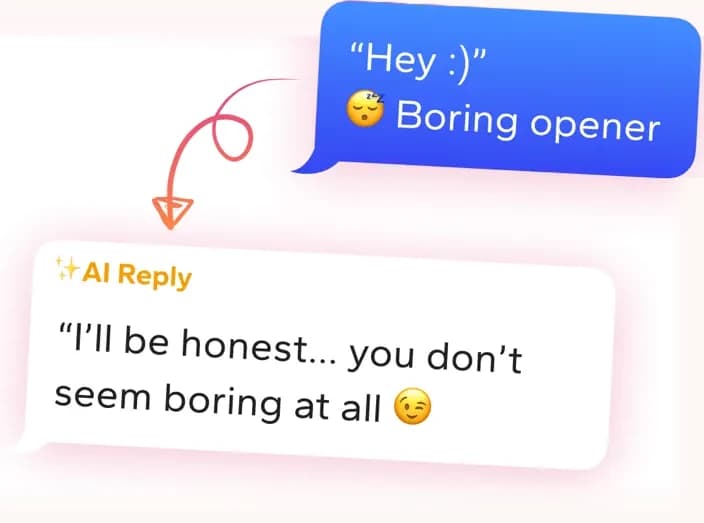
Get replies that sound like you
Screenshot the conversation in WingAI. It reads the vibe and gives you natural replies for this exact situation.
Try for freeChoosing the tone for your follow-up
Aim for the energy of someone who thought of him for a second and passed along something small. Warm, brief, a little playful if that matches how you two usually talk. Skip heavy punctuation, long paragraphs, and anything that reads like a rehearsed apology. If your earlier texts were joking and quick, stay in that register instead of suddenly turning earnest. A sudden shift in tone is itself a message, and it tells him you've been stewing. Read your draft aloud. If it sounds like something you'd say across a table without checking his face first, the tone is probably right.
What belongs inside the message
Give him something concrete to grab. A callback to a detail he mentioned, such as the trip he was planning, the show he was halfway through, or the project that was stressing him out, shows you were listening and gives him an easy topic. A light question tied to his interests works too. A small observation about something he'd care about can open the thread without any pressure attached. Keep it to a line or two. The goal is a message he can answer from his couch in under a minute, with no need to first account for the gap.
Adjusting once he finally answers
If he comes back warm and a bit apologetic, brush it off lightly and carry on with the topic. Dwelling on the gap makes him feel scolded and teaches him that replying late costs him something. If he answers with one flat line, mirror that brevity and let him carry the next move. If he's warm and proposes something, say yes plainly. If he gives an excuse that sounds thin, you don't need to argue it. Watch whether his next few messages come with effort or fade again. Patterns across several texts tell you far more than any single reply.
Common questions
- How long should I wait before texting him again?
- Give it a full day, and two is better. That window covers the common innocent explanations, like a hectic work stretch or a phone he forgot to check. It also keeps you from looking like you're keeping score. If he hasn't surfaced by then, one calm message is reasonable.
- Should I mention that he went quiet?
- Generally no. Pointing at the gap makes him explain or apologize before he can simply reply, and that friction is often why people stay silent longer. Pick up from something you were already discussing, or bring up something new he'd care about, and treat the pause as ordinary.
- What if he reads my message and doesn't answer?
- Treat it as information, not an insult. People read messages while distracted and forget to reply, but days of silence after a clear, easy message is an answer. Don't send a string of follow-ups. Let it rest and spend your energy on people who respond.
- Is it okay to send a final message after the follow-up?
- Yes, one more short, low-pressure note is fine if you want a clean ending, but only one. Keep it light and answerable, with no guilt or ultimatum in it. If that gets no reply either, stop texting and let the silence stand as his answer.
Messages that backfire
“Hey, I haven't heard from you in a few days and I'm kind of worried. Is everything okay? Please just let me know.”
It treats his silence as an emergency, so replying now means soothing your anxiety before he can talk about anything else.
“Wow, okay. I guess you're too busy for me now. Good to know. Have a nice life.”
The sarcasm closes the exchange, leaving him only an apology or a defensive reply, and most people would rather say nothing.
“Sorry to bother you again, I know you're probably swamped, no pressure at all, just whenever you get a chance, totally fine if not!”
Piling on apologies and disclaimers makes replying feel like an obligation, and it makes you sound like you're waiting at his door.
Where people go wrong
- Sending a follow-up within hours, before he's had any real chance to see the first message or get out from under whatever kept him busy.
- Writing a message that is mostly about how you feel about the silence, which gives him an emotional task instead of an easy question to answer.
- Sending a second and third nudge when the first draws nothing, which turns a single open door into a pile of messages he now has to ignore.
From our users
“I overthink every text. Having three options and picking the one that sounds like me cut that spiral short.”
Sam R.
“I was skeptical at first. Then I tried it on a dry chat and the replies actually sounded like me, not a chatbot.”
Mazoonx
Get replies that sound like you
Screenshot the conversation in WingAI. It reads the vibe and gives you natural replies for this exact situation.
Try for free