What to say when a girl texts you that she's upset or crying
Learn how to respond when she shares that she's crying or upset. Avoid toxic positivity and show up with the right tone.
When someone tells you they're crying, they're either venting to you directly or they're signaling that they need space and support in a particular way. The message itself is a small risk on her part. She's letting you see her vulnerable, which means she either trusts you or she's testing whether you can handle her when things aren't light.
Your reply has two jobs: don't make it worse and don't disappear. Making it worse means toxic positivity ('cheer up, things could be worse'), mansplaining ('have you tried...'), or over-softening it ('oh no sweetie'). Disappearing means silence or a late generic reply.
A good reply meets her where she is, keeps the door open for her to say more if she wants to, and signals that you're still there. It doesn't try to fix her mood or be her therapist.
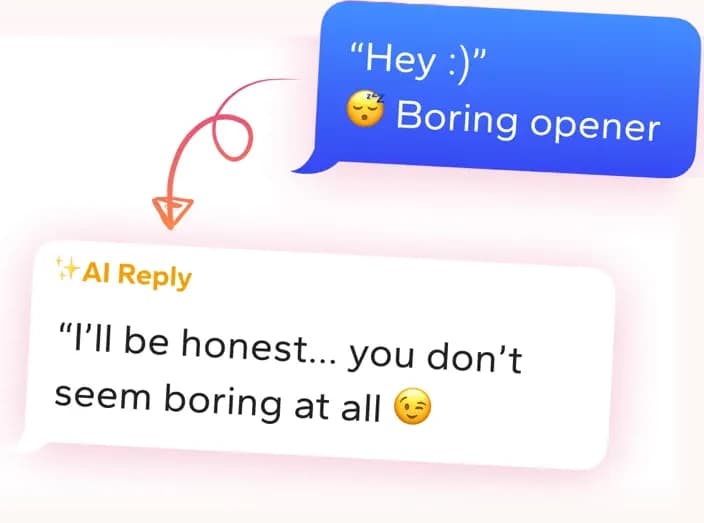
Get replies that sound like you
Screenshot the conversation in WingAI. It reads the vibe and gives you natural replies for this exact situation.
Try for freeRizz AI Screenshot the chat and get the next message for this person.
She's lowering her guard, not asking for solutions
When someone texts that they're crying, they're not usually asking you to diagnose the problem or tell them what to do. They're telling you something true about their state right now. Some people share this as a way to let you in. Others are just thinking out loud. Either way, she's chosen to be real with you instead of pretending everything is fine.
Read it as an opening, not a crisis. She's letting you see her. That's a small thing. Don't overcomplicate it by treating it like an emergency that needs your expert problem-solving. She knows her situation better than you do.
Meet her tone with a grounded response
Your reply should do two things without doing much. First, acknowledge what she said and show you read it. Don't skip that step. Second, keep it simple and leave room for her to either vent more or move on if she wants to.
The move is to stay calm and present. Not cheerful. Not heavy. Just steady. If she wants to talk about it, your response should make that feel safe. If she doesn't, your response shouldn't force it. A single honest-sounding sentence or two often works better than a paragraph. Short responses here feel more honest than long ones.
Send it soon, but don't spiral if she goes quiet
Send your reply within an hour or two of seeing the message. Waiting until later signals you didn't prioritize her. At the same time, don't overthink the response or rewrite it five times. That's her sensing you care, not her needing you to be perfect.
If she doesn't reply, that's fine. She might need to sit with her feelings for a bit. Don't follow up immediately with another message or ask if she's okay. Give her space to come back to you. If a day passes with nothing, a simple 'let me know if you want to talk' works. After that, move on. You've shown up. The rest is on her.
Why these replies fail
“Aww no don't cry! Everything happens for a reason and you'll feel better soon”
Toxic positivity dismisses what she's feeling and makes it about making her stop, not about hearing her
“Sounds rough. So what happened? Is it about work or a person?”
Too many questions in a row feels like an interrogation when she's vulnerable and may not be ready to explain
“[No response for 8 hours, then:] Sorry just saw this. You good?”
Late replies with minimal effort signal you didn't care enough to respond when it mattered
Common mistakes
- Jumping to fix-it mode with advice or solutions when she just needs acknowledgment
- Waiting too long to respond, which reads as you don't care or don't know what to say
- Turning it into a conversation about your own problems or experiences
- Using language that feels like you're talking to a child or being overly sweet
- Asking too many questions at once, which feels like an interrogation when she's already raw
Questions people ask
- Should I ask what's wrong or just acknowledge it?
- Acknowledge it first. Let her decide if she wants to tell you more. A gentle opening like 'I'm here' or 'talk to me' gives her the choice without demanding details. If she wants to vent, she will. Firing off questions feels like you're trying to extract information instead of showing up.
- Is it okay to send a voice message or call instead of texting back?
- Only if you two already do that regularly. When someone's crying, a text gives them control over the pace and lets them respond when they're ready. A sudden call can feel intrusive. Stick with text unless you know she'd prefer to hear your voice.
- What if she doesn't respond after I reply?
- Don't panic. She might need time alone or she might be too in it right now. Silence after a vulnerable share is normal. Wait at least a few hours or a day before checking in again. One follow-up is fine. After that, you're texting into a void.
- How long should my response be?
- Keep it to one or two short sentences. Long responses feel like you're writing an essay about her feelings. Short and direct reads as more honest and less performative. She doesn't need your speech, she needs to know you're paying attention.
What people say after using WingAI
“I overthink every text. Having three options and picking the one that sounds like me cut that spiral short.”
Sam R.
“I was skeptical at first. Then I tried it on a dry chat and the replies actually sounded like me, not a chatbot.”
Mazoonx
“She went cold mid-week and I had no idea what to say. The reply I sent felt natural and she picked the chat back up.”
Marcus T.
Get replies that sound like you
Screenshot the conversation in WingAI. It reads the vibe and gives you natural replies for this exact situation.
Try for free