Examples of dry text and how to reply
Real examples of dry texts like 'k', 'lol' and 'that's cool', what each one tells you, and how to answer each without matching the flatness.
A dry text is a reply that arrives with nothing attached. 'k', 'lol', 'haha yeah' and 'that's cool' are the usual suspects, and what they share is that they close the loop instead of extending it. The person did answer you, which is why it stings and confuses at the same time. Behind the message there could be a dozen different states: texting from a train, half watching a show, tired after a shift, nervous about saying something wrong, or simply not that curious about you. One flat message cannot tell you which.
Your aim is not to decode their mood perfectly. It is to hand them something that is easy and a little fun to respond to. Think about what a dry reply gave you to work with: almost nothing. So the next message has to bring its own material, a specific detail, a mild opinion, a small tease about what they just said. If you answer a 'haha yeah' with a question as broad as 'what are you up to this weekend', you have asked them to do all the work of inventing content, and tired or distracted people will not.
Platform and timing change how dry a message reads. On a dating app early on, short replies are common because both people are still deciding whether this is worth their evening, and a quick 'lol' may just be a placeholder while they scroll through other chats. In a number you have already swapped, or after a date, the same word lands colder, because the effort bar is higher. A reply that comes at midnight after a long gap is a different thing from one that arrives in forty seconds. Look at when it came, not only what it said.
What tends to backfire is any response that makes the dryness the topic in a heavy way. Asking if they are okay, saying they seem bored, or sending a string of follow up questions all put pressure on someone who is already giving little. Matching their flatness backfires too, since two people trading single words will happily keep doing it until one of you gets bored. Sulky silence, then a sudden burst of messages, tends to read as an audit of their behavior rather than an invitation.
The way to read what comes back is to look at shape rather than length. A short answer that includes a question, a joke, or a small detail of their own is someone participating, even clumsily. Another bare 'lol' after you gave them a specific hook is information. So is a reply that picks up your detail and runs with it. Watch whether they ever ask anything about you. Over a few exchanges, that single habit tells you more than any one message could.
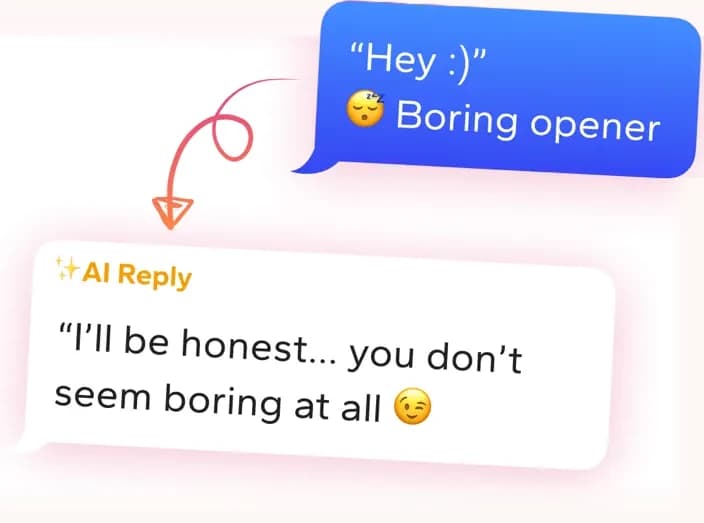
Get replies that sound like you
Screenshot the conversation in WingAI. It reads the vibe and gives you natural replies for this exact situation.
Try for freeReplying to a bare k or ok
A lone 'k' or 'ok' usually follows a message that asked for logistics or a decision, like plans, a time, or a yes or no. Often there is nothing wrong with it. They agreed, and that was the whole job of the message. Check what you sent before you read anything into it. If your text was a statement of plans, the flat reply may simply be confirmation, and the right move is to leave it alone and show up. If your text was a story or a joke and you got 'ok' back, that is thinner. Respond to the story's loose end instead of the 'ok', maybe a detail you left out on purpose, so they have a reason to say more than one letter.
Answering lol with nothing else
A 'lol' by itself tells you the joke or comment reached them and little more. It can be a real laugh from someone who is busy, or a polite way of ending the topic. Do not chase it with an explanation of why your joke was funny. Instead, move sideways. Pick something adjacent to what you said, a related detail, a slightly absurd follow up, or a mild disagreement with something you told them earlier. You are giving them a new door rather than asking them to walk back through the old one. If a playful challenge fits the way you two already talk, a small tease about their one word reply can work, but only if you have already traded jokes before.
When that's cool ends the topic
'That's cool' tends to show up after you share something about yourself, like a trip, a job, a hobby, or a weekend. It sounds polite and goes nowhere, which can make it feel like a pat on the head. Often the person simply did not know what to ask. Make it easier by narrowing the thread, giving one odd specific detail from what you described and a small opinion about it. A person who had no follow up question when the topic was big may have plenty when the topic is small and slightly strange. If the same phrase comes back after you do this, they are probably not curious about the subject, or about you.
Why these replies fail
“oh cool lol. so what else do you like to do?”
It copies the flatness of their 'that's cool' and then asks a question so wide that a single word is an acceptable answer.
“You seem kind of uninterested. Everything ok?”
Answering a 'lol' with a mood check puts the burden of reassuring you on someone who gave you one word, and hands them an easy exit.
“ok well let me know if you want to hang sometime”
After a flat 'k' this gives up the initiative and makes any future contact entirely their job, which a low effort texter is unlikely to take on.
Common mistakes
- Reading a single 'k' or 'lol' as a verdict, when the message it answered may not have needed anything more than that.
- Following a flat reply with two or three extra texts in a row, which turns a small gap into a pile of unanswered effort.
- Asking broad questions like what they are up to or what they like to do, which hand a tired person a chore instead of a hook.
- Matching their short replies word for word as a kind of silent protest, which just makes a conversation made of single syllables.
Questions people ask
- What does dry texting mean?
- Dry texting means replying with very little: single words, short phrases, or reactions like 'lol' and 'k' that add no detail and ask nothing back. It describes the shape of the message, not the reason behind it. The person could be busy, tired, shy, or uninterested, and one message cannot tell you which.
- Is a dry text always a sign they're not interested?
- No. A flat reply can come from distraction, a bad day, or plain discomfort with texting. Interest shows up better in patterns, like whether they ask you things, bring up their own details, or reply at reasonable times. One 'lol' alone proves very little either way.
- What is a dry texter?
- A dry texter is someone whose messages tend to be minimal across many conversations, not just one. They answer without adding material, rarely ask questions, and let the other person drive. Some are like this with everyone and are fine in person. Others are only like this with people they are not invested in.
- How do I respond to a dry text without sounding needy?
- Send one message that gives them something specific to react to, like a small opinion or an odd detail, and then stop. Avoid asking why they are being short or sending several follow ups. Neediness comes from stacking messages and explaining yourself, not from replying once with some effort.
What users say
“I was skeptical at first. Then I tried it on a dry chat and the replies actually sounded like me, not a chatbot.”
Mazoonx
“I overthink every text. Having three options and picking the one that sounds like me cut that spiral short.”
Sam R.
Get replies that sound like you
Screenshot the conversation in WingAI. It reads the vibe and gives you natural replies for this exact situation.
Try for free