What signals on Hinge actually mean and how to reply
Learn what Hinge signals mean, how to read them correctly, and what your reply needs to accomplish to keep momentum going.
On Hinge, a signal is when someone likes a specific part of your profile: a photo, a prompt answer, or your whole profile. Unlike a blank like on other apps, signals show intention. They tell you what caught their attention and give you a concrete thing to work with.
The signal itself is not the same as interest in dating you. It's interest in talking about that thing. Your job is to read what they actually liked, then reply in a way that continues that thread instead of ignoring it and starting over.
Most people waste signals by treating them like blank likes. They ignore what was liked and send a generic opener. That kills the momentum before it starts. A good reply acknowledges what they found interesting and gives them a real reason to text back.
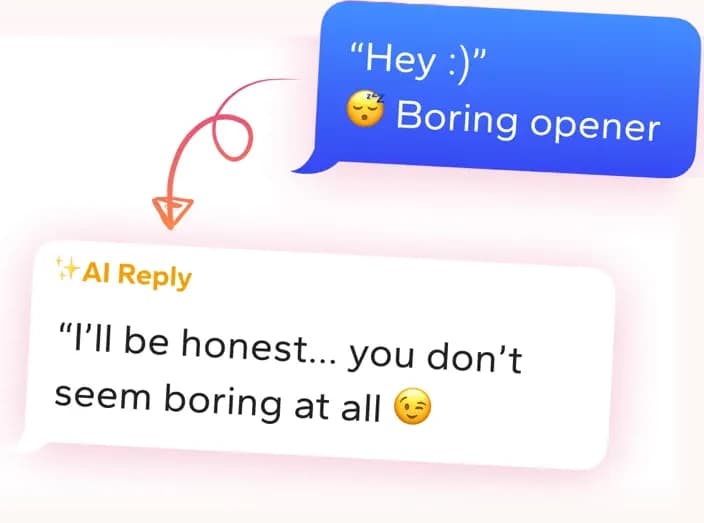
Get replies that sound like you
Screenshot the conversation in WingAI. It reads the vibe and gives you natural replies for this exact situation.
Try for freeHinge AI Screenshot the prompts and get a comment written for that profile.
Signals tell you where their attention already is
When someone signals a specific photo or prompt answer, you know what interested them. They didn't swipe because your whole profile seemed fine. They stopped at that one thing. If they signal your hiking photo, they're probably not signaling because they want to hear about your job. If they signal your prompt about coffee, they either drink coffee, want to learn about it, or liked how you wrote it.
Read the signal as a clue about where to start, not as proof they'll date you. It's directional. They're telling you what part of you to lead with in the conversation. Most people miss this and treat all signals as the same, which is why most signal replies go nowhere.
Your reply needs to name what they liked and add new information
A good reply does two things. First, it shows you noticed which specific thing they signaled. That takes three words, not three paragraphs. Second, it adds something new so they're not just repeating back what they already read. If they signal your hiking photo, you don't reply with 'I love hiking too.' You name the signal and then give them a new detail or a specific question that moves the conversation forward.
The reply should feel like you're continuing a conversation that started with that signal, not like you're introducing yourself for the first time. This keeps the momentum alive instead of resetting it.
Send your reply within 24 hours or the signal dies
The longer you wait to reply to a signal, the less impact it has. Signals live in the moment. Respond within a day while the conversation is still fresh in their mind. After three days, they've moved on.
If they don't reply to your response within five to seven days, don't send a follow up. You replied well. They either lost interest or got busy. A second message looks like you're trying to convince them. Let it go and match with someone who signals back.
Why these replies fail
“Hey! Thanks for the like!”
Ignores which part they actually liked and sounds grateful instead of interested, which kills any momentum.
“Oh nice, you like hiking? I climb mountains on weekends and have summited three peaks. What's your favorite trail?”
Launches into your own story instead of letting them talk first, making the reply about you instead of building on what they liked.
“Coffee brewing methods are cool”
Just echoes their prompt with no new information or direction, so there's nothing for them to actually reply to.
Common mistakes
- Ignoring the signal entirely and sending a generic 'hey' or opener about something else
- Over explaining or being too grateful that they liked something
- Asking a question so open ended they have no specific thing to answer
- Launching into your story instead of letting them talk first
- Treating a signal like a blank like and expecting them to carry the conversation
Questions people ask
- Does a signal mean they're interested in me?
- A signal means they're interested in that specific thing. It's a starting point, not a yes. They noticed something and want to talk about it. Your reply determines if that signal turns into actual interest.
- Should I reply to every signal I get?
- No. Reply to signals from people you'd actually want to date. If their profile gives you nothing to work with or they seem like a bad match, skip it. A signal is only valuable if both of you are actually interested.
- What if they signal a photo but I want to know more about them?
- Start with the photo. Acknowledge it, add one new detail, then ask a question that invites them to share more. Once they reply, you can go deeper. Don't try to skip past what interested them.
- How long should I wait for a reply before giving up?
- Wait five to seven days. If they don't reply in that window, they're not interested enough to continue. Send one good reply and let the rest happen naturally. Don't chase.
What people say after using WingAI
“I was skeptical at first. Then I tried it on a dry chat and the replies actually sounded like me, not a chatbot.”
Mazoonx
“I'm busy and half the profiles give you almost nothing to work with. WingAI gets me a solid first line fast without me staring at the screen for ten minutes.”
Ralph
“She went cold mid-week and I had no idea what to say. The reply I sent felt natural and she picked the chat back up.”
Marcus T.
Get replies that sound like you
Screenshot the conversation in WingAI. It reads the vibe and gives you natural replies for this exact situation.
Try for free