Signs he cheated but won't admit it: how to respond
Spot the red flags when he's hiding infidelity. Learn what to say when he denies it and won't come clean.
When a guy has cheated and refuses to acknowledge it, you're usually picking up on inconsistencies: defensive anger when you ask direct questions, sudden changes in routine or phone habits, vague explanations that don't add up, or him dismissing your concerns as jealousy or insecurity. The silence and deflection often hurt more than the act itself.
A good reply in this situation does two things. It names what you're actually observing without making an accusation you can't prove. And it forces him to choose between coming clean or doubling down on the lie, which clarifies what you're actually dealing with.
Your goal isn't to get a confession. It's to get clarity on whether this relationship can function if he won't be honest. Sometimes his response tells you more than the truth ever would.
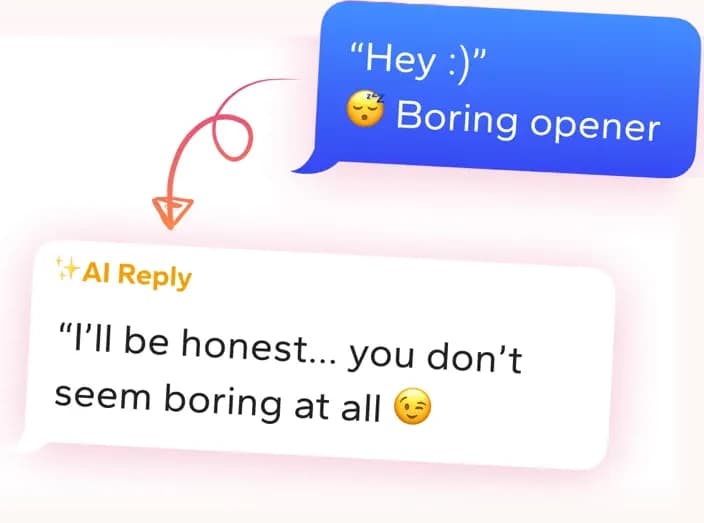
Get replies that sound like you
Screenshot the conversation in WingAI. It reads the vibe and gives you natural replies for this exact situation.
Try for freeRizz AI Screenshot the chat and get the next message for this person.
What his pattern of denial actually reveals
Cheaters who won't admit it fall into two camps. Some panic and over-explain, giving you contradictory details that don't survive basic logic. Others go quiet or hostile, treating your questions like accusations instead of requests for honesty. Both are signaling the same thing: he's prioritizing the lie over the relationship.
Pay attention to the specific way he deflects. Does he attack your trust in him rather than address your concern? Does he reframe it as your problem, not his? Does he flood you with noise to muddy the water? These patterns tell you he's chosen the lie and he's willing to gaslight you to keep it. That's the diagnosis. What you're seeing isn't miscommunication. It's a choice.
State the observable facts, then stop
Don't accuse him of cheating. Instead, name the things you can actually see and let him fill the silence. You noticed the time he came home and what he smelled like. You saw the phone behavior change. You heard an explanation that doesn't track. Present these as facts, not feelings. Then ask him directly what's going on, without offering him multiple choice answers.
This move matters because it removes his ability to dismiss you as paranoid or jealous. You're not making assumptions about his feelings or intentions. You're reporting what happened. If he responds with anger or more deflection, you have your answer about whether he's willing to be honest with you.
Give him one clear shot, then decide on the next move
Send your message on a day when you're both home and could actually have a conversation, not late at night or when he's rushing somewhere. If he denies it or deflects again, don't loop. Don't ask follow-up questions. That's his choice made.
Wait 24 hours. If he circles back with the truth or a real conversation, you have information to work with. If he doesn't, or if he doubles down, you now know he values the lie more than your relationship. That's the point where you decide whether you can stay with someone who won't be honest with you, not whether he's actually guilty. Most people know their answer already.
Why these replies fail
“I know you cheated on me with someone from work and I have proof so just admit it already.”
You don't actually have proof and this claim will make him defensive and dismissive instead of reflective, plus it gives him something concrete to argue against.
“Look, I'm not mad, I just want to understand what happened. Can we talk about where you were last Tuesday? I promise I won't be upset.”
Promising not to be upset signals you'll accept his answer no matter what, so he has no reason to tell the truth. This also shifts the conversation to negotiating rather than him coming clean.
“You've been acting weird, your phone is always hidden, you came home late smelling weird, and honestly I think you're cheating but I don't want to believe it so please tell me I'm wrong.”
This piles details on top of each other and ends by asking him to reassure you, which makes it about managing your emotions instead of him being honest. It also gives him room to pick apart one detail and use that to dismiss the whole thing.
Common mistakes
- Listing every suspicious detail like a prosecutor, which makes him defensive and entrenched rather than reflective
- Asking him directly 'Did you cheat?' when you already know the answer, giving him an easy out to lie again
- Staying calm and understanding to convince him to open up, which signals you'll accept the lie if he sticks to it
- Waiting days before bringing it up, which lets him craft a story and signals the issue isn't urgent
- Saying 'I know you cheated' without actual proof, which he can use to discredit you later
Questions people ask
- What if he admits it but says it was a one-time mistake?
- That's data, but only part of it. The bigger question is whether he can be honest with you going forward. Did he come clean because you forced it out of him or because he chose to? A one-time mistake with ongoing honesty is different from a pattern of lies. His willingness to come clean tells you whether rebuilding is even possible.
- Should I confront him in person or over text?
- In person if he's there. Text works if you need to be safe or if he'll avoid you in person. Text also gives you a record. But if you do it in person, write down what you observed right after so you remember exactly what he said and how he responded. That clarity matters when you're deciding what to do next.
- How long should I wait for him to come clean on his own?
- If you already have strong suspicions, waiting doesn't help. He's had time to come clean voluntarily and chose not to. Waiting just lets him settle into the lie. Say what you know now. The longer you sit with it alone, the more resentment builds.
- What if I find actual proof after he denies it?
- Show him once. Don't draw it out or make it dramatic. This is the moment where his reaction matters most. Does he apologize or does he blame you for snooping? Both answers tell you what you need to know about his character and whether this relationship can work.
What people say after using WingAI
“I was skeptical at first. Then I tried it on a dry chat and the replies actually sounded like me, not a chatbot.”
Mazoonx
“I overthink every text. Having three options and picking the one that sounds like me cut that spiral short.”
Sam R.
“Didn't think it would be this good. The funny options actually get responses, which is wild.”
Nico_dang
Get replies that sound like you
Screenshot the conversation in WingAI. It reads the vibe and gives you natural replies for this exact situation.
Try for free