Should you send a second text after being left on delivered?
Left on delivered and wondering about a second text? Here is when to send one, what to say, and how to read what comes back so you stop spiraling.
Delivered feels personal, but the person on the other end is usually in a much duller situation than the one you are imagining. They glanced at your message while walking into a meeting, or standing in a checkout line, or half asleep, and filed it under later. Later has a way of never arriving. Replying takes a small amount of energy, and a message that needs thought gets pushed behind the ones that need only a thumbs up. Silence after delivered often says more about their bandwidth than about their opinion of you.
What you want from a second text is simple: a conversation that feels easy to rejoin. You are not trying to win an apology or force a verdict. You want to make replying cheap for them, so they can answer in ten seconds from the couch without feeling they owe an explanation for the gap. That means treating the first message as a thing that already happened and does not need defending. The goal is momentum, and momentum comes from giving them something light to react to.
Timing matters more on a messaging app than almost anywhere else, because the read receipt makes the silence visible to both of you. You can see exactly when they looked, and that makes every hour feel loaded. Resist the urge to read the clock like a lie detector. A message seen at 9pm on a Tuesday and answered on Thursday is a busy week, not a rejection. Give it a full day at minimum. If the first text was a big, vulnerable one, such as asking them out, a longer pause before following up is reasonable, since big asks get postponed more than small ones.
Most second texts backfire for one reason: they carry your anxiety. Anything that points back at the silence, asks if they saw it, jokes about being ignored, or hints that you are hurt hands them a chore. Now replying means managing your feelings, and avoidance gets more tempting, not less. A sulky joke is just as heavy as a direct complaint, because it still asks them to respond to the silence itself. Sending several nudges in a row, or switching to another platform to get their attention, escalates the same problem.
How they respond to the follow-up tells you far more than the original silence did. A reply, even a short or sheepish one, means the gap was circumstance, and you can match their pace without making a thing of it. A reply that comes quickly and asks something back is a good sign. If the second message also sits on delivered, you have a pattern, and a pattern is an answer. Resist rewriting it into a hopeful story. Stop there, and put your attention on people who answer.
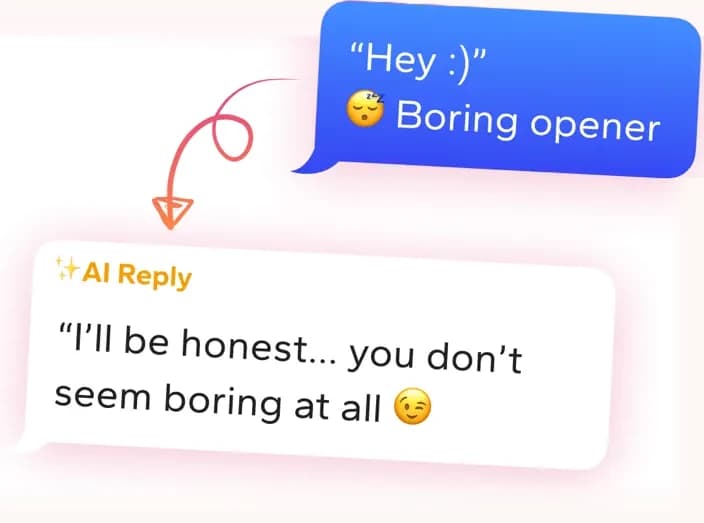
Get replies that sound like you
Screenshot the conversation in WingAI. It reads the vibe and gives you natural replies for this exact situation.
Try for freeWhy delivered gets read too harshly
When you are the one waiting, the silence has your full attention. For them, your message is one small item in a day full of items. Opening it and not replying costs them nothing in the moment, so they do not register it as a decision at all. They meant to answer once things calmed down, then another notification buried it. This does not make the silence painless, but it should change how loudly you interpret it. A week of quiet is a different thing from an afternoon of quiet, and a first text that required a real answer is easier to postpone than a light one. Treat the gap as missing information, not a verdict.
Writing a follow-up that stands alone
Pick something that would make sense even if your first text never existed. A question about a show they mentioned, a place they said they wanted to try, a small update on something you talked about earlier. Specific beats broad, because a vague check-in asks them to do the work of inventing a topic. Keep it short enough to read in one glance. Skip any wording about how long it has been or whether they are busy, since that drags the silence back into the room. If your first message was a question they still have not answered, do not repeat it in new clothes. Start fresh and let the old one fade.
When a longer silence changes the plan
If a week or more has passed, the situation is different from a missed day. A quick follow-up now can look like you stewed on it, so only send one if you have a natural reason, such as news or a shared event coming up. Otherwise, a clean exit is kinder to you. Consider how much you have invested too. After a single exchange on an app, a week of nothing is a mild disappointment, not a loss. After weeks of daily talking, sudden silence deserves one calm, low pressure message, and then peace. Either way, you send once and then your attention goes elsewhere.
People also ask
- Should I double text after being left on delivered?
- Yes, once, after a full day has passed. Send something new that stands on its own and does not mention the silence. If that one also gets no answer, stop. A single follow-up is reasonable, while a stream of them reads as pressure.
- How long should I wait before a second message?
- At least 24 hours. Sooner than that and you are reacting to your own nerves, not to their silence. Two or three days is fine if the first text was a big one, like asking them out, since those often take longer to answer.
- What if they were left on delivered for a week or more?
- Send a message only if you have a natural, unrelated reason to reach out, like news or an upcoming shared event. Otherwise let it go. A week of silence after a normal text is usually your answer, and chasing it rarely changes the outcome.
- What if they answer my second text very slowly?
- Reply normally and watch the pattern. Slow once can just be a busy stretch, but if every answer takes days, that is how they prioritize you. Match their pace and let their effort, not your hope, decide how much you invest.
Why these don't work
“Just checking that my last text actually went through?”
It points straight at the unanswered message and gives them a way to reply with a polite lie instead of any real interest.
“Wow, left on read again, love that for me.”
The sarcasm turns your hurt into their problem, so replying feels like signing up for guilt.
“I really thought we had something. Can you at least tell me what changed?”
A heavy emotional ask after a single silent day demands an explanation they probably have not formed yet, which makes avoiding you easier.
Pitfalls to avoid
- Referring to the silence in the follow-up, whether through a check-in, a joke, or a complaint, which makes replying feel like owing an apology.
- Sending a third or fourth message, or switching to another app, after the second one has already gone unanswered.
- Following up within hours because the read receipt is visible, instead of letting a full day pass.
- Rewriting the first message with slightly different wording, which just repeats the unanswered question.
It doesn't sound like a bot
“I was skeptical at first. Then I tried it on a dry chat and the replies actually sounded like me, not a chatbot.”
Mazoonx
“She went cold mid-week and I had no idea what to say. The reply I sent felt natural and she picked the chat back up.”
Marcus T.
“I overthink every text. Having three options and picking the one that sounds like me cut that spiral short.”
Sam R.
“Didn't think it would be this good. The funny options actually get responses, which is wild.”
Nico_dang
Get replies that sound like you
Screenshot the conversation in WingAI. It reads the vibe and gives you natural replies for this exact situation.
Try for free