Questions to Ask Over Text to Keep the Chat Going
Text questions that pull real answers instead of one-word replies, built around a hiking example, plus when to send them and when to back off.
Picture the other side of the screen. She is on a trail day or planning one, her phone buzzes between a water break and a photo stop, and she has about four seconds of attention to give you. A question that needs a paragraph to answer will get postponed and then forgotten. A question that she can answer with a quick story, a strong opinion, or a mild complaint about her last blister gets answered on the spot. That is the real design problem with texting: you are competing with her actual surroundings, not just with her patience.
What you are after is a small, specific opening. If she mentioned she hikes, the useful follow-up lives inside that detail. Ask which trail she would drag a friend back to, or what went wrong on the hike she still tells people about. Those invite a memory, and memories come with built-in material: weather, company, a wrong turn, a bad decision about snacks. You are not collecting facts about her. You are handing her a chance to be funny or proud, and most people take it when the question is easy to pick up.
Timing matters more than it seems. A message that lands while she is mid-hike or in the car heading to a trailhead may sit for hours, and the delay says nothing about you. Evenings after an outdoor day tend to be when people feel talkative, a bit tired, and glad to relive the best part. Early morning on a weekend can work too, when she is deciding where to go. Reading her rhythm from earlier replies beats guessing. If her answers come in bursts after dark, match that instead of firing questions at noon.
What backfires is the pile-up. Three questions in a row about gear, fitness level, and favorite peaks feels like a form she has to fill out, and she will answer the easiest one or none. Another trap is the question that fakes interest: asking about hiking when nothing she has said suggests it matters to her. She can tell the difference between curiosity and a prompt pulled off a list, and the answers get shorter once she notices. Also avoid grilling her on things that are hard to share early, like how experienced she is, which can sound like a test.
Her response tells you plenty. A long answer with a tangent and a question back means the door is open, so follow the tangent instead of returning to your script. A cheerful but brief reply usually means she is busy or still deciding, so give a lighter follow-up and let it breathe. Short, flat answers across several exchanges, with no question coming back, mean the topic or the channel is not working. Switch subjects once, and if nothing changes, ease off rather than pushing the same hiking thread harder.
Pick a detail she already gave you
Scan what she has told you for something with a story attached. A trail name, a canceled trip, a photo with a view she clearly worked for. Build the question on that single detail so it could only be sent to her. If she posted a summit shot, ask what the last mile was like, not whether she enjoys mountains. Questions that ask for a moment, a decision, or a comparison pull out specifics, while questions about preferences pull out labels. Keep it to one sentence, mention her detail by name, and leave out the follow-up until she has replied. If her profile gives you nothing, ask about the most recent thing she did outdoors and let her choose how much to share.
Match her pace, not your impatience
If she answers within minutes, you can keep a light back and forth going. If she replies a few hours later, resist the urge to fill the silence with extra messages. People who spend weekends outside are often offline for stretches, and a pause during a hike is just a pause. Send your question, then do something else. When she comes back, answer what she said before asking anything new, even if it is only a line of reaction. That small acknowledgment keeps the exchange from feeling like a quiz. If a full day passes with no reply, leave it alone for another day before sending anything, and make the next message easy to answer.
Move from trails to who she is
Hiking stories are a good doorway, but staying in the doorway gets repetitive. Once she has told you about a favorite trail, listen for what it says about her: she likes solitude, she likes pushing herself, she likes being the one who plans. Then ask about that. Why does she prefer going alone, or what pulled her into it in the first place? These questions feel natural because they grow out of her own answer, not out of a list. Do it after two or three exchanges, not on the first message. Too early and it feels like a leap. Too late and the chat settles into trail trivia.
Why these replies fail
“Do you like hiking?”
She has already told you she hikes, so this asks for something you know and gives her nothing to tell a story about.
“Cool. What gear do you use, how often do you go, and what's the hardest trail you've done?”
Three gear and stats questions in one message turn her weekend hobby into an interview, and she will likely answer the easiest one and skip the rest.
“lol nice. so what's your favorite movie?”
Dropping the hiking thread she just opened for an unrelated stock question shows you were not following what she said.
Get replies that sound like you
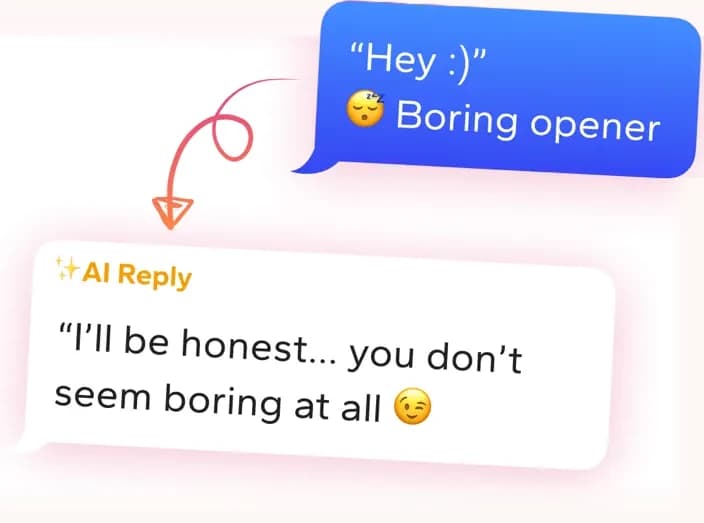
Screenshot the conversation in WingAI. It reads the vibe and gives you natural replies for this exact situation.
Try for freeQuestions people ask
- What are good questions to ask over text to keep a conversation going?
- Ask about a specific thing she already told you, and phrase it so she has to tell a short story. A question about her worst wrong turn or favorite trail beats a general one, because it needs a memory, not a yes or no. One question per message keeps it easy.
- How many questions should I ask in a row?
- One per message, and not every message. Answer what she said, share something small about yourself, then ask the next thing. Stacking several questions makes the chat feel like a form, and she will usually answer only the easiest one.
- What should I do if she only gives short answers?
- Try one more question tied to something specific she has mentioned. If the replies stay brief and she asks nothing back, the text format may not suit her or her interest may be low. Suggest a call or meeting once, then step back.
- Is it okay to ask flirty or deeper questions early on?
- Wait until she has shared a few stories and is asking you things too. Deep or flirty questions land better after some rapport, and they work best when they grow out of something she said, like why she hikes alone, instead of arriving from nowhere.
What users say
“I overthink every text. Having three options and picking the one that sounds like me cut that spiral short.”
Sam R.
“I was skeptical at first. Then I tried it on a dry chat and the replies actually sounded like me, not a chatbot.”
Mazoonx
“Used it for a couple hours and set up a date the same night. Not even kidding.”
Nikola2214
Common mistakes
- Asking about hiking in general terms when she has already named a trail or a trip, which wastes the detail she gave you.
- Sending a second or third question when she has not answered the first, especially when she may simply be off the grid for a day.
- Treating her answers as a checklist, so each reply is just a cue for the next question instead of something to respond to.
Get replies that sound like you
Screenshot the conversation in WingAI. It reads the vibe and gives you natural replies for this exact situation.
Try for free