Is 'if he wanted to, he would' actually toxic advice?
The phrase cuts both ways. Sometimes it's clarity. Sometimes it's oversimplified. Here's how to tell and what to do.
The saying 'if he wanted to, he would' gets thrown around when someone isn't texting back, canceling dates, or going slow. It sounds harsh but it's trying to do something useful: stop you from inventing excuses for someone's behavior.
The problem is it ignores complexity. People are busy. New relationships move at different paces. Someone might like you and still be inconsistent. What matters is whether his pattern matches what you want, not whether he's technically capable of doing better.
Good replies to this phrase acknowledge what's true in it (his actions do tell a story) without accepting the false binary (he either wants you badly or doesn't want you at all). They help you move from guessing his motivation to evaluating whether his behavior works for you.
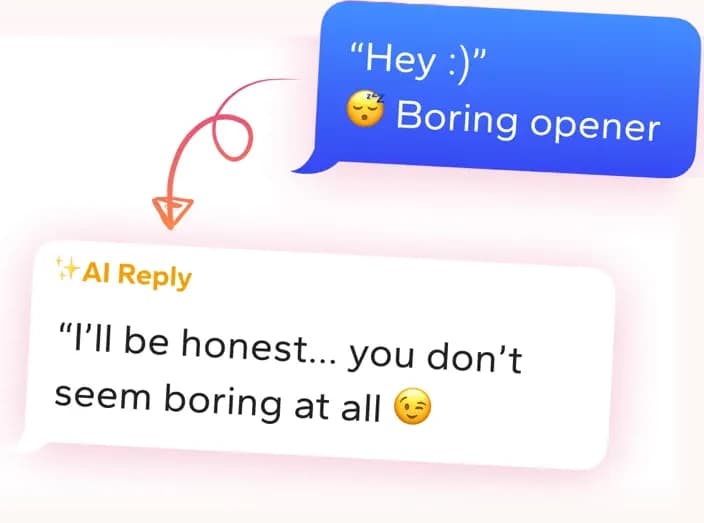
Get replies that sound like you
Screenshot the conversation in WingAI. It reads the vibe and gives you natural replies for this exact situation.
Try for freeRizz AI Screenshot the chat and get the next message for this person.
Why the phrase cuts both ways
The saying works when someone is actively choosing other things over you consistently. If he texts his friends constantly but rarely reaches out to you, or he finds time for hobbies but not dates, your friend has a point. His behavior is showing you what he prioritizes.
But it breaks down when you apply it to everything. A guy can like you and still be flaky because he's depressed, overwhelmed at work, or just not great at texting. He can like you and move slowly because he's been hurt before or just isn't someone who gets attached fast. The saying assumes there's unlimited interest somewhere else he's choosing instead, which isn't always true.
What matters more than his motivation
Stop trying to figure out if he 'wants to' badly enough. That's mind reading. Instead, ask whether his actual behavior, his real patterns right now, match what you need.
A good response here names what you're actually seeing (he texts back after two days, plans dates last minute, cancels sometimes) and connects it to how that makes you feel. It doesn't diagnose his motivation. It doesn't assume he's choosing someone else or doesn't care. It just says: this is the pattern, and I need something different, or this is the pattern and it works for me. That's a decision you can act on.
When to slow down and when to trust the instinct
In the first month or two, inconsistent texting usually doesn't mean anything. People are busy, nervous, or just not texting-based communicators. If the broader trajectory is moving forward, inconsistency is noise.
After two or three months, patterns matter more. If you're going on regular dates and seeing him in person, occasional slow texts are fine. If you're only hearing from him when he wants something, or he keeps saying he wants more but doesn't show up, then the pattern is telling you something real. At that point, you can act without needing to know what's in his head. The behavior itself is your data.
Why these replies fail
“Your friend is totally right, honestly. Guys who care just text. It's that simple. You should probably just move on.”
It treats the saying as absolute truth and closes off the possibility that his situation is actually more complex.
“That's such toxic advice. Everyone's busy. He probably just texts differently. Don't listen to her.”
It swings too far the other way and stops you from evaluating whether his pattern actually works for you.
“The saying is outdated. Modern dating is complicated. You just need to have a conversation with him about expectations.”
It avoids the real question by pivoting to a talk that often doesn't change someone's underlying behavior pattern.
Common mistakes
- Dismissing the saying entirely as toxic instead of recognizing what it gets right about actions revealing priority
- Using it as a reason to ghost or end things without checking if his pattern actually bothers you
- Accepting it as law and ignoring real circumstances like depression, family crisis, or work overload
- Applying it to early dating when pace variation is completely normal
- Letting it make you feel bad about wanting to give someone a fair chance
Questions people ask
- Is my friend toxic if she uses this phrase on me?
- No, she's probably trying to protect you from excuses. She might be blunt about it or apply it too broadly, but her intent is usually to help you see patterns. The question is whether she's right about this specific guy's pattern, not whether the phrase itself is toxic.
- If he's actually busy, does the saying still apply?
- Being busy is real, but busy people still prioritize. If he's swamped but makes time for you in small ways, that's different from being swamped and going silent for weeks. Look at his actual behavior, not his explanation.
- Should I tell him what my friend said about him?
- No. Bringing a friend's judgment into your relationship creates unnecessary tension and puts him on the defensive. If you want to address his texting patterns, do it directly and about how it affects you, not about what he 'really wants.'
- How long should I wait before deciding his behavior is a real problem?
- Three months is a reasonable marker. By then, if he's interested and available, there's usually a clear pattern of effort. Before that, give more grace. After that, trust what you're actually seeing rather than what you hope he means.
What people say after using WingAI
“I overthink every text. Having three options and picking the one that sounds like me cut that spiral short.”
Sam R.
“I was skeptical at first. Then I tried it on a dry chat and the replies actually sounded like me, not a chatbot.”
Mazoonx
“Didn't think it would be this good. The funny options actually get responses, which is wild.”
Nico_dang
Get replies that sound like you
Screenshot the conversation in WingAI. It reads the vibe and gives you natural replies for this exact situation.
Try for free