How to tell someone you're not okay mentally over text
Learn how to open up about mental health struggles via text without pushing them away or over-explaining.
When you're struggling mentally and need to tell someone you're dating, text can feel safer than face-to-face. But it also removes tone, context, and the chance to show you're still present. The person on the other end doesn't know if you're looking for them to fix it, if you need space, or if you're asking them to leave.
A good reply does two things: it signals what you need without making them responsible for your wellbeing, and it gives them a clear way to show up. You're not dumping the weight on them. You're being honest about your state while keeping the door open for them to care in a way that works.
The hardest part is saying it simply. Not over-explaining, not apologizing for having emotions, and not pretending you're fine when you're not. That builds trust faster than any reassurance.
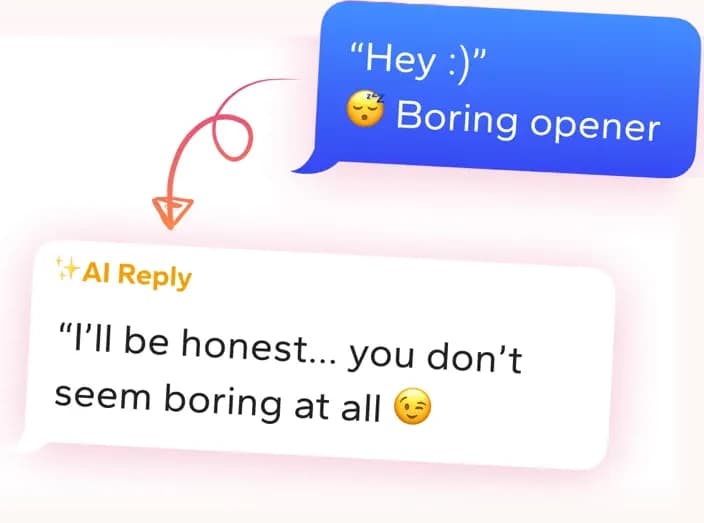
Get replies that sound like you
Screenshot the conversation in WingAI. It reads the vibe and gives you natural replies for this exact situation.
Try for freeRizz AI Screenshot the chat and get the next message for this person.
They're reading between the lines for relationship danger
When someone tells you they're not okay mentally over text, your first instinct is to wonder what it means for you two. Are they losing interest? Do they want out? Is this about something you did? They might not say that out loud, but they're thinking it.
Reading the message means looking at what they're actually saying versus what they're afraid you'll assume. 'I'm struggling' is not the same as 'I don't want to see you.' 'I need to focus on myself' is not the same as a breakup. The fact they told you at all, instead of ghosting or going silent, means they're trying to keep you in the loop. That's the opposite of pulling away.
Acknowledge it without becoming their therapist
Your job is not to fix their mental health or convince them they're wrong to feel bad. That's therapist territory. Your job is to show you heard them and you're not running. That's it.
The second move is to make space without making it weird. Don't say 'let me know what I can do' because now they have to manage both their mental health and your helpfulness. Instead, be specific about how you'll show up. Maybe that's checking in less so they can breathe. Maybe it's still making plans but keeping things low-key. Maybe it's just not pretending everything is normal. The point is they know what to expect from you, and you're not asking them to manage your feelings about their feelings.
Wait for them to set the pace after you respond
Send your reply during normal daytime hours when you can think clearly. Don't send it drunk, tired, or in the middle of a spiral. They'll feel the difference.
After you reply, let them come to you next. They just told you something vulnerable. They need to see if you're going to shame them, minimize them, or make it about you. A day or two of quiet is normal. A week is a sign they might be protecting themselves. If they go silent beyond that, you can reach out once more with something low-pressure, but then you have to accept they might need space. Pushing for reassurance or proof they still care becomes another thing they have to manage.
Why these replies fail
“Oh no, what's wrong? Tell me everything. I'm here for you no matter what. Do you need me to come over? Should I call you?”
It dumps the responsibility back on them to comfort you about their own struggles and makes them feel like their disclosure was an emergency you need to resolve.
“That's totally fair. I get it. I've been struggling too, so I really understand what you're going through right now.”
It pivots the conversation to you and your struggles, which makes them feel like you didn't actually hear them.
“Okay, so are we still good? Like, you still want to see me, right? Just checking because this is a lot.”
It makes their mental health about your insecurity and forces them to reassure you when they're the one struggling.
Common mistakes
- Writing a paragraph-long explanation that makes them feel responsible for understanding or fixing you
- Apologizing repeatedly or framing your mental health as a burden they have to carry
- Being vague enough that they have to guess what you need or whether the relationship is at risk
- Saying 'I'm fine' or minimizing when you're actually struggling, which kills credibility later
- Sending it late at night when emotions are raw, then expecting an immediate response
Questions people ask
- Should I ask a lot of follow-up questions about what's going on?
- Not immediately. If they want to tell you more, they will. Right now they're testing whether you'll stay calm and not make it weird. Asking questions can feel like pressure to explain or justify their feelings. Keep your first response simple, then let them decide how much to share.
- What if they say nothing is wrong and they're just being honest about their state?
- Take it at face value. They're managing something internally and you don't need the full diagnosis. Your job is to acknowledge what they told you and adjust how you show up. Pushing for details suggests you don't trust them or you need them to explain themselves better.
- How long should I give them before I check in again?
- At least a few days. Let them see that telling you didn't change how you treat them. If a week passes with no contact, one brief check-in is fine. After that, they're either dealing with something that needs more space than texting can offer, or they're signaling they want to step back.
- Is it wrong to tell them you're not equipped to help them?
- No. If they're in crisis or need real support, being honest about your limits is kind. You can say something like 'I care about you and I'm here for the basics, but I think talking to someone trained for this might help more.' That's different from dismissing them.
What people say after using WingAI
“I was skeptical at first. Then I tried it on a dry chat and the replies actually sounded like me, not a chatbot.”
Mazoonx
“She went cold mid-week and I had no idea what to say. The reply I sent felt natural and she picked the chat back up.”
Marcus T.
“I overthink every text. Having three options and picking the one that sounds like me cut that spiral short.”
Sam R.
Get replies that sound like you
Screenshot the conversation in WingAI. It reads the vibe and gives you natural replies for this exact situation.
Try for free