How to respond when he says he's scared of getting hurt
When a guy opens up about fear of being hurt, a good reply validates him without over-reassuring. Learn what to say.
When someone tells you they're scared of getting hurt, they're doing something risky. They're naming a real vulnerability instead of hiding it or ghosting. This is actually a green flag, even though it might feel like rejection or pressure.
He's not asking you to promise nothing bad will happen. He's asking whether you take that fear seriously. A good reply shows you heard him without trying to fix it or over-commit to something you can't control. You're meeting honesty with honesty.
Most people either dismiss the fear ("don't worry, it'll be fine") or panic and over-promise ("I would never hurt you"). Both feel hollow. The move is to acknowledge the risk is real, show you respect the boundary he's naming, and keep moving forward with intention.
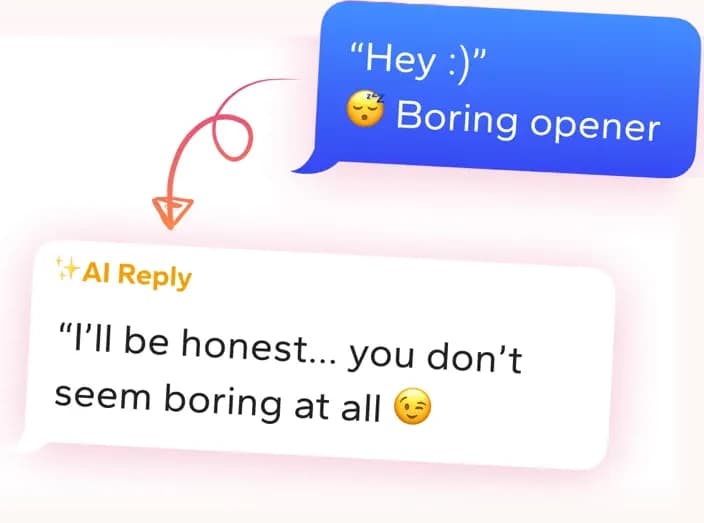
Get replies that sound like you
Screenshot the conversation in WingAI. It reads the vibe and gives you natural replies for this exact situation.
Try for freeRizz AI Screenshot the chat and get the next message for this person.
He's setting a boundary, not asking for permission
When he says he's scared of getting hurt, he's telling you something real about his past and what he needs right now. He's not asking you to convince him otherwise or prove you're different. He's flagging that he moves carefully. This is information, not manipulation.
People who have been hurt before often develop better radar for red flags. If he's telling you upfront that he's cautious, he's actually showing maturity. He's not pretending to be ready for something he's not.
Acknowledge the fear and respect the pace
A solid reply does two things at once. First, it shows you took his words seriously and didn't brush them off. Say it back to him so he knows you heard. Second, it signals you're okay with moving at his speed without treating it like a burden.
You're not reassuring him that nothing will go wrong. You're saying his caution makes sense and you respect it. You can also gently name what you want moving forward so he knows you're both working with the same expectations. Keep it short and clear.
Send it within a few hours, then let him drive the next beat
Reply the same day, ideally within a few hours while the conversation is still warm. Don't overthink it. Once you send it, give him space to respond. He just opened up, so he might need time to see how you land before he pushes forward.
If he goes quiet for a few days after, that's normal processing. Don't send a follow-up right away. If a week passes with no response, one short message asking where things stand is fair, then you step back and let him choose. Respect his pace but don't wait indefinitely.
Why these replies fail
“I would never hurt you, I promise. You can trust me.”
You're making a guarantee about your own actions that sounds hollow when someone has actually been hurt before. It centers your trustworthiness instead of his valid fear.
“Yeah I've been hurt too, it's the worst. Let me tell you what happened to me...”
You turned his vulnerability into an invitation to talk about yourself. He needs to know you hear him, not that you have matching trauma.
“That's understandable but I'm not going to hurt you, so we should be fine moving fast.”
You're dismissing his timeline and asking him to move at your pace instead of respecting the boundary he just set.
Common mistakes
- Saying 'I promise I won't hurt you' locks you into a guarantee you can't keep and sounds defensive
- Responding with your own hurt stories turns his vulnerability into a therapy session about you
- Going silent because you feel blamed, when he's actually just stating his own hesitation
- Over-reassuring with 'everything will be fine' or 'you can trust me' sounds condescending to someone who has been hurt
- Asking him to get over it or move faster sends the message his fear doesn't matter
Questions people ask
- Does he mean he wants to break up?
- Not necessarily. He's flagging that he needs to move slowly and carefully. That's different from ending things. He's actually trying to protect the connection by being honest about his limits. Give him space to show you what he means through his actions.
- Should I ask him what happened to make him scared?
- Not in your first reply. Let him open that door if he wants to. Asking for his trauma story too soon can feel like pressure. If he wants to tell you, he will. Focus on showing you heard him right now.
- What if I'm also scared of getting hurt?
- You can name that quietly without making it a tit-for-tat moment. Something like 'I get that, and I'm being careful too' works. Keep it brief and then redirect to what you both want going forward together.
- How long should I wait before asking him to define the relationship?
- Let him set the pace since he just told you he needs time. If things feel stuck after several weeks of regular contact, you can ask what he's thinking. But pushing for labels right after he asks to go slow will backfire.
What people say after using WingAI
“I overthink every text. Having three options and picking the one that sounds like me cut that spiral short.”
Sam R.
“I was skeptical at first. Then I tried it on a dry chat and the replies actually sounded like me, not a chatbot.”
Mazoonx
“My openers used to be boring. Now I reference something from her profile and people actually write back.”
Aiden K.
Get replies that sound like you
Screenshot the conversation in WingAI. It reads the vibe and gives you natural replies for this exact situation.
Try for free