How to reply when he texts after days of silence with no apology
He went quiet for days, then texted like nothing happened. Here is how to reply so you keep your time, your dignity, and a clear read on him.
When a man goes silent for several days and then reappears with a breezy message, there are a few ordinary explanations. He may have gotten busy and let the gap stretch until texting felt awkward. He may have been keeping you warm while he sorted out other options. He may have lost interest, felt a flicker of guilt or boredom, and reached out to see if the door was still open. You cannot tell which from one text, and the lack of an apology means he has not offered you any help guessing. What you do know is that he found it easy to skip the awkward part, and that tells you something about how he handles discomfort.
Your aim here is not to win the exchange or to deliver a verdict. You want a reply that keeps your options open while showing you noticed the gap. That means holding two facts together: you are willing to hear from him, and you are not going to behave as though three days of nothing were a normal rhythm. If he has a decent explanation, a calm reply gives him room to share it. If he does not, a calm reply costs you nothing and leaves you looking composed rather than wounded.
Timing matters more than most people admit. A text that lands on a Tuesday afternoon after a quiet weekend reads differently from one that lands at midnight on a Saturday. A late night message with a vague greeting is often someone looking for company, not conversation. A midday message might be a lighter check in. Either way, you set the pace by when you answer. Replying within a minute teaches him that your attention is available on demand, so let the response wait until you have actually thought about what you want from this person.
Several instincts tend to backfire. Sarcasm feels satisfying and gives him something to be offended by, which shifts the conversation from his absence to your tone. Pretending nothing happened feels gracious but removes any reason for him to behave differently next time. Writing a long, careful message about how the silence made you feel hands him a lot of material and asks for emotional labor from someone who has not yet shown he will provide it. Interrogating him with a string of questions turns you into the one doing the work. Short and level usually holds up best.
His answer to your answer is where the real information sits. If he responds with some warmth, acknowledges the gap in his own words, and proposes something concrete, he is treating the silence as a thing worth fixing. If he skips past it with a joke, you learn he would rather not be held to anything. If he goes quiet again after your measured reply, you learn that a small amount of accountability was more than he wanted to give. Watch what he does over the following week more than what he says in the first message back.
Read the timing of his text
Look at when the message arrived before you decide how warm to be. A text at 11pm on a weekend sits differently from one at lunchtime on a Wednesday. Late night messages after days of nothing often come from boredom or loneliness, and they tend to want an easy, flirty reply. Daytime messages leave more room for a real exchange. You can answer either one, but your tone should match what you want, not what the hour is asking for. If it came late, replying the next afternoon in a steadier register tells him you are not on call after dark. If it came during the day, you can be a little more open, as long as the gap still gets a mention.
Name the gap without a lecture
A single short line that refers to the days he was missing does the work. You are not asking for an apology and you are not auditing his week. You are showing that the silence registered in your mind as a fact, the way you would mention that a train was late. Keep the grammar plain and the tone dry, with no exclamation marks and no emoji padding. Then stop. Resist the urge to add a softener like "no worries though" or a justification for why you are saying it. Those additions invite him to treat your observation as something to smooth over rather than answer, and they quietly retract the point you just made.
Pick a question that needs an answer
After the brief acknowledgment, give him something concrete to respond to. A question like "what's been going on" invites a vague "just busy" and nothing more. Something tied to a plan, such as whether he wants to meet this week and which evening works, forces him to show whether he has any intention of following through. You can also ask directly what changed on his end, framed as curiosity about where things stand. Either route shifts effort back toward him. Avoid stacking several questions, because a pile of them looks like anxiety and gives him an easy way to answer only the softest one.
Why these replies fail
“omg hi!! I was starting to think you forgot about me lol”
The joke makes the silence sound like a cute mishap, so he gets to laugh along without ever acknowledging that he vanished for days.
“Interesting. Didn't think I'd hear from you again.”
It sounds wounded and passive aggressive, which hands him an easy reason to get defensive or reply with a shrug instead of addressing the gap.
“Hey you! No worries at all, life gets crazy. What are you up to tonight?”
Excusing him before he has explained anything and then offering to fill his evening tells him the days of silence cost him nothing.
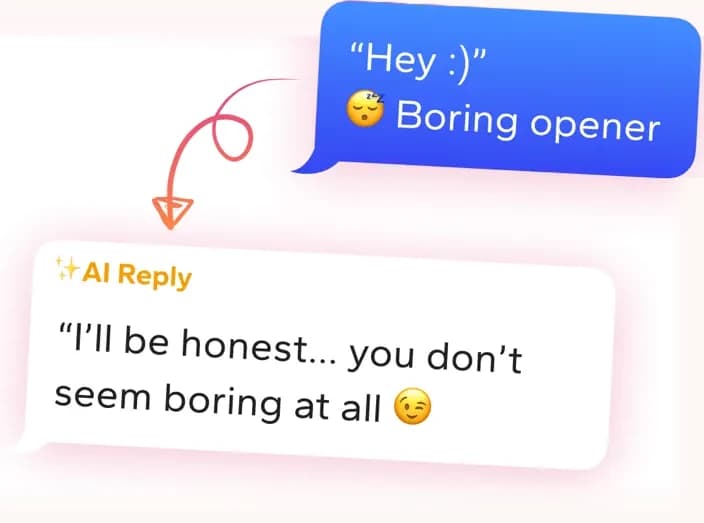
Get replies that sound like you
Screenshot the conversation in WingAI. It reads the vibe and gives you natural replies for this exact situation.
Try for freeQuestions people ask
- Should I reply right away or make him wait?
- Wait a few hours at least, and longer if his text came late at night. A quick reply tells him you were sitting by your phone. Waiting is not a game, it just gives you time to decide what you want to say instead of reacting to the relief of hearing from him.
- Do I have to mention that he disappeared?
- Yes, in one short, calm line. Skipping it lets him treat days of silence as nothing, which makes a repeat more likely. You do not need to be angry or ask for an apology. A plain reference to the gap shows you noticed and that you expect a normal pace going forward.
- What if he says he was just busy?
- Take it at face value and watch what follows. Busy is believable for a few days, but it only holds up if his attention afterward is steady. If he plans something specific and shows up, fine. If the same pattern returns within a week or two, his behavior is giving you the real explanation.
- Should I ignore the text completely instead?
- You can, and that is a fair choice if you have already lost interest. Staying silent is cleaner than sending a lukewarm reply you do not mean. If you are still curious about him, though, one measured response gives you information. Ignoring him only tells you nothing, and him nothing either.
What users say
“I was skeptical at first. Then I tried it on a dry chat and the replies actually sounded like me, not a chatbot.”
Mazoonx
“I overthink every text. Having three options and picking the one that sounds like me cut that spiral short.”
Sam R.
Common mistakes
- Replying within minutes because the relief of hearing from him feels urgent, which tells him his absence had no effect on how available you are.
- Sending a long paragraph about how hurt or confused the silence made you, which gives him a lot to react to and asks for emotional effort he has not earned yet.
- Accepting a vague "sorry been crazy" and going straight back to normal conversation without waiting to see whether his follow through improves.
Get replies that sound like you
Screenshot the conversation in WingAI. It reads the vibe and gives you natural replies for this exact situation.
Try for free