How to call out flaky behavior without pushing him away
Address a pattern of cancellations directly. Know what you're really signaling and when to say something.
If you're thinking about mentioning that he cancels a lot, you've already noticed a real pattern. He's made plans and backed out more than once. You're not being paranoid. The question is whether to name it now or let it become the reason you fade.
Calling it out serves two purposes. It tests whether he'll get defensive or take accountability. And it sets a boundary before you invest more time waiting for plans that might not happen.
The trap is making this sound like an accusation instead of an observation. You're not trying to win an argument about his reliability. You're trying to see if he'll adjust his behavior for you or if this is just who he is.
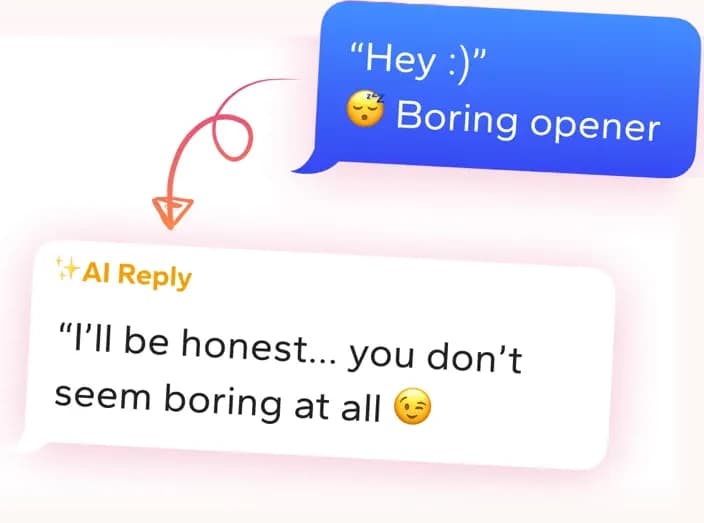
Get replies that sound like you
Screenshot the conversation in WingAI. It reads the vibe and gives you natural replies for this exact situation.
Try for freeRizz AI Screenshot the chat and get the next message for this person.
The pattern is the message itself
When someone cancels once, it's life. When it's three times, that's data. He's showing you something about how he prioritizes plans with you. This could mean he's disorganized, he's not that interested, he overschedules himself, or he gets anxious about committing. The reason matters less than what you do next.
If you bring it up, you're asking him to be aware of the impact. Right now he might not realize he's done this repeatedly, or he's aware but doesn't think you're bothered. Either way, silence signals acceptance. Naming it is a small test.
Name the pattern without attacking his character
Your reply needs to do two things. First, be specific about what you've seen without sounding like you're keeping score. Say something that makes it clear this is a pattern you've noticed, not a one-time thing you're overreacting to. Second, create a little space for him to respond. You're not lecturing him. You're observing out loud and waiting to see what he does.
The tone matters more than the words. Casual and direct works better than hurt or sarcastic. You want him to feel like you're giving him information about how you experience him, not attacking his character. If he gets defensive, that's useful information too.
Give him a chance to adjust before you decide
Send your message when you're calm, not right after a cancellation. Wait at least a few hours. Give him space to respond without chasing. If he apologizes and offers to actually plan something, take him up on it exactly once more. See if he follows through.
If he makes another excuse, flakes again, or doesn't take the conversation seriously, that's your signal to step back. Don't have a second conversation about it. People show you who they are when you give them the chance. After he flakes a second time after this conversation, your energy is better spent elsewhere. Don't wait for proof that he's never going to change.
Why these replies fail
“This is the third time you've cancelled on me. Do you actually want to hang out or are you just not interested?”
It sounds like an interrogation and forces him into a defensive position instead of letting him step up.
“lol ok so I guess we're never actually going to hang out then”
The humor masks anger and doesn't give him a real chance to address it. He'll match the sarcasm instead of taking it seriously.
“I don't want to be that person but it kind of feels like you don't value my time when you keep bailing”
The preamble weakens your point and makes it sound like you're apologizing for having a boundary.
Common mistakes
- Bringing it up during or right after a cancellation when emotions are high
- Listing every single time he's cancelled like you're building a case
- Softening it so much he doesn't realize you're actually upset
- Asking why without any real consequence, so he has no reason to change
- Framing it as a joke when you're actually frustrated
Questions people ask
- Should I bring up his cancellations or just let it go?
- Bring it up if you want to see if he'll change. If you say nothing, you're accepting this is how he operates. One mention gives him information he might actually use. If he cancels again after that, you have your answer and can move on without wondering.
- What if he gets mad that I'm calling him out?
- That tells you something important. A person who overreacts to being told his cancellations affect you isn't ready to adjust his behavior. That defensiveness is the answer you needed. You can politely exit.
- How many cancellations is too many before I say something?
- Two is a pattern. Three is a clear one. If you're counting and it's stressing you out, that's your cue to mention it. You don't need to wait for five or six to justify speaking up.
- What if he cancels again right after I bring it up?
- That's a response. He heard you and did it anyway. You don't need a third cancellation to confirm this won't work. Stop making plans and redirect your attention to someone who respects your time.
What people say after using WingAI
“I overthink every text. Having three options and picking the one that sounds like me cut that spiral short.”
Sam R.
“I was skeptical at first. Then I tried it on a dry chat and the replies actually sounded like me, not a chatbot.”
Mazoonx
“Used it for a couple hours and set up a date the same night. Not even kidding.”
Nikola2214
Get replies that sound like you
Screenshot the conversation in WingAI. It reads the vibe and gives you natural replies for this exact situation.
Try for free