Words to comfort a girl who's struggling
Learn how to respond with words that actually help when she's going through a hard time, without being dismissive or making it weird.
When a girl mentions she's stressed, sad, or dealing with something difficult, your reply sets the tone for whether she feels heard or patronized. She's already decided to tell you. That's trust. A good response takes that seriously instead of rushing past it to fix her mood or change the subject.
The goal here is not to become her therapist. It's to show you're listening, that what she said landed with you, and that you're not going to pretend it's smaller than it is. Then you create room for her to either keep talking or step away from it, depending on what she needs.
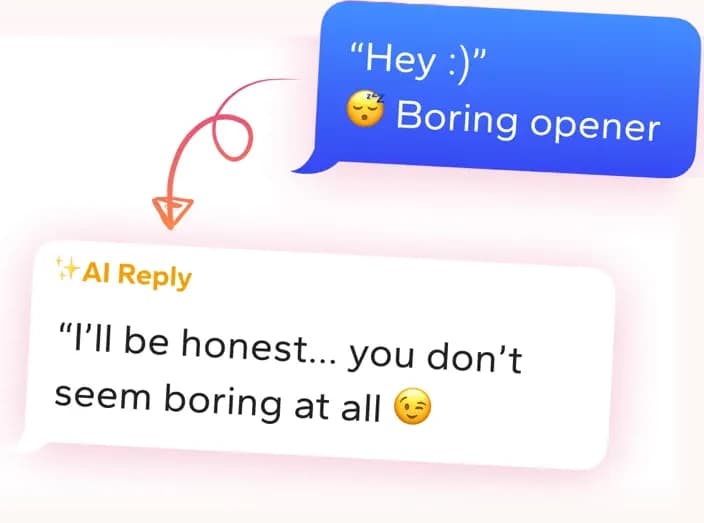
Get replies that sound like you
Screenshot the conversation in WingAI. It reads the vibe and gives you natural replies for this exact situation.
Try for freeRizz AI Screenshot the chat and get the next message for this person.
She's sharing her burden with you
When she brings up something difficult, she's signaling two things at once. One is that she trusts you enough to mention it. The other is that she's carrying weight and looking for some relief, even just from being heard. The stress itself is real, but so is her choice to tell you instead of telling no one or telling someone else.
Look for what specifically is bothering her, not just the topic. 'My boss is impossible' tells you it's the relationship that's hard, not the workload. That difference matters for how you respond. Also notice the tone. Is she venting hard, or is she quietly mentioning it? That tells you whether she needs to get loud with you or if she needs calm.
Show you heard her, then stand beside her
First, name what you heard without minimizing it. Not 'That's tough' like you're checking a box, but something that shows you registered the specific thing she said. Second, give her a sense that you're in her corner without trying to fix it immediately. You can ask a follow-up question that invites her to say more, or you can just be present. Third, leave the door open. Don't send a long heavy message that needs a big response. Make space for her to text back or go quiet without either feeling awkward.
Respond within hours, keep it brief
Send your reply within a few hours of her message. Waiting too long makes it feel like you forgot or didn't care. But don't overcorrect by writing a novel. A few honest sentences that take 30 seconds to read are better than paragraphs she has to sit with.
If she doesn't reply within a day or two, don't send a follow-up unless the situation was serious. She got what she needed or she's dealing with it on her own, and both are fine. If you're still talking regularly on other stuff, just move forward. Coming back to it unprompted can feel like you're checking up on her as a task rather than as someone who cares.
Why these replies fail
“Aw that sucks :/ At least you probably won't be there forever though!”
The emoji softens it too much and the silver lining feels dismissive, like you're trying to get her to cheer up instead of listen.
“Honestly same. My last job was way worse though. I had a manager who would literally yell at us in meetings.”
It pivots away from her situation and makes the conversation about you, which means she stops feeling heard.
“That sounds really hard. Do you think maybe you're being too sensitive about it though? Bosses can be tough.”
The first sentence is good but the follow-up questions whether her feelings are justified, which undermines the whole thing and makes her defensive.
Common mistakes
- Jumping straight to solutions ('Just tell him X' or 'You should try Y') instead of acknowledging the feeling first
- Making it about you ('I hate my boss too, one time he...') and losing focus on her situation
- Trying too hard to cheer her up with jokes or positivity when she just needs someone to sit with it
- Asking 'Why are you stressed about this?' in a way that sounds like you're questioning whether she should be
- Going silent or responding with 'That sucks' and nothing else, which feels cold
Questions people ask
- What if I don't know what to say?
- Say what you actually feel. 'That sounds really frustrating' or 'I hate that you're dealing with this' works. You don't need perfect words. She's not expecting you to be a therapist. She wants to know you heard her and you're not going to pretend it's nothing.
- Should I ask her a lot of follow-up questions?
- One or two max. A single 'What happened?' or 'How are you holding up?' invites her to keep talking if she wants. But don't grill her like you're investigating. She'll share more if she wants to, and that's her call.
- Is it okay to try to make her feel better by being funny?
- Not in your first reply. Read the tone first. If she's venting hard, humor can feel like you're not taking it seriously. Once she's had time to vent and the weight lifts a bit, a light joke can work. But lead with listening.
- What if she vents for a really long time?
- Let her. Respond when she pauses. You don't need to match her energy or write paragraphs back. Short, steady replies that show you're still there ('That's rough' or 'I get why you're frustrated') let her know you're listening without adding pressure.
- Should I offer to help or hang out to cheer her up?
- Only if it fits what she actually needs. If she's stressed about work deadlines, hanging out might not help. If she's had a bad day and needs company, that can be perfect. Read the situation. Sometimes the best help is just listening.
What people say after using WingAI
“I overthink every text. Having three options and picking the one that sounds like me cut that spiral short.”
Sam R.
“I was skeptical at first. Then I tried it on a dry chat and the replies actually sounded like me, not a chatbot.”
Mazoonx
“My openers used to be boring. Now I reference something from her profile and people actually write back.”
Aiden K.
Get replies that sound like you
Screenshot the conversation in WingAI. It reads the vibe and gives you natural replies for this exact situation.
Try for free