How to reply to your first disagreement when dating someone new
First disagreements feel high-stakes. Here's how to respond so you build trust instead of creating distance.
Early disagreements hit different. You're still learning how the other person communicates when frustrated, and they're learning about you. A bad reply here can feel like a character judgment. A good one shows you can handle friction without pulling away or getting defensive.
What matters most is that your reply proves you're not scared of the disagreement. People who dodge conflict or overreact in early dating usually signal they'll be hard to be around long term. Your job is to show you're steady, you can listen, and you're willing to talk about real stuff.
The stakes feel huge because they kind of are. First disagreements often determine whether someone sees you as relationship material or just a person they're casually into.
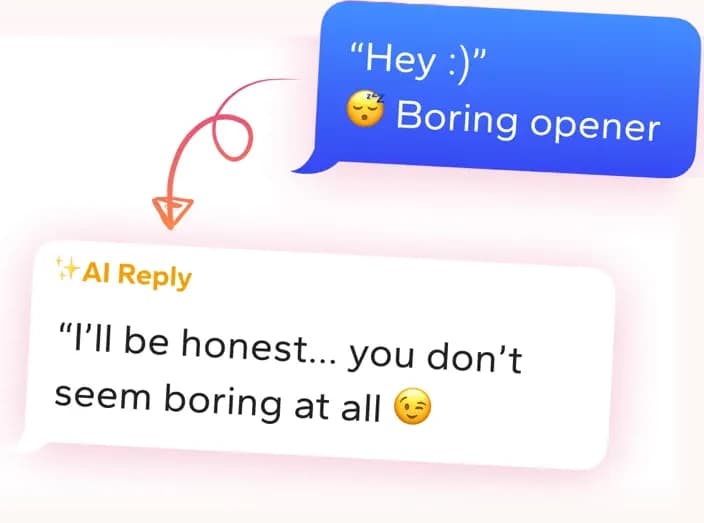
Get replies that sound like you
Screenshot the conversation in WingAI. It reads the vibe and gives you natural replies for this exact situation.
Try for freeRizz AI Screenshot the chat and get the next message for this person.
What a first disagreement actually signals
When someone brings up a complaint this early, they're not looking for an exit. They're testing whether you can hear feedback without shutting down. This is her way of saying she sees potential and wants to know if you're worth continuing with.
Read the tone of her message carefully. Is she frustrated or just stating a fact. Is she already checked out or still engaged. Early disagreements usually come with more details and emotion if she cares about the outcome. If she's being vague or distant, that's different. She's signaling she might be done. But if she's specific about what bothered her, she's still invested.
Taking the hit before explaining yourself
Your reply needs to do two things in order. First, acknowledge what she experienced without immediately defending your side. This is not about admitting you're a bad person. It's about showing you understand how your actions landed on her end.
Second, briefly explain what was actually going on if there's real context she's missing, but only after you've validated her experience. The structure matters: acknowledge first, explain second. If you flip it, she'll feel like you're dismissing her concern. People need to know you get it before they can hear your side.
Reply the same day, then give space
Send your reply within hours, not days. Delaying signals you're upset or avoidant. She's already stressed. Waiting amplifies that.
Keep your message short and direct. Don't write a novel. After you send it, wait for her to respond without sending follow-ups. If she doesn't reply within 24 hours, send one simple follow-up text, something like "Let me know what you think" or "I mean what I said." After that, stop. If she's still not responding after another day, she's telling you something. Don't keep chasing. If she comes back, you're good. If she doesn't, you handled it right and she decided otherwise.
Why these replies fail
“I was stressed about work too, so I probably wasn't at my best. But you also interrupted me like three times last week, so.”
This deflects by bringing up her flaws instead of actually addressing what she said, which makes her feel unheard.
“I'm so sorry. I'm the worst. I feel terrible about this. I can't believe I did that to you. You deserve better.”
Over-apologizing shifts focus to your emotional state and makes her responsible for comforting you, which is backwards.
“I literally was listening though. I had a work call I was waiting on. That's why I was checking my phone. You're being unfair.”
Leading with your justification instead of first acknowledging her experience reads as defensive and dismissive of how she felt.
Common mistakes
- Getting defensive and listing your own grievances instead of addressing what she raised
- Over-explaining or justifying why you behaved that way instead of acknowledging how it landed
- Waiting days to respond, which signals you're avoiding the issue
- Being overly apologetic or self-flagellating, which makes it weird and shifts focus to your feelings
- Turning it into a joke or trying to smooth it over without actually addressing it
Questions people ask
- Should I apologize even if I don't think I did anything wrong?
- Apologize for the impact, not for your intent. You can say "I hear that this made you feel dismissed, and I'm sorry" without agreeing you were intentionally ignoring her. There's a difference between defending your character and acknowledging how she experienced the moment.
- What if she's overreacting or being unfair?
- Even if you think she's wrong, your first response shouldn't be to argue. Acknowledge what she felt, then once she feels heard, there's room to have a real conversation about it. Jumping straight to "you're being unfair" usually shuts that door.
- How long should I wait before following up if she doesn't reply?
- Wait at least 24 hours after your first message. One follow-up text is fine. After that, you've done your part. If she still doesn't respond, she's either processing or she's checked out. Pushing further usually makes it worse.
- Is this a sign the relationship won't work?
- Not at all. How you handle this disagreement matters way more than the disagreement itself. Most relationships have friction. The question is whether you can both address it without falling apart. This is your chance to prove you can.
What people say after using WingAI
“I overthink every text. Having three options and picking the one that sounds like me cut that spiral short.”
Sam R.
“I'm busy and half the profiles give you almost nothing to work with. WingAI gets me a solid first line fast without me staring at the screen for ten minutes.”
Ralph
“I always freeze on the first sentence. This gets me past that blank box so I actually hit send.”
joejoe4567
Get replies that sound like you
Screenshot the conversation in WingAI. It reads the vibe and gives you natural replies for this exact situation.
Try for free