How to ghost someone nicely without the guilt
End things cleanly when you've lost interest. A brief, honest message beats silence and leaves both of you better off.
Ghosting gets a bad reputation, but sometimes it's the most respectful option. You've either matched with someone you don't click with or dated a few times and realized there's no spark. Either way, you're not interested in continuing.
A "nice ghost" means sending one honest message that closes the door clearly instead of slowly fading and leaving them guessing. It takes 30 seconds. It stops them from waiting for a reply that will never come. It lets them move on without building false hope.
Good replies do two things: they're brief enough that you're not over-explaining or making excuses, and they're clear enough that the other person understands this is final. No "maybe someday" language. No vague reasons that invite pushback. Just a straight line.
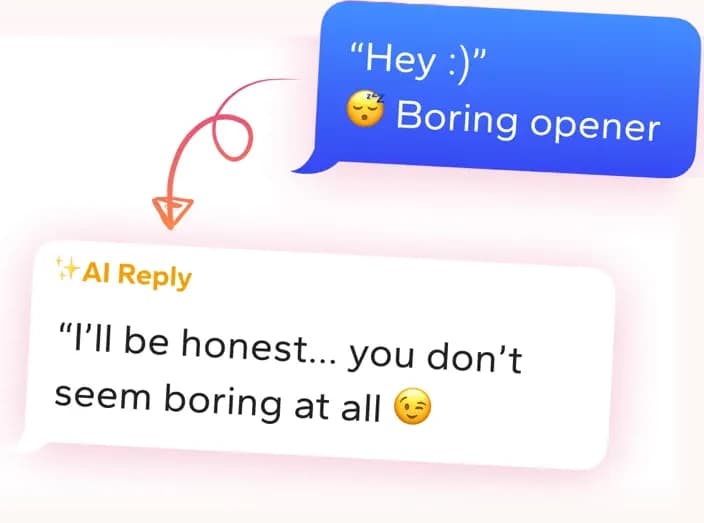
Get replies that sound like you
Screenshot the conversation in WingAI. It reads the vibe and gives you natural replies for this exact situation.
Try for freeRizz AI Screenshot the chat and get the next message for this person.
Reading the stage you're actually in
Nice ghosting only works if you're early enough to do it cleanly. If you matched but never messaged, or messaged once or twice, a single clear text does the job. If you've been dating for months and suddenly vanish, that's not nice ghosting, that's just ghosting.
Similarly, if you've already been fading (taking days to reply, canceling plans, one-word responses), they've likely already absorbed that you're not interested. At that point, saying something might actually be worse because it confirms what they've suspected and drags it out. Read where you actually are in the connection before deciding whether a message helps or hurts.
The message needs to do one job only
A nice ghost message has a single purpose: make it clear you're ending this so they stop waiting. Don't soften it with compliments. Don't explain your reasoning. Don't leave a crack open for them to negotiate or ask follow-up questions. The moment you say 'I don't think we're right for each other,' the message is done.
If you add stuff like 'I think you're great but...' or 'I've got a lot on my plate right now,' you're giving them something to work with. They'll either spend energy reassuring you, or they'll hold onto hope that circumstances might change. A clean boundary is kinder than a mixed message wrapped in politeness.
Send it once, then stay gone
Send the message and do not send anything else. If they reply asking why, don't answer. If they get angry, don't defend yourself. If they try to negotiate or win you back, don't engage. You've said what needed saying.
The follow-up impulse usually comes from guilt. You start second-guessing the tone, or you feel bad seeing their message go unanswered, so you clarify or apologize or explain further. Stop. The kindest thing is to let them sit with a clear answer and move on. Any additional contact is for your comfort, not theirs.
Why these replies fail
“I think you're amazing and I've had so much fun with you, but I just don't see this going anywhere right now. Maybe in the future things could be different.”
The compliments and 'maybe in the future' language give false hope and look like you're leaving the door open when you're not.
“Hey, I'm really busy with work right now and don't have time for anything serious. I hope you understand.”
This suggests your lack of interest is temporary and tied to circumstances, not to actual compatibility.
“I don't think this is working out. Sorry. I hope you find someone better. Let me know if you want to talk about it.”
The apology and offer to talk invites them to push back or ask for more of your time when the point was to end it.
Common mistakes
- Writing a long explanation of why you're not interested, which reads like you're open to debate
- Using soft language like 'right now' or 'for now,' which signals you might come back
- Sending the message after midnight, making it feel cowardly
- Waiting weeks to send it while they think things are still happening
- Following up with extra messages if they don't reply, turning one clean exit into prolonged contact
Questions people ask
- Is it ever okay to just disappear without saying anything?
- Only if you've barely exchanged messages or it's been a match with no real connection. Once you've had a conversation or met in person, they deserve a line. It takes 20 seconds and keeps you from being the person who just vanishes.
- What if they ask why or try to convince me to stay?
- Don't engage. You've said what you needed to. Answering questions or debating your decision only prolongs the goodbye. Silence after your message is the boundary you're setting. Let it stand.
- Should I feel bad about this?
- A little discomfort is normal and actually healthy. It means you care enough to do this respectfully. But don't let guilt make you soften the message or send follow-ups. The guilt passes. Confusion lasts longer.
- How do I know if I'm being too harsh?
- Read the message back. If it's kind but clear, you're good. If you're softening it with reasons, qualifiers, or future possibilities because you're uncomfortable, that's when you know it's too much.
What people say after using WingAI
“I was skeptical at first. Then I tried it on a dry chat and the replies actually sounded like me, not a chatbot.”
Mazoonx
“Used it for a couple hours and set up a date the same night. Not even kidding.”
Nikola2214
“She went cold mid-week and I had no idea what to say. The reply I sent felt natural and she picked the chat back up.”
Marcus T.
Get replies that sound like you
Screenshot the conversation in WingAI. It reads the vibe and gives you natural replies for this exact situation.
Try for free