How to apologize to someone you just started dating after saying something mean
Learn how to apologize early in dating. Own what you said, make it brief, and show change through actions.
Early dating is fragile. One mean comment can shift how someone sees you fast, especially before trust is built. When you say something unkind, she's not just hurt. She's also deciding whether you're someone worth continuing with.
A good apology does two things at once: it tells her you get what you did wrong, and it proves you're not the type of person who stays defensive. The move is owning it without excuses, without over-explaining, and without making her feel responsible for making you feel better.
Timing and tone matter more than length. Early dating apologies should land the same day or next morning. Keep it short. She can tell if you're sorry by what you do next, not by how many words you use.
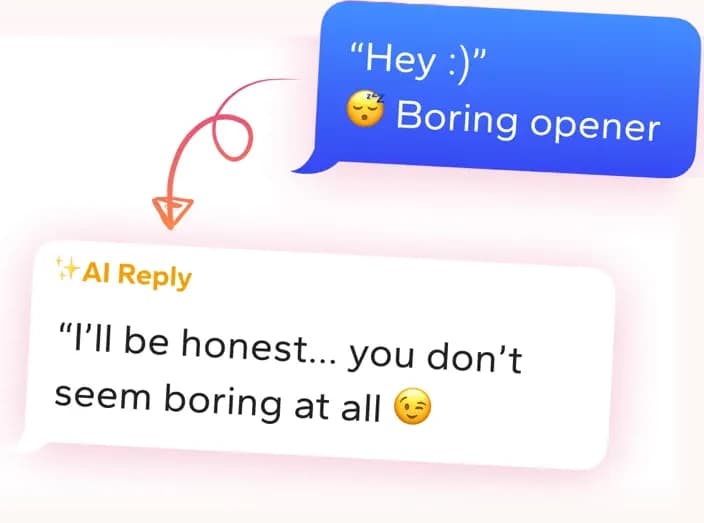
Get replies that sound like you
Screenshot the conversation in WingAI. It reads the vibe and gives you natural replies for this exact situation.
Try for freeRizz AI Screenshot the chat and get the next message for this person.
What meanness signals early in dating
When someone calls you out for saying something mean this early, she's not being oversensitive. She's setting a boundary about how she wants to be treated. The comment landed worse than you thought it would, and that tells you something about the gap between your intention and her experience.
She's also testing whether you'll take accountability or get defensive. Early dating is when people show their character. If you push back, minimize, or explain why it was actually fine, she'll remember that. The apology is less about the one comment and more about whether you're someone who can hear feedback without shutting down.
Own it without the repair lecture
A real apology has one job: say what you did wrong and acknowledge the impact. Not why you did it. Not what you meant to do. Not a promise to never do it again. Those come later through your actions.
The move is simple. Name the specific thing you said. Say it wasn't okay. Say you get why it hurt. Then stop. Don't add context. Don't explain your mood or your day or why you thought it was funny. Don't ask her to forgive you. Let her decide that. Short apologies land harder because they show you're not trying to convince her, just making it right.
Apologize within hours, then show up differently
Send the apology the same day if possible, or first thing the next morning. Waiting three days makes it look like you didn't think it mattered. She already knows you messed up. The faster you acknowledge it, the faster you move forward.
After you apologize, the real test is the next few interactions. Be kinder than usual without making a show of it. Don't reference the apology again. Don't ask if she's forgiven you. If she pulls back or goes quiet, give her space. If she responds normally, match her energy and move on. If she brings it up again, listen without defending.
Why these replies fail
“I'm sorry you felt hurt by what I said, but honestly I was just being sarcastic and didn't mean it that way.”
This isn't an apology. It puts the hurt on her (she 'felt' hurt) and erases the comment by explaining your intent instead of owning the impact.
“I feel so bad about what I said. I hate that I hurt you. I'm the worst. Can we please talk about this?”
It centers your guilt instead of her hurt, and asking to talk forces her to comfort you or rehash the whole thing when she just wants acknowledgment.
“That was a mean thing to say and I shouldn't have said it. I promise I'll be better. I really like you and I don't want to mess this up.”
The promise about the future and the reassurance about liking her dilute the apology and make it seem like you're asking for reassurance back.
Common mistakes
- Over-explaining what you meant, which sounds like you're defending the comment instead of apologizing for it
- Apologizing but adding 'I was just joking' or 'you know I didn't mean it', which erases the apology
- Making it about your feelings, like 'I feel terrible' or 'I hate when we fight', which shifts focus from her hurt
- Waiting days to apologize, which tells her you didn't think it was serious
- Sending a long apology message that puts pressure on her to respond in kind
Questions people ask
- How long should the apology be?
- Two to four sentences maximum. One sentence naming what you said wrong, one acknowledging the impact, maybe one saying you're sorry. That's it. Long apologies feel like you're trying to convince her instead of making it right.
- Should I apologize in person or over text?
- Text first if it's been less than a day or two. It's faster and less pressured. In-person apologies early in dating can feel heavy and put her on the spot. If she opens back up after the text, you can add a bit more warmth in person later.
- What if she doesn't respond to my apology?
- Wait at least 24 hours before sending anything else. If she doesn't respond after that, send one low-pressure text that's not an apology again. Something simple and normal. If she still doesn't respond, stop texting and let her come to you. She needs space.
- Should I explain why I said it?
- Not in the apology. Save that for later if she asks. Right now, explaining comes across as making excuses. Later, when things are better, you can talk about context. But the apology itself should stay focused on her experience, not your reasoning.
What people say after using WingAI
“I overthink every text. Having three options and picking the one that sounds like me cut that spiral short.”
Sam R.
“I always freeze on the first sentence. This gets me past that blank box so I actually hit send.”
joejoe4567
“I was skeptical at first. Then I tried it on a dry chat and the replies actually sounded like me, not a chatbot.”
Mazoonx
Get replies that sound like you
Screenshot the conversation in WingAI. It reads the vibe and gives you natural replies for this exact situation.
Try for free