How to respond when she constantly corrects what you say
She picks apart small details in your messages. Here's how to address it without shutting down the conversation or looking defensive.
When someone corrects you repeatedly on minor things, it signals something. Sometimes it's nervousness and she's compensating by proving she knows better. Sometimes it's a control pattern. Sometimes she's just wired that way and doesn't realize how it lands. The point is you need to name it without making her defensive, and you need to do it early before resentment builds.
A good reply accomplishes two things at once. It shows you noticed the pattern without pretending you didn't, and it gives her a chance to course correct or explain. You're not attacking. You're not ignoring it either. You're signaling that you see what's happening and you're okay enough to call it out.
Get replies that sound like you
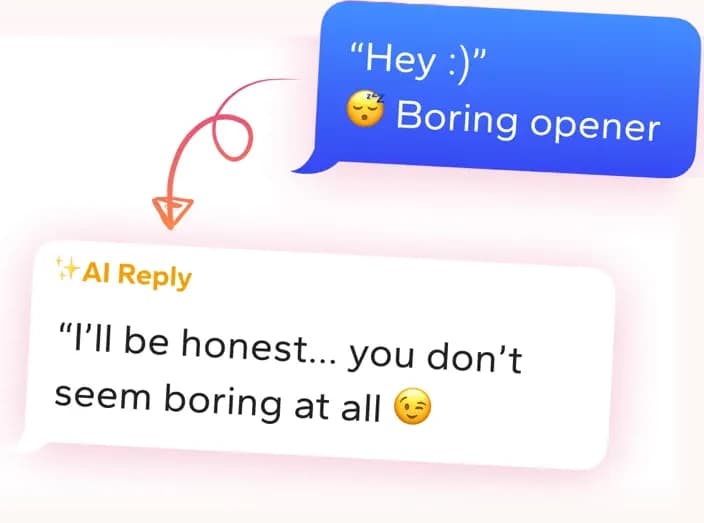
Screenshot the conversation in WingAI. It reads the vibe and gives you natural replies for this exact situation.
Try for freeRizz AI Screenshot the chat and get the next message for this person.
Is she nervous or is this a pattern
Early dating makes people weird. If this is the first week or two, the corrections might be her brain in overdrive. She's anxious, so she hyper-focuses on being smart or impressive and nitpicks details to prove it. That's different from someone who does this consistently over weeks or months.
Pay attention to context. Does she correct you more when you're meeting in person versus texting? Does she do it when the conversation is flowing, or mostly when there's awkward silence? Does she correct other people or just you? If it feels like one-off nervous energy in the first few dates, you can let one or two slide. If it's a pattern by week three or beyond, you need to address it.
Bring it up light, but direct
Your reply needs to name the pattern without sounding like you're keeping score. It has to feel like a funny observation, not a complaint. The tone matters more than the words. You're gently pointing out something you both noticed, and you're curious about it rather than annoyed.
The move is to acknowledge it, note that you noticed it happening more than once, and ask a real question. Don't lecture her or make it heavy. Keep it short. You want her to feel like you're in this together, like you're both aware something is happening and you're curious what that's about. That opens the door for her to explain, apologize, or adjust.
Send it when you're both calm and in daylight
Do not bring this up in the middle of an argument or when she's just corrected you for the third time. Wait for a neutral moment. Send it during the day when she's not tired or defensive. Texting this at 10pm or after a long day reads like you've been stewing on it.
If she doesn't respond to your call-out, don't follow up immediately. Wait a full day. If she responds by deflecting or correcting you again in that exchange, you have a data point. That tells you whether this is fixable or whether it's just how she operates. If it stays the same after you've named it once, decide if you can live with it or if you need to move on. Don't keep bringing it up.
Why these replies fail
“Lol ok grammar police, chill out”
It's sarcastic and hostile, which makes her defensive instead of reflective, and it doesn't actually tell her what you need.
“You know you do this thing where you correct everything I say and it's honestly kind of annoying”
It's accusatory and comes across as complaining rather than curious, which puts her in justify-herself mode instead of opening a real conversation.
“I'm sorry, I didn't mean to say it that way, you're right”
Over-apologizing teaches her that correcting you works, which reinforces the behavior and makes you look unsure of yourself.
Common mistakes
- Getting defensive and correcting her back, which turns it into a fight instead of a conversation
- Ignoring it completely and letting the pattern solidify, which breeds quiet resentment
- Over-apologizing or being overly self-deprecating, which reads as insecure or sarcastic
- Bringing it up during a heated moment when she's already correcting you, rather than in a calm follow-up
- Making it about her character instead of the behavior, which puts her on trial instead of opening dialogue
Questions people ask
- What if she gets mad when I bring it up?
- That tells you something important. If you mention it kindly and she responds with anger or defensiveness, she either doesn't want to change or she doesn't see it as a problem. You can't fix that. You can only decide if you're willing to live with someone who responds that way to gentle feedback.
- Should I bring it up in person or over text?
- Text is better for this one. It gives her time to process without feeling put on the spot in real time. In person, the moment gets awkward fast and she feels cornered. Over text, she can think before she responds.
- What if I'm actually wrong sometimes and she's correcting real mistakes?
- Then it matters why she's doing it. There's a big difference between gentle correction and pointed correction. If she says it kindly and offers information, that's helpful. If she says it with a tone that makes you feel small, that's the problem worth addressing.
- How many times should I let it slide before saying something?
- Once or twice in the first two weeks is normal. By the third instance, especially if it happens in the same conversation, you should address it. The longer you wait, the more it becomes part of how you interact and the harder it is to change.
What people say after using WingAI
“I overthink every text. Having three options and picking the one that sounds like me cut that spiral short.”
Sam R.
“I was skeptical at first. Then I tried it on a dry chat and the replies actually sounded like me, not a chatbot.”
Mazoonx
“Didn't think it would be this good. The funny options actually get responses, which is wild.”
Nico_dang
Get replies that sound like you
Screenshot the conversation in WingAI. It reads the vibe and gives you natural replies for this exact situation.
Try for free