How long can someone leave you on read before it's a red flag
Hours or even a full day of silence after a read is usually harmless. Learn when being left on read becomes a pattern worth reacting to, and how to respond.
Most people who read a message and go quiet are not plotting anything. They opened it while standing in a checkout line, on a train, or between meetings, felt they couldn't answer properly, and the thought slid away. The message sits in a mental pile marked later, and later gets crowded out by dinner, laundry, and a dozen other pings. Some people also read a message precisely because they care about it, then hold off replying because they want to answer well. That is the unflattering truth about read receipts: they record an opening, not a decision.
What you probably want is simple. You want to stop spinning, and you want to know whether this person is worth your attention. Both goals are better served by watching than by acting. A single quiet stretch tells you almost nothing, so resist the urge to turn one data point into a verdict. Give a normal reply window, roughly the length of a working day plus a night, before you start building theories.
Timing and platform change the math. On a texting app, a read with no answer for a few hours is ordinary. On Instagram or Snapchat, where people skim a message in the middle of scrolling, a delay often means they saw it in passing and never returned. A weekday morning is a poor time to expect a thoughtful answer, while a Sunday evening is a better test of real availability. Also consider their baseline. Someone who has always replied within minutes and suddenly goes quiet for three days is telling you something different from a person who has always taken their time.
What tends to backfire is any message that makes the silence the subject. Pointing at the read receipt, joking about it, or sending a string of follow-ups all put the person in the position of explaining themselves, and people who feel cornered usually respond with more distance. Overly generous messages fail too, because telling someone to take all the time they need removes any reason to hurry. The same goes for a long, emotionally loaded message that requires an essay in return. Heavy messages get read and parked.
The response itself is your best evidence. If they come back with a short, warm answer and a fresh question, the delay was probably logistics. If they reply flatly, never ask anything back, and the gaps keep widening over a week or two, that is a trend, and trends deserve more weight than any single moment. Notice whether they are active elsewhere while ignoring you, but hold that lightly, since posting a story takes five seconds and thoughtful replies take focus. Then decide based on what you see across several exchanges, not on how much a single unanswered message hurt.
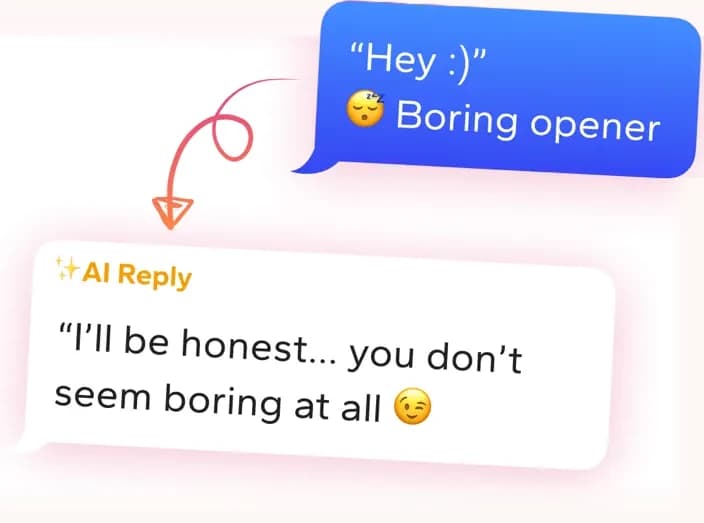
Get replies that sound like you
Screenshot the conversation in WingAI. It reads the vibe and gives you natural replies for this exact situation.
Try for freeReading the gap between read and reply
Look at the shape of the delay, not only its length. A message read instantly and answered four hours later is very different from one opened at noon and answered on Thursday. Check what else was going on. Was it a work crunch, a holiday weekend, or a night out? Compare the delay to how they usually behave with you. Someone who normally answers in an hour and now takes two days has changed something, even if the cause is dull. Someone who has always been slow and stays slow is simply slow. Your job is to spot changes in their own pattern, not to hold them to your personal reply speed.
Shaping a follow-up they can answer
A good follow-up reads like the conversation never stalled. Pick something concrete from what they last told you, a trip, a deadline, a show they mentioned, and ask a question with a short answer. Keep it to a line or two. Avoid referencing the silence, avoid apologizing for double texting, and skip anything that sounds like a test. If your first message was a big, open-ended one, narrow it down this time, because a person who skipped the long version may reply happily to a quick one. Choose a moment when they are likely free, like an evening, rather than mid-morning.
Deciding when to stop initiating
Give the follow-up a full day or two to land. If it is also read and ignored, stop sending messages, and do it without announcing it or going cold in a dramatic way. Just let the next move be theirs. This protects your time and gives you cleaner information, because a reply that arrives without prodding means more than one you coaxed out. If they resurface after a week with a casual hello and no explanation, you can choose how much enthusiasm to match. You are allowed to answer warmly, answer slowly, or not answer at all. Silence from them does not oblige you to wait indefinitely.
Common questions
- How long is too long to be left on read?
- Anything under a day is normal, and a couple of days once in a while is still unremarkable. It starts to matter when multi-day gaps repeat, or when they used to reply quickly and no longer do. One slow reply says little. A pattern across a week or two says more.
- Is being left on read a red flag?
- Not by itself. People read messages and forget, feel tired, or want time to answer well. It becomes worth taking seriously when it happens repeatedly, when their replies are consistently flat, and when they stay active elsewhere while skipping your messages. Judge the trend, not the single incident.
- Is it rude to leave someone on read?
- It depends on context. Skipping a casual message for a few hours is ordinary, and nobody is owed instant answers. It turns rude when someone asked a direct question or made a plan and gets silence for days with no acknowledgement. A quick one-line reply is easy enough that habitual silence tends to feel dismissive.
- How long should I wait after being left on read before texting again?
- Give it at least a full day, ideally the next evening. Then send one short, specific message that is easy to answer without referencing the silence. If that is also ignored, stop initiating and let them come to you. Waiting longer than a few days only wastes your own momentum.
Messages that backfire
“lol you literally read this 2 days ago”
It turns a quiet stretch into an accusation, so their next message, if any, will be defensive or a polite excuse instead of a real answer.
“No pressure at all, reply whenever you get a chance, even next week is fine!”
Handing over an open-ended deadline tells them there is no reason to answer soon, which makes another multi-day gap the easiest choice.
“Hey? Hello? Are you ignoring me? Did I say something wrong? Please just tell me”
A burst of follow-ups sent before a full day has passed reads as panic, and it hands them a heavy emotional task when they were already struggling to reply.
Where people go wrong
- Checking the read time repeatedly and counting minutes, which turns an ordinary delay into a story about rejection before there is any evidence for it.
- Sending a follow-up that mentions the read receipt or the silence, which pulls the conversation into an awkward discussion of the delay itself.
- Treating a single slow reply as proof of disinterest without comparing it to how quickly this person normally answers, or to what their week looks like.
From our users
“I was skeptical at first. Then I tried it on a dry chat and the replies actually sounded like me, not a chatbot.”
Mazoonx
“She went cold mid-week and I had no idea what to say. The reply I sent felt natural and she picked the chat back up.”
Marcus T.
Get replies that sound like you
Screenshot the conversation in WingAI. It reads the vibe and gives you natural replies for this exact situation.
Try for free