How to reply when he cancels but actually seems sorry
He canceled plans but apologized for real. Learn what his message signals and how to respond without letting him off too easy.
When someone cancels and actually apologizes, it's different from the brush-off cancel. The apology tells you he knows what he did, he's not hiding from it, and he probably wants to reschedule. That's the thing you're reading: does he actually want to fix this or is he just being polite?
Your reply has to do two jobs at once. It needs to show you're not angry or bitter about the cancellation itself. At the same time, it has to make clear that canceling has a cost. You're not a backup plan. If he's really sorry, he'll prove it by making the reschedule concrete and not flaking twice.
The move here is to stay neutral and slightly reserved, then hand the ball back to him. Don't accept the apology so eagerly that you erase what just happened. Don't ice him out either. Match his directness, accept it briefly, and then require him to actually do the next thing.
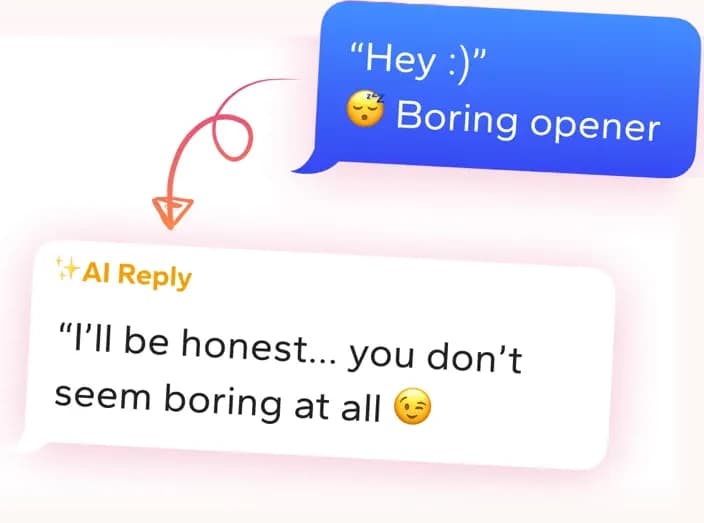
Get replies that sound like you
Screenshot the conversation in WingAI. It reads the vibe and gives you natural replies for this exact situation.
Try for freeRizz AI Screenshot the chat and get the next message for this person.
The difference between sorry and rescheduling
An apology by itself isn't a plan. He said he feels bad. That's step one. But someone who cancels plans and is actually sorry will immediately suggest a specific time to reschedule. If his message stops at "I'm sorry," he's actually putting the burden on you to figure out next steps. That's a red flag. A person taking accountability says "I'm sorry, I want to reschedule for Thursday." Watch for whether he's managing the fallout or handing it to you to manage.
Staying warm but not erasable
You want to show that you're not the type to punish someone for an honest mistake. But you also want to show that your time has value. The move is brief acceptance without over-reassurance. Don't write a paragraph about how it happens to everyone. Don't tell him it's totally fine or you weren't that excited anyway. Those are you minimizing what he did. Instead, acknowledge it in one line and redirect to what comes next. Short and matter-of-fact is the tone. It signals you're not dwelling on it, but you're not pretending it didn't happen.
Let him name the day, not you
After you reply, do not suggest a new time. Wait for him to do that. This is where you'll actually see if the apology meant something. Someone who's really apologetic will make the next plan concrete and doable. Someone who was just being polite will go quiet. If he doesn't reschedule within a day or two, the apology was habit, not intention. If he does reschedule and then cancels again, you know what time it is. But after the first real cancellation, he gets one chance to prove the apology was real by actually making it right.
Why these replies fail
“No worries at all! Honestly I totally understand, things come up. Let me know whenever works for you and we can figure something out.”
You've eliminated all consequence and moved the rescheduling work onto him by being too flexible, making you seem like you have no other plans.
“Cool. Well I guess we'll try this again sometime then.”
This reads as cold and punishing even though you're trying to be boundaried, and it doesn't actually acknowledge his apology, which makes you look resentful.
“Oh no, don't worry about it! These things happen. What happened anyway? And definitely let's reschedule soon!”
You're over-reassuring him, asking him to explain himself, and being vague about rescheduling instead of waiting for him to propose a concrete time.
Common mistakes
- Immediately reassuring him that it's fine, erasing the consequence of canceling
- Making the reschedule too easy by offering multiple times or flexible plans
- Responding hours later or seeming cold, which reads as punishing rather than boundaried
- Going silent instead of replying, leaving him guessing about where you stand
- Asking why he canceled instead of accepting it and moving forward
Questions people ask
- Should I ask him why he canceled?
- No. By accepting his apology without drilling into the reason, you're showing you trust him to handle his own life. If you ask why, you're asking him to convince you his reason was good enough. That puts him in a defensive position and wastes time. He knows why. Move forward.
- How long should I wait before he suggests a new time?
- One to two days. If he cancels and apologizes but doesn't suggest a reschedule within that window, he's not as invested as his apology made it seem. A person who actually wants to see you will have a next date in mind before he hits send on the apology.
- What if he cancels a second time?
- One real cancellation with a real apology is normal. A second cancellation, even with another apology, tells you his priorities don't include you. At that point, you can reply but do not reschedule. Apologize back and say you're going to focus on people who can follow through.
- Is it better to reply right away or wait a bit?
- Reply within a few hours while the conversation is still fresh, but not immediately. You want to show you're not sitting by the phone waiting for his message. Quick reply feels natural. Instant reply can feel like you were just waiting there.
What people say after using WingAI
“Used it for a couple hours and set up a date the same night. Not even kidding.”
Nikola2214
“She went cold mid-week and I had no idea what to say. The reply I sent felt natural and she picked the chat back up.”
Marcus T.
“I was skeptical at first. Then I tried it on a dry chat and the replies actually sounded like me, not a chatbot.”
Mazoonx
Get replies that sound like you
Screenshot the conversation in WingAI. It reads the vibe and gives you natural replies for this exact situation.
Try for free