Talking stage rules: what to do and avoid early dating
Master the talking stage. Learn what signals matter, how to reply right, and when to move toward commitment or walk away.
The talking stage is the window between first contact and exclusivity. It's when you're learning if someone is worth your time and if they actually care about you as a person, not just as someone to text when they're bored.
During this phase, consistency beats intensity. Someone interested will respond regularly and make plans. Someone stringing you along will disappear for days, reply one-word, or text only at night. Good replies during the talking stage move things forward, show real interest, and create reasons to actually meet or keep talking.
The biggest mistake is treating the talking stage like forever. It has a natural lifespan. If three or four weeks pass with no plans, no progression, and spotty replies, the talking stage is already over. You're just the person they text when bored.
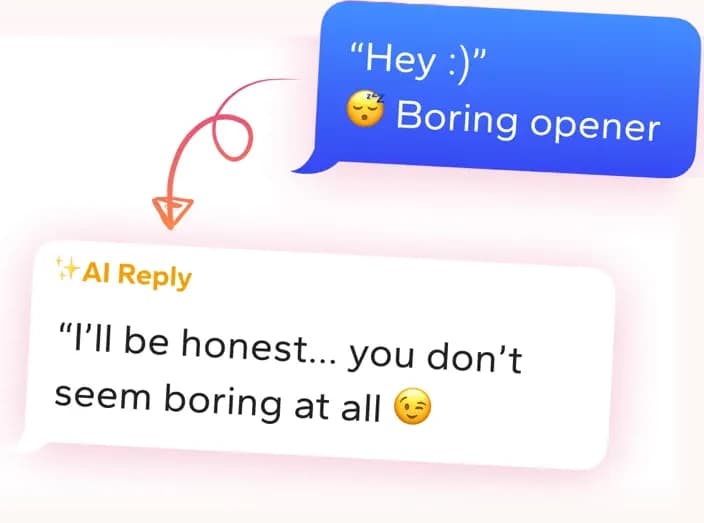
Get replies that sound like you
Screenshot the conversation in WingAI. It reads the vibe and gives you natural replies for this exact situation.
Try for freeRizz AI Screenshot the chat and get the next message for this person.
How to read interest levels during early texting
In the talking stage, interest shows up as consistency and speed. Someone who likes you replies within hours, not days. They ask you questions back. They remember things you said before. They make plans and follow through.
Low interest looks like: one-word replies, no questions asked back, going dark for three days then texting like nothing happened, canceling plans last minute, or only texting late at night. If someone is truly interested in you, they will find ways to talk to you and see you. They won't make you wonder where you stand.
Your reply needs to match their pace and add something
A good reply in the talking stage does two things. First, it answers what they asked and shows you actually read their message. Second, it gives them a reason to keep talking or moves toward meeting. Don't just answer with facts. Add a detail, a question, or a suggestion that keeps momentum going.
You're also setting the tone for how responsive you are. If they text you quickly and thoughtfully, match that energy. If you're slow and distant, they'll assume you're not that interested and will back off or start looking elsewhere.
The six week clock on the talking stage
The talking stage should move toward meeting within two to four weeks. By week six, if you haven't met and there's no solid plan, one person has lost interest or is keeping you as a backup option.
If you've been texting for three weeks with no date scheduled, stop waiting for the perfect moment. Suggest something specific and see what happens. Their response tells you everything. If they make it work, great. If they avoid it or cancel twice, accept that you're not a priority and redirect your energy.
Why these replies fail
“Thanks for asking! My weekend was good, pretty chill. How about yours?”
This is empty filler. You told them nothing real and gave them no reason to stay engaged.
“That's great! I was actually thinking about you today and wondering what you're looking for in a partner. What are your deal breakers?”
You're jumping three months ahead. Deep questions before you've met feel intense and put pressure on early conversations.
“*read at 2:47pm*”
Leaving someone on read signals disinterest and kills momentum, especially early on when you're both still testing the waters.
Common mistakes
- Waiting more than a day to reply, then acting casual about it
- Sending long, detailed messages before you've even met
- Asking deep questions on day two or three
- Replying only when you want something, not when they reach out
- Staying in the talking stage past six weeks with no plans to meet
Questions people ask
- How quickly should I reply during the talking stage?
- Aim for within a few hours on the day you see it, especially early on. You don't need to be instant, but if you're waiting 12+ hours to reply while texting others, she'll notice. Match her pace once you see what feels natural.
- Is it okay to text them every day in the talking stage?
- Yes, if the conversation is natural and they're responding. Daily texting is normal during the talking stage. But if you're texting with nothing new and they give one-word replies, you're talking too much.
- What should I avoid talking about too early?
- Avoid relationship history, past trauma, financial stress, and family drama in the first week or two. Keep early conversations light and about interests, what you do, and what you enjoy. Save deeper stuff for when you've met and have real chemistry.
- How do I know when to move from texting to asking them out?
- After 5-7 days of solid back-and-forth texting, suggest a specific time and place. You don't need to be friends first. The talking stage is meant to be brief. If the conversation feels easy and they're engaged, make a move.
- What if they go quiet for a few days then text like nothing happened?
- This usually means you're not a priority. One or two days is fine. Consistently ghosting for 3+ days then acting casual shows they're not managing the talking stage in good faith. You can respond, but adjust your effort down.
What people say after using WingAI
“I overthink every text. Having three options and picking the one that sounds like me cut that spiral short.”
Sam R.
“I was skeptical at first. Then I tried it on a dry chat and the replies actually sounded like me, not a chatbot.”
Mazoonx
“Didn't think it would be this good. The funny options actually get responses, which is wild.”
Nico_dang
Get replies that sound like you
Screenshot the conversation in WingAI. It reads the vibe and gives you natural replies for this exact situation.
Try for free