Golden Hour Dating Photos: Why Timing Your Shoot Matters
October 12, 2026 · WingAI
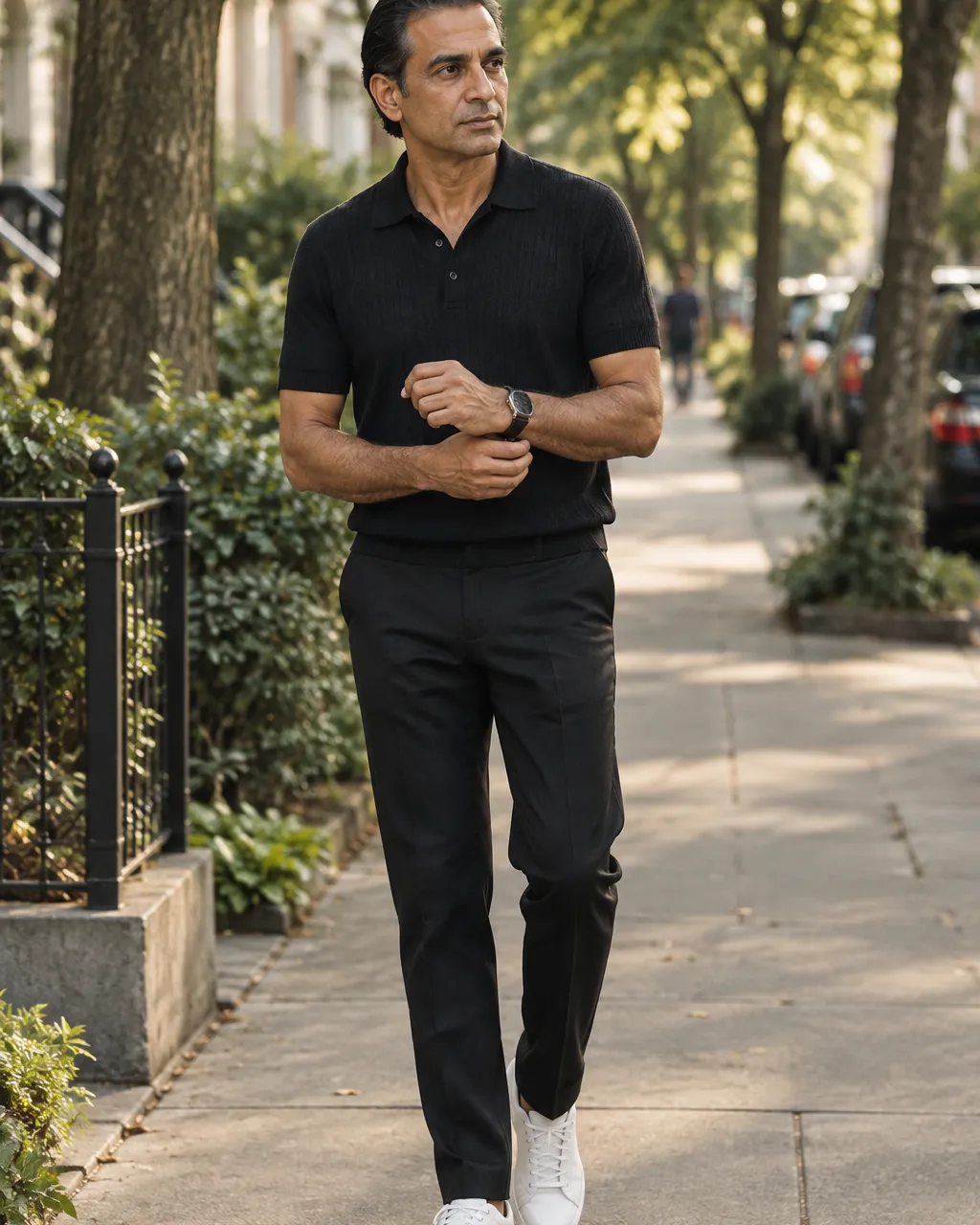
Learn how golden hour dating photos create flattering app images, when to schedule your shoot, what to wear, and how to plan locations.
Great dating photos are not only about what you wear or which location you choose. Timing can change the entire feel of your images. If you have ever seen a photo where the light looks warm, soft, and natural, there is a good chance it was taken around golden hour.
Golden hour dating photos work especially well because they feel polished without looking overly staged. The light is flattering on skin, easier on the eyes, and more forgiving than harsh midday sun. For dating apps, that matters. Your photos need to show your face clearly, communicate your style, and feel approachable in a quick swipe environment.
The goal is not to look like a model in a perfume ad. The goal is to look like yourself on a very good day.
 AI-generated style example, not a real client photo.
What Is Golden Hour?
Golden hour is the period shortly after sunrise or shortly before sunset when the sun sits low in the sky. The light is softer, warmer, and more directional than it is in the middle of the day.
For photography, this timing creates a few advantages:
- Softer shadows on the face
- Warmer skin tones
- Less squinting
- More depth in the background
- A more relaxed, cinematic mood
Golden hour is not exactly one hour everywhere. It depends on the season, your location, cloud cover, and whether your shoot is near tall buildings, trees, hills, or water. In winter, the best light may come and go quickly. In summer, you may have a longer window, but the sun can still be intense until it drops lower.
For dating photos, the most useful part of golden hour is often the final 45 to 75 minutes before sunset. Morning golden hour can also be beautiful, especially if you want quieter streets, empty parks, or a fresh, low-key look.
Why Golden Hour Works So Well for Dating Profile Photos
Dating profile photos have a different job than corporate headshots or fashion portraits. They need to feel attractive, but also real. They should show confidence without looking stiff. They should suggest what it might feel like to meet you in person.
Golden hour helps because it adds warmth and ease. Strong overhead sunlight can create dark shadows under the eyes and nose. It can make people squint, tense their forehead, or turn away from the camera. Indoor lighting can be tricky too, especially if it is dim, greenish, or too direct.
At golden hour, the light is lower and more flattering. A photographer can position you so your face is evenly lit, your eyes are visible, and the background has a natural glow. This is helpful for close-up shots, waist-up portraits, walking photos, and casual lifestyle images.
It also gives your dating profile variety. A good set can include a clear face-forward portrait, a relaxed seated shot, a walking image, and a social-feeling lifestyle frame, all in one session without changing locations too much.
Sunset vs. Sunrise: Which Is Better?
Both can work. The right choice depends on your schedule, energy, location, and the mood you want.
Sunset golden hour
Sunset is the most popular option because it fits naturally after work and often has a social, date-night feel. It works well for outfits like a fitted jacket, casual button-down, knit polo, chinos, leather sneakers, boots, or a clean going-out look.
Sunset sessions are great near cafes, residential streets, waterfront paths, parks, plazas, and neighborhoods with warm building textures. The tradeoff is that popular locations can be crowded, especially on warm evenings and weekends.
Sunrise golden hour
Sunrise can be underrated. The light is clean, the air often feels calmer, and locations are usually less busy. If you get nervous being photographed in public, sunrise can make the experience feel more private.
Morning light works especially well for a natural, active, or thoughtful profile: coffee in hand, walking through a quiet street, sitting on a bench, or wearing an elevated casual outfit. The tradeoff is simple: you have to be ready early. Hair, grooming, steaming clothes, and travel all need to happen before the shoot starts.
How to Plan the Timing of Your Shoot
A good golden hour shoot is planned backward from sunset or sunrise. If sunset is at 7:20 p.m., you usually do not want to arrive at 7:15. You want time to meet, settle in, test the light, adjust your outfit, and start with easier poses before the light becomes most dramatic.
A practical sunset schedule might look like this:
- Arrive 75 to 90 minutes before sunset
- Start with simple portraits in open shade or soft side light
- Move into warmer backlit photos as the sun drops
- Finish with the most atmospheric shots close to sunset
- If useful, take a few blue-hour photos just after the sun disappears
For sunrise, the schedule is tighter. You may start right at sunrise or a few minutes after, depending on the location and how quickly light reaches the area. In cities with tall buildings, the sun may not hit the street until later. In open parks, beaches, or rooftops, the light arrives faster.
Book your dating photo shoot →
Choosing Locations for Golden Hour Dating Photos
Location and light work together. A great location at noon may be difficult at sunset if the sun is blocked by buildings. A plain street can look beautiful when warm light hits brick, trees, or a textured wall.
Look for places with a mix of these elements:
- Open sky for soft, even light
- Trees or architecture for depth
- Clean backgrounds without visual clutter
- Places to sit, lean, walk, or pause naturally
- A nearby second look, such as a cafe exterior, park path, or quiet side street
You do not need a dramatic landmark. In fact, dating photos often work better when the setting supports you instead of competing with you. A bench, stoop, crosswalk, bookstore exterior, waterfront railing, or leafy path can be enough if the light is good and the composition is clean.
Avoid locations where the best angle points directly into heavy traffic, trash bins, harsh signage, or crowds. Also be realistic about public spaces. Some parks, rooftops, gardens, hotels, and private courtyards may require permission or have restrictions on professional photography. When in doubt, keep the setup simple and choose flexible public areas.
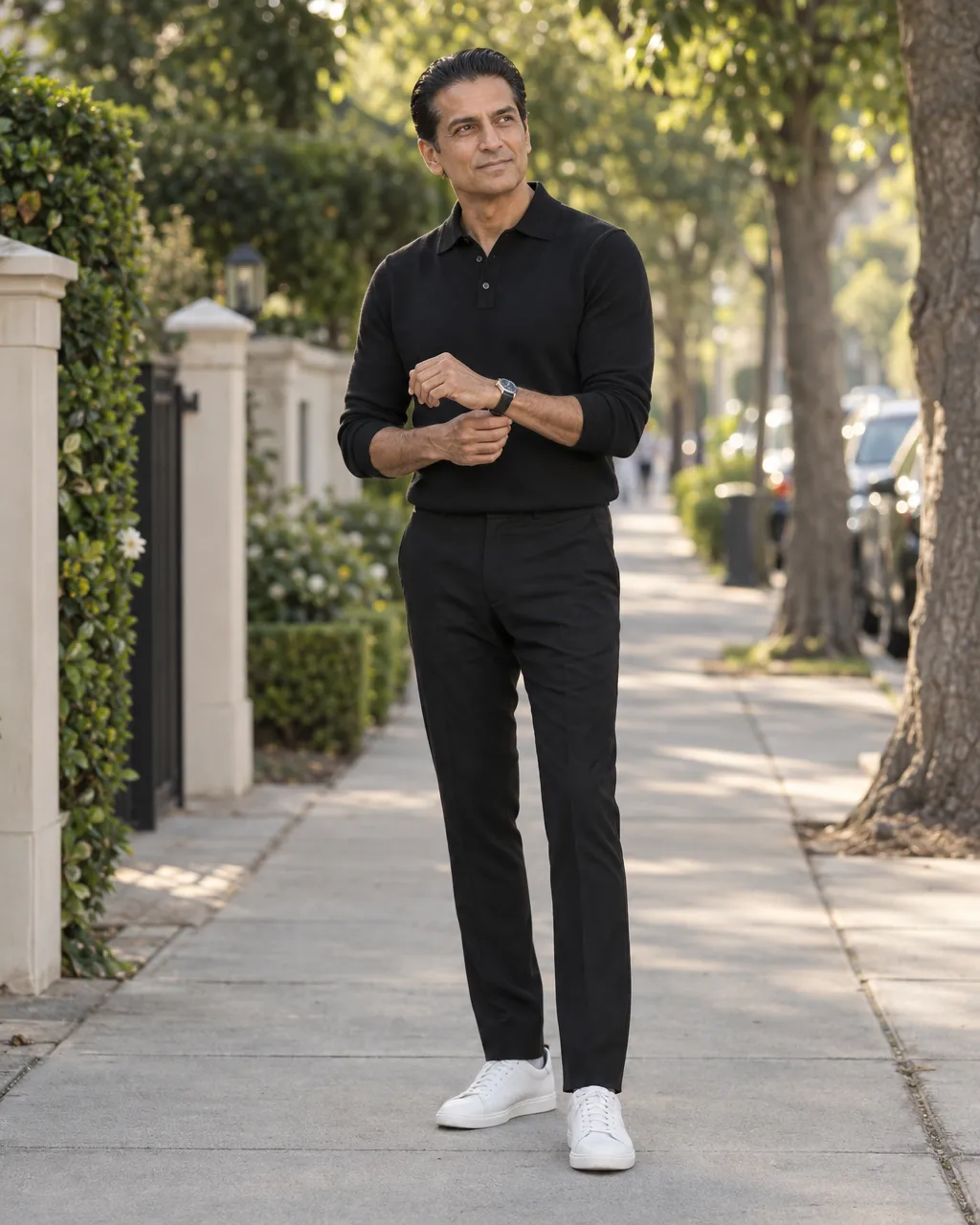
 AI-generated style example, not a real client photo.
What to Wear for Golden Hour Light
Golden hour is warm, so wardrobe choices should complement that warmth rather than fight it. You do not need to dress in beige or brown, but it helps to choose colors and textures that photograph well in soft sunlight.
Strong options include:
- Navy, cream, olive, rust, denim, charcoal, burgundy, forest green, and soft white
- Knitwear, suede, linen, denim, cotton, wool blends, and structured jackets
- Simple patterns like subtle stripes or small checks
- Clothes that fit cleanly through the shoulders, waist, and sleeves
Be careful with neon colors, tiny high-contrast patterns, large logos, and very reflective fabrics. They can pull attention away from your face. Pure white can look great, but it may need careful exposure in strong light. All-black outfits can work too, especially with texture, but they may lose detail if the background is dark.
Bring at least one layer. A jacket, overshirt, cardigan, or blazer gives you more variety without requiring a full outfit change. It also gives your hands something natural to do, which helps if you feel awkward posing.
Grooming and Skin Prep for Warm Light
Golden hour is forgiving, but it still shows detail. Keep grooming simple and intentional.
If you shave, do it early enough to avoid redness. If you keep facial hair, tidy the neckline and edges. For hair, choose a style that can handle a little wind, especially near water or open streets. Bring a comb, hair product, blotting papers, lip balm, and a lint roller.
Warm light can emphasize shine, so matte skin prep is helpful. It means reducing distractions so your face reads clearly on camera. A light, matte moisturizer or anti-shine product often photographs well.
Hydrate, eat something beforehand, and avoid rushing. A calm face photographs better than a stressed one.
Posing During Golden Hour
The best golden hour poses feel casual but guided. You should not have to know what to do with every limb. A good shoot gives you small prompts that create natural movement.
Try these simple actions:
- Walk slowly toward the camera, then glance slightly off to the side
- Lean against a wall with one knee relaxed
- Sit on a bench and angle your shoulders slightly away from the camera
- Adjust your jacket cuff or sleeve
- Hold sunglasses, a coffee, or a book if it fits your real life
- Look toward the light, then back to the camera
Your expression matters as much as the pose. Dating photos usually benefit from a mix: one clear smile, one softer half-smile, one confident neutral expression, and one candid-feeling movement shot. You want range without looking like different personalities in every photo.
Weather, Clouds, and Backup Plans
Golden hour does not require a perfectly clear sky. Light cloud cover can be excellent because it diffuses the sun and makes skin tones even. Partly cloudy evenings can create dramatic shifts in light, so flexibility helps.
The bigger issues are heavy rain, strong wind, extreme heat, and very dark overcast conditions. If the forecast is uncertain, plan locations with cover nearby: awnings, covered walkways, building overhangs, transit shelters, or indoor-adjacent areas with window light.
Wind can be useful in small amounts, but it can also make hair and clothing hard to manage. Bring a backup hairstyle option, a comb or hair product, and avoid outfits that need constant adjustment.
In colder months, golden hour may happen during the workday or late afternoon. Build in travel time and wear warm layers between shots. In summer, sunset may be late, so eat before the shoot and avoid arriving overheated.
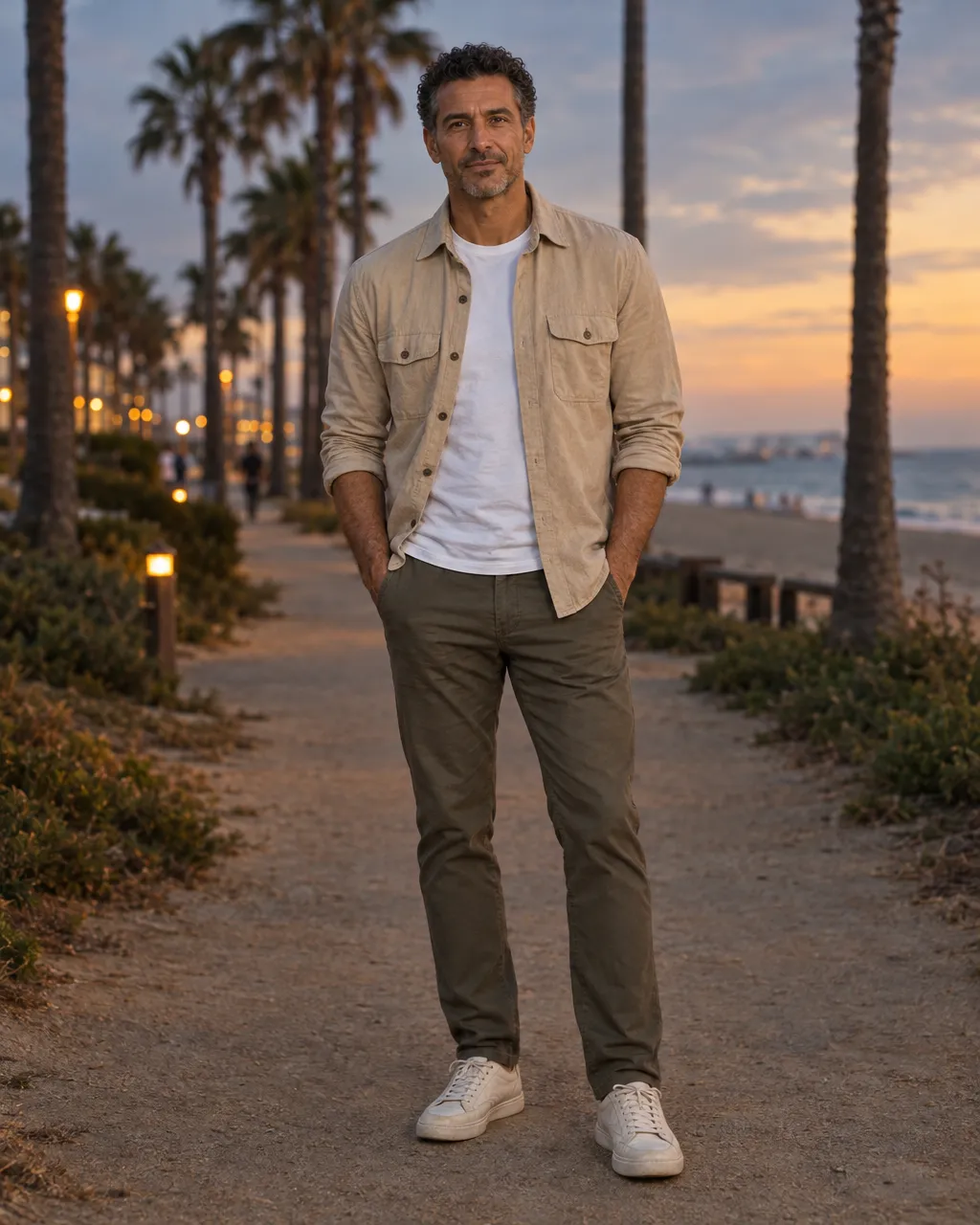 AI-generated style example, not a real client photo.
Common Mistakes to Avoid
The first mistake is starting too late. If you wait until the sun is already touching the horizon, you may only have a few usable minutes. Arrive early enough to warm up and get safe shots before the best light peaks.
The second mistake is choosing a location only because it is pretty. Pretty does not always mean practical. If the spot is packed, windy, restricted, or full of distracting backgrounds, it may not serve your profile.
The third mistake is wearing something brand new that you have never tested. Dating photos involve sitting, walking, turning, and close-up framing. Wear clothes that fit well from multiple angles and make you feel like yourself.
The fourth mistake is trying to force every photo to be dramatic. A dating profile needs clarity. The most useful photo may be a simple, well-lit portrait where your face is easy to see.
How to Use Golden Hour Photos on Your Dating Profile
Once you have your images, choose a profile lineup that feels balanced. Your first photo should usually be a clear, friendly image of your face. Golden hour is great for this because it can look polished while still feeling natural.
After that, include variety. A strong set might include:
- A close portrait with eye contact
- A waist-up lifestyle shot
- A walking or movement photo
- An outfit variation or layered look
- A photo that hints at your environment or interests
Avoid using five photos from the exact same angle and location, even if the light is beautiful. Dating profiles work best when the photos feel connected but not repetitive.
A Simple Golden Hour Shoot Checklist
Before your shoot, confirm:
- Sunset or sunrise time
- Meeting point and backup location
- Outfit one and optional layer
- Grooming kit and lint roller
- Comfortable shoes for walking between spots
- Weather plan
- Any location rules or restrictions
- Enough buffer time so you are not rushed
If you are planning this yourself, the most important thing is to respect the light. Golden hour moves quickly. Know where you want to start, where you can move next, and which photos matter most.
If you want help planning the timing, locations, and overall look, the intake form can help match the shoot plan to your goals, schedule, and dating profile needs.
Book your dating photo shoot →
FAQ
Are golden hour dating photos better than midday photos?
Often, yes. Golden hour light is usually softer and more flattering than direct midday sun. Midday can still work in open shade or urban areas, but golden hour makes it easier to create warm, natural-looking portraits.
How long before sunset should a dating photo shoot start?
A good rule is to start 75 to 90 minutes before sunset. This gives you time to get comfortable, capture clean portraits, change layers if needed, and use the best light as it develops.
What if it is cloudy during golden hour?
Clouds are not automatically a problem. Light cloud cover can be very flattering. Heavy clouds may reduce the warm glow, but you can still get soft, natural dating photos if the location and exposure are handled well.
Should I do sunrise or sunset photos for my profile?
Choose sunrise if you want quieter locations and a fresh, calm feel. Choose sunset if you want warmer, more social, evening energy. Both can work well for dating apps.
What should I avoid wearing for golden hour photos?
Avoid large logos, neon colors, overly shiny fabrics, and clothes that wrinkle easily or need constant fixing. Choose outfits that fit well, feel like you, and keep attention on your face.
Images on this page are AI-generated style examples showing lighting, framing and settings. They are not photos of real clients.