How to reply to 'I miss you' at every relationship stage
Texting responses to 'I miss you' vary by stage. Early dating needs different moves than exclusive or long-term relationships.
'I miss you' lands differently depending on where you are. Three weeks in, it signals something. Three months in, it might mean something else. The message itself is straightforward, but your reply has to match the relationship's actual temperature and momentum, not what you hope it will become.
A good reply does two jobs at once. It answers her statement honestly without overcommitting to a stage you haven't reached. It also moves the interaction forward, either by creating a reason to meet or by deepening the conversation in a way that fits where you are.
The timing and context matter as much as the words. Sending back a mirror reply at 11pm reads different than a thoughtful one sent the next morning. And if she sends this message when you've been spacing out on texting, your response has to address that reality.
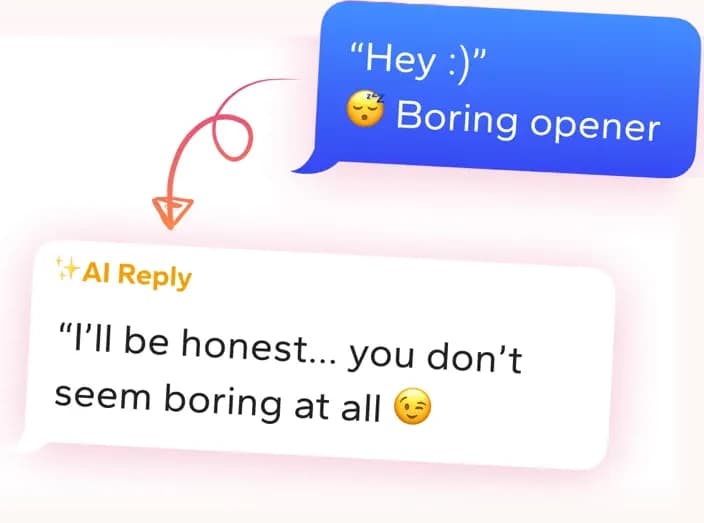
Get replies that sound like you
Screenshot the conversation in WingAI. It reads the vibe and gives you natural replies for this exact situation.
Try for freeEarly dating and the 'I miss you' surprise
In the first month, this message usually means she's thought about you unprompted and decided to say so. That's meaningful. But it doesn't mean you're exclusive or that she's made a long-term bet on you yet. She's testing the waters and gauging how you'll handle the vulnerability.
Read it as interest and forward momentum, not as a relationship declaration. The fact that she sent it at all matters more than the exact wording. Most people don't send 'I miss you' before they've felt it a few times.
After months in and the shift to real feeling
Once you've been seeing each other regularly for two or three months, 'I miss you' usually means she's settled into real attachment. She's not testing the waters anymore. She's saying something she feels when you're apart, which is different from early dating where the feeling is newer and more uncertain.
At this stage, the message often comes with an implicit ask. She wants reassurance that you feel similarly, or she wants to see you soon. Your reply should name that directly rather than dodge it.
In relationships and the question underneath
If you're exclusive or have defined the relationship, 'I miss you' still carries weight, but it often masks something else. Maybe she's had a bad day and needs to feel connected. Maybe you've been too busy with work and she's feeling the distance. Maybe she's testing whether you'll step up and make plans.
Hear the message, but also ask yourself what prompted it. Is it random, or does it follow a period of less contact? Your response should acknowledge both the feeling and the context.
Why these replies fail
“I miss you too”
It's a reflex that doesn't prove you felt it. It reads like you're matching her energy because you felt obligated to, not because it's true.
“That's sweet. What are you up to?”
You acknowledge her vulnerability and then immediately change the subject, which signals discomfort and makes her regret opening up.
“Can't wait to see you soon. When are you free this week?”
It jumps to logistics before recognizing what she said, which makes the message about your schedule instead of about her.
Common mistakes
- Mirroring 'I miss you' back immediately, which feels obligatory instead of felt
- Over-reassuring with 'I miss you too' when the real work is making time to see her
- Waiting days to respond because you're unsure of the stage or scared of seeming too keen
- Replying only with logistics ('When can we hang?') without acknowledging what she said
- Sending a long emotional paragraph when a short, grounded response would feel better
Questions people ask
- Should I say 'I miss you too' right away?
- Only if it's true and you send it with a specific thought attached. A memory, something that reminded you of her, when you want to see her. By itself, 'I miss you too' sounds like a response to a script. Add context or follow with a concrete reason to connect.
- What if I'm not sure how serious she is about me yet?
- Respond honestly without overstating your own feelings. You can say something real about enjoying time with her or looking forward to seeing her. You don't have to match her emotional temperature if it doesn't fit the stage. Honesty here is better than false reciprocation.
- Is it bad to wait a few hours before replying?
- Not if you're actually doing something. Waiting hours because you're nervous reads differently than waiting a few hours because you were working or out with friends. If you're sitting with it because you're unsure how to respond, that delay will show. Reply once you know what you want to say.
- What do I do if she says 'I miss you' and I'm not feeling the same way yet?
- Don't lie. You can be warm and honest. 'I really like spending time with you' or 'I've been thinking about you' can be true without forcing 'I miss you' if it's not where you are. Real responses build more trust than false emotion.
- Should I always suggest a meetup after she says 'I miss you'?
- Only if it makes sense timing-wise. If you just hung out, trying to nail down plans immediately can feel pushy. Sometimes the right move is to deepen the conversation first and then suggest a time. Read the context, not just the text.
What people say after using WingAI
“I overthink every text. Having three options and picking the one that sounds like me cut that spiral short.”
Sam R.
“She went cold mid-week and I had no idea what to say. The reply I sent felt natural and she picked the chat back up.”
Marcus T.
“I was skeptical at first. Then I tried it on a dry chat and the replies actually sounded like me, not a chatbot.”
Mazoonx
Get replies that sound like you
Screenshot the conversation in WingAI. It reads the vibe and gives you natural replies for this exact situation.
Try for free