She says she's okay but you know something's wrong
Get a reply you can send tonight, without overthinking it.
When she claims everything is fine but her tone or behavior says otherwise, here's how to reply without pushing her away or letting it slide.
When someone says 'I'm okay' or 'It's fine' but their energy, word choice, or context tells you otherwise, you're picking up on a real signal. Maybe she's short with you. Maybe she went quiet after something happened. Maybe her texts got formal or sparse. Your instinct that something is off is often correct.
The trap is that a direct 'Are you sure?' or 'You don't seem okay' puts her on the defensive. She either doubles down on the lie or resents you for pushing. The other trap is dropping it entirely and letting resentment build on her end.
A good reply shows you noticed the gap between what she said and what you're sensing, but gives her room to come clean without feeling interrogated. It signals you care and you're paying attention, while respecting that she might not be ready to say what's really going on.
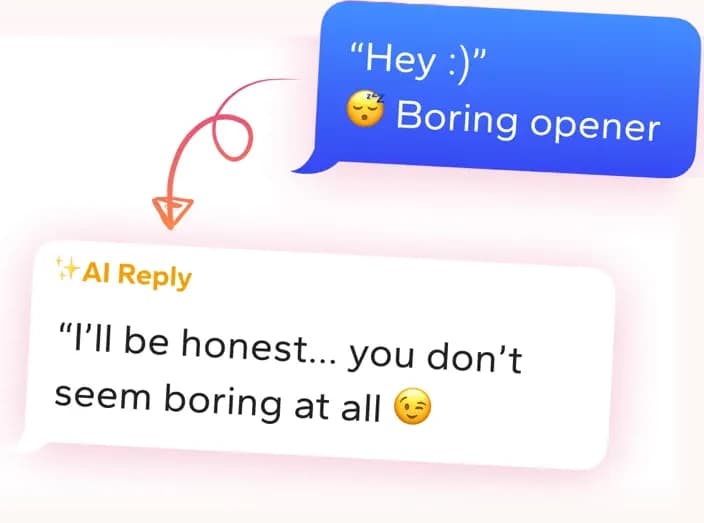
Your reply for this exact chat, tonight, in your own words
Take the 2-minute quiz. WingAI learns how you text and writes replies that sound like you, not like AI.
“I was skeptical at first. Then I tried it on a dry chat and the replies actually sounded like me, not a chatbot.”
First week free. Cancel anytime.
The gap between her words and her tone
When someone says they're fine but their texts are short, their energy dropped, or they're responding slower than usual, they're telling you two different stories. The words are the safe answer. The tone is the truth.
Pay attention to what changed. Did she go from texting you paragraphs to one-liners? Did she stop using her normal language or emojis? Did something happen right before she claimed everything was okay? Did she seem upset in person but then text you that she's fine? These details matter because they tell you whether she's tired, annoyed at you, stressed about something else, or pulling back. The feeling is real even if the words are a deflection.
Acknowledge the signal without demanding the truth
Your reply needs to do two things at once. First, show her you noticed the disconnect between what she said and what you sensed. Not in a 'gotcha' way, but like you're paying attention. Second, give her an opening to talk without forcing her hand.
The move is to name what you're observing, short texts, quiet energy, a shift in how she's talking to you. Then step back. Say something like 'I know you might not want to talk about it right now' or 'No pressure if you're not ready.' This tells her you see something is off, you're not buying the lie, and you're not going to interrogate her. It's an invitation, not a demand. She can either take it now or come back to it later, and either way you've shown you care enough to notice.
Wait for her to fill the silence, then decide if you push
Send your reply and then do nothing. Don't follow up immediately. Don't send a string of messages trying to get her to open up. Give her at least a few hours, ideally until the next day, to respond.
If she comes back and actually tells you what's wrong, that's your signal to listen and be useful. If she doubles down on 'I'm fine,' you have a choice. You can drop it once, maybe twice. But if this becomes a pattern where she shuts you out every time something bothers her, that's different. At that point you're not being pushy by bringing it up. You're setting a boundary about what kind of relationship you're building. If she won't let you in, you can't move forward.
Why these replies fail
“Are you sure? You don't really sound fine to me”
Calling her out directly makes her feel busted and defensive, so she'll either retreat further or get annoyed that you're 'reading into things.'
“Okay babe, I'm here for you whenever you need me”
This puts pressure on her to open up and makes it about reassuring you that she trusts you, rather than actually addressing what's wrong.
“Did I do something? Just tell me if I did”
Centering yourself makes the conversation about your worry instead of her problem, and it often guilt-trips her into comforting you.
Common mistakes
- Immediately pushing: 'You don't sound fine' or 'What's actually going on' feels like an interrogation and makes her clam up more.
- Accepting it flat: Saying 'okay, cool' signals you didn't notice or don't care, which breeds distance and silent frustration.
- Over-reassuring: Jumping to 'I'm here for you, you can tell me anything' comes off as needy and puts pressure on her to open up.
- Making it about you: 'Did I do something wrong?' shifts the focus away from what she needs and makes her comfort your priority.
- Bringing it up much later: Waiting days to circle back signals it wasn't important to you in the moment.
Questions people ask
- Should I call her instead of texting about this?
- Only if you two normally talk on the phone and it feels natural. A call can come across as urgent or dramatic if texting is your default. A text gives her room to answer when she's ready. Save the call for if she keeps avoiding the conversation over multiple days.
- What if she gets mad that I don't believe her?
- That's a sign she's not ready to talk about it yet. Don't argue or defend yourself. Back off for now. If she's actually fine and you're wrong, she'll move past it quickly. If something is actually bothering her, she'll circle back when she feels safer.
- How many times can I bring this up before I look clingy?
- Once clearly, maybe a soft second time days later if nothing changed. After that, you're nagging. If she consistently won't let you in after you've shown you noticed and you care, that's a relationship issue to address directly, not something to hint at repeatedly.
- What if she says she's fine and I believe she actually means it?
- Then you were wrong about the signal and that's okay. Let it go. But if you're second-guessing yourself, there probably is something there. Trust your read. If you respond in a way that opens a door without demanding answers, you haven't lost anything.
It doesn't sound like a bot
“I overthink every text. Having three options and picking the one that sounds like me cut that spiral short.”
Sam R.
“I'm busy and half the profiles give you almost nothing to work with. WingAI gets me a solid first line fast without me staring at the screen for ten minutes.”
Ralph
“I always freeze on the first sentence. This gets me past that blank box so I actually hit send.”
joejoe4567
Your reply for this exact chat, tonight, in your own words
Take the 2-minute quiz. WingAI learns how you text and writes replies that sound like you, not like AI.
Try for freeFirst week free. Cancel anytime.