What to text her when she's upset with you
How to reply when she's mad or hurt. Read what her message actually means, then respond in a way that counts.
When she texts you upset, she's signaling something broke in how she feels about you or the situation. Her message is a test: can you take it seriously, or will you deflect, minimize, or turn it around on her?
A good reply does two jobs at once. It shows you understand why she's upset (not why you think she should be, but why she actually is). And it moves toward fixing the thing itself, not just the mood. You're not trying to cheer her up. You're trying to address what made her upset in the first place.
Timing matters here. Send it soon enough that she knows you read it, but not so fast it looks like you're panicking or trying to rush past the problem. And be ready for silence. Sometimes she needs space before she can talk, and that's not a rejection.
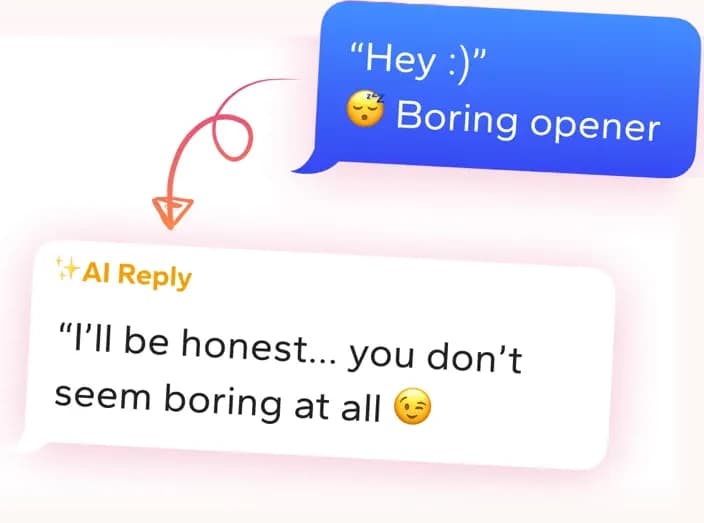
Get replies that sound like you
Screenshot the conversation in WingAI. It reads the vibe and gives you natural replies for this exact situation.
Try for freeShe's telling you that you made her feel unsafe or unseen
She's not just frustrated. She's telling you that your action or absence affected how safe or valued she feels around you. Pay attention to what she calls out, not what you think the real issue is.
If she says you didn't remember something, the upset isn't about the calendar detail. It's about whether you think she matters enough to hold in your head. If she says you made her feel embarrassed, she's not fishing for reassurance. She's saying her reputation or dignity took a hit because of something you did or didn't do. Read the actual feeling she named, not the story you'd tell about it.
Reflect back what she said before you apologize or explain
Start by showing you get why it landed the way it did. Not an apology yet, just a reflection. Say back what she said in your own words, and name the feeling she's describing. This stops her from having to repeat herself or defend why she should be upset.
Then own your part directly. No 'but I was busy' or 'I had reasons.' Just what you did and that it mattered. Finally, signal what changes. Not a promise to be perfect, but something concrete about how you'll handle this kind of thing next time. The order is important: acknowledgment, ownership, then direction forward.
Send your response within hours when you can focus fully
Send it within a few hours of her message, while it's still clear you took it seriously. Don't send it at midnight or in between things. Make it the thing you're focused on.
She might not reply right away, and that's okay. She could need time to cool down or to see if your actions match what you said. Don't follow up immediately asking if she's okay or whether she forgives you. Let her come back when she's ready. If it's been days and she's gone cold, one simple check-in after 48 hours works: 'I meant what I said.' Then stop. If she doesn't respond after that, you've done the work. The rest is on her.
Why these replies fail
“Hey I'm sorry you feel that way, I definitely didn't mean to upset you”
It centers your intent instead of her experience. She didn't say you meant it badly, she said you hurt her. This reads like you're asking her to absolve you.
“I get it, I was late, it happens though. We've all had rough days”
You're explaining your side before you've actually admitted the impact. It sounds like you're already moving on, not staying with what you broke.
“I'm sorry, I'll do better. Can we move past this?”
Too fast. You haven't shown her you understand what happened or why it mattered. She'll feel like you're just trying to end the conversation, not fix anything.
Common mistakes
- Explaining why you couldn't make it before acknowledging that you let her down
- Telling her she's overreacting or that it wasn't that big a deal
- Sending a joke or meme to lighten the mood instead of addressing what happened
- Going silent because you're not sure what to say
- Turning it into a conversation about your feelings instead of hers
Questions people ask
- Should I call instead of texting?
- Only if you've already texted a real response and she hasn't replied or asked to talk. Starting with a call can feel like you're bypassing what she needs to say. Text gives her space to collect her thoughts. A call works after she's had time to breathe.
- What if I didn't know she'd be upset?
- That doesn't matter right now. She's telling you that it did upset her, so it matters now. Save the 'I didn't know' for after you've acknowledged the actual impact. Right now, focus on understanding why it landed the way it did, not defending why you didn't predict it.
- How long should I wait for her to respond?
- Give it 24 to 48 hours before you send anything else. If she's truly done and not answering, pushing harder makes it worse. One follow-up after two days is the limit. After that, you're in her court. She knows how to reach you.
- Is it bad if I need to ask her to explain what upset her?
- Not if you really don't understand. But ask it as a real question, not defensively. Say something like 'I want to make sure I understand what hit you about this.' Then listen without interrupting or explaining yourself back.
What people say after using WingAI
“She went cold mid-week and I had no idea what to say. The reply I sent felt natural and she picked the chat back up.”
Marcus T.
“I overthink every text. Having three options and picking the one that sounds like me cut that spiral short.”
Sam R.
“I was skeptical at first. Then I tried it on a dry chat and the replies actually sounded like me, not a chatbot.”
Mazoonx
Get replies that sound like you
Screenshot the conversation in WingAI. It reads the vibe and gives you natural replies for this exact situation.
Try for free