What to text a girl going through personal stuff
Get a reply you can send tonight, without overthinking it.
How to reply when she mentions she's dealing with something difficult. Build trust without being pushy or awkwardly cheerful.
When a girl tells you she's going through personal stuff, she's opened a door but set a boundary at the same time. She's trusting you with something real, but she probably doesn't want advice, cheerleading, or heavy questions right now. The moment matters because how you respond either deepens the connection or makes things awkward.
A good reply does two things: it shows you heard her without making the conversation about her problems, and it keeps the door open for her to share more if she wants to. You're not trying to fix anything or prove you're different from other guys. You're just being steady.
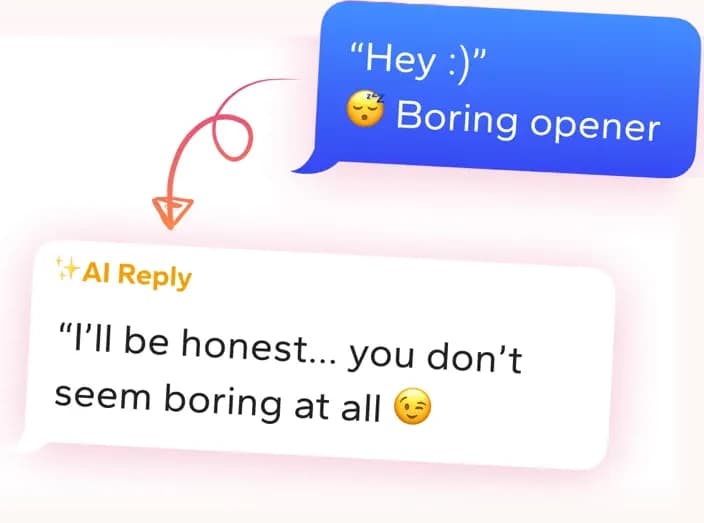
Your reply for this exact chat, tonight, in your own words
Take the 2-minute quiz. WingAI learns how you text and writes replies that sound like you, not like AI.
“I was skeptical at first. Then I tried it on a dry chat and the replies actually sounded like me, not a chatbot.”
First week free. Cancel anytime.
She's testing the water, not asking for rescue
When someone mentions personal stuff early on, they're usually checking how you react to real problems. They're not necessarily asking you to be their therapist. She might bring it up once and then move on. Or she might open up more over time. What matters right now is that you don't flinch or disappear.
Read her tone. If she sounds matter-of-fact, she's probably not spiraling and doesn't want sympathy. If she sounds stressed, acknowledge it without turning the conversation into a support session. Either way, the message is: I can handle this, and I trust you enough to mention it.
Keep it brief and leave space for her to decide what's next
Your reply should be short. One or two sentences max. Acknowledge what she said without drilling into the details. Something that shows you heard her, then either move forward or wait for her lead.
The second part matters. Don't ask 'What happened?' or 'Are you okay?' unless the situation is alarming. Those questions make her feel obligated to explain or reassure you. Instead, say something that lets her bring it up again if she wants to. After your reply, it's okay to change the subject naturally, or to just leave the conversational door open and see what she does.
Send it within a few hours, then hold back
Reply soon enough that it doesn't feel like you're ignoring what she said. A few hours is fine. Don't wait until tomorrow like you're thinking about a strategic moment. Just send it when you see the message.
After that, step back. If she doesn't reply, don't follow up for at least a few days. She might be dealing with something that requires her focus. Don't interpret silence as rejection. If she comes back with more details, great. If she doesn't, respect that. The goal is to stay in the picture without becoming another thing she has to manage.
Why these replies fail
“Oh no, that's rough. What's going on? I'm here for you if you need to talk about it.”
Too eager to be her emotional support person. This puts pressure on her to either explain everything or manage your helpfulness.
“That sucks. But hey, you'll get through it! Things always work out.”
Dismisses what she said by jumping to forced optimism. Signals you don't actually want to hear about her problems.
“[no response]”
Silence makes it seem like you're uncomfortable or judging her. She'll feel weird about having mentioned it at all.
Common mistakes
- Asking too many follow-up questions that make her feel like she has to explain everything
- Pivoting immediately to something cheerful or funny, which signals you don't want to hear about it
- Saying 'I'm here for you' or similar phrases that promise emotional labor you may not be ready to deliver
- Treating it like a crisis when she might just be venting and moving on
- Going silent instead of replying, which reads as judgment or discomfort
Questions people ask
- Should I ask her what's going on?
- Not in the first reply. If she wants to tell you, she will. Asking upfront puts her in a position where she either has to overshare or let you down. If it naturally comes up later or she volunteers details, then you can listen and ask follow-ups.
- What if she doesn't reply to my text?
- Give it time. She might be dealing with something that takes her attention. Don't assume she's ignoring you. Wait several days before sending another text, and when you do, keep it light and unrelated to what she mentioned. Let her re-enter the conversation on her own terms.
- How long should I wait before asking her out?
- Don't change your plans because of what she said. If you were planning to ask her out, do it when the moment feels right in your normal texting flow. If she's really overwhelmed, she'll let you know and reschedule. Tiptoeing around her or delaying everything can actually make things awkward.
- Is it wrong to change the subject right after?
- No. A short acknowledgment followed by moving forward is often exactly what she wants. It shows you can handle her having a real life without making it weird. She'll appreciate that you're not treating her like she's fragile.
It doesn't sound like a bot
“I overthink every text. Having three options and picking the one that sounds like me cut that spiral short.”
Sam R.
“She went cold mid-week and I had no idea what to say. The reply I sent felt natural and she picked the chat back up.”
Marcus T.
“Used it for a couple hours and set up a date the same night. Not even kidding.”
Nikola2214
Your reply for this exact chat, tonight, in your own words
Take the 2-minute quiz. WingAI learns how you text and writes replies that sound like you, not like AI.
Try for freeFirst week free. Cancel anytime.