What to Text a Girl Who's Been Hurt and Scared to Open Up
How to reply when she tells you she's been hurt before and struggles to trust. Build safety without pushing.
When a woman tells you upfront that she's been hurt or has trouble opening up, she's doing two things at once. She's giving you context for her own behavior, and she's testing whether you'll respect that boundary or try to convince her out of it. This is sensitive ground.
A good reply doesn't ignore what she said and doesn't try to fix it. It shows you heard her, that you're not going to rush her, and that you're not threatened by her caution. The goal is to make her feel safer moving forward, not to prove you're different from whoever hurt her before.
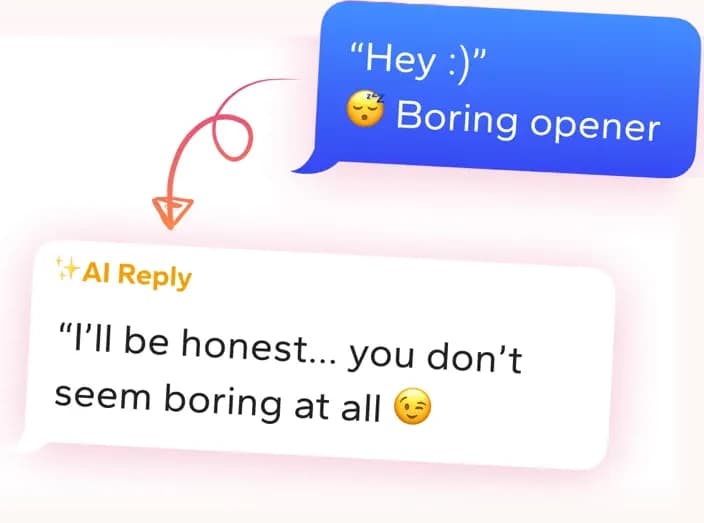
Get replies that sound like you
Screenshot the conversation in WingAI. It reads the vibe and gives you natural replies for this exact situation.
Try for freeShe's setting a boundary, not rejecting you
When she brings up past hurt, she's usually saying 'I like this, but I need to move at my pace.' This is actually a positive signal because she's being honest instead of ghosting or putting walls up silently. The fear she's naming is real, but naming it means she's already thinking about lowering it with you.
Read this as her showing you how to treat her right, not as a warning that you're doomed. If she was completely closed off, she wouldn't tell you this. She's giving you a map.
Acknowledge without taking the weight
Your reply needs to do two things. First, show you actually heard what she said and that it matters. Don't rush past it or minimize it. Second, signal that you're not going to pressure her or make her trauma your project. You're here to move at her speed, which means you're also implicitly saying you can handle it.
The move is simple: name what she said, confirm you're on board with slow, and then move forward normally. Don't dwell on the hurt part. Don't ask questions about what happened. Just demonstrate through your next action that slow is fine with you.
Stay consistent and match her pace for weeks
After she tells you this, the follow-up matters more than the reply. She's watching to see if you actually mean it. If you back off completely, she'll think you rejected her. If you suddenly push harder, you've lied. You need to stay steady, show up regularly, but don't jump levels of intimacy or seriousness.
If she goes quiet for a few days, wait before double-texting. If conversations are light, don't force depth. If she shares something small, don't treat it like you've earned full access. Over the next few weeks, she'll gradually test whether you keep your word. Consistency here is the only real reassurance that works.
Why these replies fail
“Hey, I totally get it. I promise I'm not like the other guys. I would never hurt you.”
Makes it about proving yourself instead of respecting her pace, and puts pressure on her to believe you immediately.
“That's okay, we can go as slow as you want. No rush at all.”
Sounds like you're doing her a favor and implies moving slow is a temporary compromise, not how you'll actually treat her.
“I'm sorry that happened to you. Do you want to talk about what went wrong in your past relationships?”
Treats her vulnerability like an invitation to dig into her trauma, which pushes intimacy too fast and makes it about her pain, not about you two.
Common mistakes
- Saying 'I'm different' or 'I would never hurt you', makes it about reassuring you, not about her pace
- Going quiet to give her space, she told you this because she wanted connection, not silence
- Pushing for more openness too soon, invalidates the boundary she just set
- Over-explaining your good intentions, comes across as defensive
- Treating it like a problem to solve rather than information she's sharing
Questions people ask
- Should I acknowledge what she said or just move on like normal?
- Acknowledge it briefly and directly, then move on. Ignoring it signals you didn't care enough to hear her. Over-discussing it suggests you're uncomfortable or trying to fix her. A simple 'I hear you, and I'm happy to take this however you need' does the job. Then text her normally about other things.
- How long should I wait before asking her out or trying to meet up?
- Let her set the pace after she tells you this. If she suggested taking things slow, that's her way of saying she'll tell you when she's ready. Don't disappear, but don't push for a date either. If she seems comfortable after a week or two, you can suggest something low-pressure. Let her move toward you.
- What do I do if she stops replying after opening up?
- Wait at least three days before sending another message. She might be spiraling or testing whether you're still there. When you do reach out, make it casual and normal, not about the heavy thing she said. If she stays silent for a week, send one more light text. After that, let it go. Some people aren't ready, and that's not your fault.
- Is it okay to ask her what happened or who hurt her?
- Not unless she brings it up again. She told you enough for you to understand. Asking for details makes it about her past instead of your future together. If she wants to tell you more, she will. Your job is to show her the relationship feels safe by not interrogating her.
What people say after using WingAI
“I was skeptical at first. Then I tried it on a dry chat and the replies actually sounded like me, not a chatbot.”
Mazoonx
“My openers used to be boring. Now I reference something from her profile and people actually write back.”
Aiden K.
“She went cold mid-week and I had no idea what to say. The reply I sent felt natural and she picked the chat back up.”
Marcus T.
Get replies that sound like you
Screenshot the conversation in WingAI. It reads the vibe and gives you natural replies for this exact situation.
Try for free