What to comment on her Instagram when she's sad
Get a reply you can send tonight, without overthinking it.
How to comment on a sad post without being weird, generic, or pushing too hard. Read the situation and reply the right way.
When she posts something sad, angry, or vulnerable on Instagram, it's a signal. She's either processing something out loud, testing who shows up, or both. A comment is public, so it lands different than a DM. You have maybe one sentence to not make it awkward.
A good comment does two things at once: it shows you actually read what she wrote (not just the vibe), and it doesn't pretend to be closer than you are. You're not her therapist. You're not her best friend. You're someone who noticed and isn't afraid to say something real instead of a sad emoji.
The move is specific, brief, and warm without being heavy. It opens a door but doesn't force her to walk through it right now.
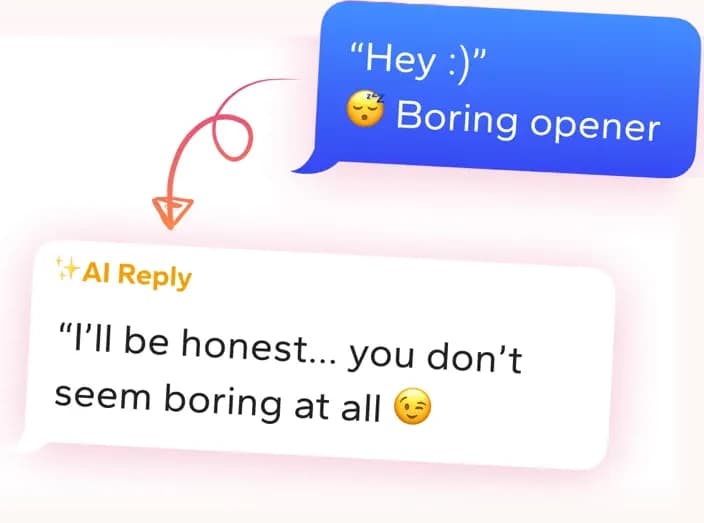
Your reply for this exact chat, tonight, in your own words
Take the 2-minute quiz. WingAI learns how you text and writes replies that sound like you, not like AI.
“I was skeptical at first. Then I tried it on a dry chat and the replies actually sounded like me, not a chatbot.”
First week free. Cancel anytime.
The difference between a vent post and a cry for help
A sad post is not always a distress signal. Sometimes she's just naming what happened, and sometimes she's working through it by writing. The caption matters. If it's specific ('my boss is impossible'), she's venting. If it's abstract ('done', 'over it'), she's processing and probably doesn't need advice. If she's tagged friends or asking a question, she wants engagement. If it's just a statement with a photo, she wants witnesses, not solutions. Read the actual words before you type. That tells you whether to lean in or give space.
The comment that proves you listened
A good comment picks up something specific from what she said or posted. Not the feeling, the detail. If she mentioned rain, mention rain. If she said a name, reference it. If she posted about a test or a shift, acknowledge that real thing. This does two jobs: it proves you actually read it, and it shows you're not treating her sadness as interchangeable with everyone else's sadness. Then add one warm line that's about her, not about fixing her. You're narrating what you see, not trying to solve it. Keep it short enough that it doesn't demand a long reply.
When to comment, when to message, when to wait
Post comments when they're fresh, within a few hours. Wait much longer and it looks like you scrolled back. If you're close enough that a DM feels right, DM instead. A comment is good when you're building momentum with her and want to show up publicly. If she hasn't replied to your DMs or you barely know her, a comment is your move. Don't comment and then immediately DM the same thing. If she doesn't reply to your comment, don't push. No follow-up comment a week later. If a DM feels warranted after a day or two, that's different, but keep it light and don't reference the sad post as a reason to message her.
Why these replies fail
“Hang in there! Let me know if you need anything :)”
Completely generic and could work on a sick cat post. Shows you didn't actually read what she wrote.
“ugh i hate mondays too, my day was terrible, my boss asked me to redo an entire project”
Takes her sad moment and makes it about your bad day instead.
“What happened? Who hurt you? Do you want to talk about it?”
Too many questions on a public comment reads invasive and puts pressure on her to explain.
Common mistakes
- Being too cheerful or trying to fix her mood with a joke
- Writing something so vague it could work on anyone's post
- Making it about you and your bad day instead of hers
- Asking invasive questions in a public comment
- Leaving only an emoji or a string of sad faces
Questions people ask
- Is it weird to comment on a sad post if I barely know her?
- Not if you're real about it. A short, specific comment shows you notice her. It's weirder to like it silently and then DM out of nowhere. A comment is the appropriate middle ground when you're not close but want to show up.
- Should I use an emoji or keep it all text?
- Text is stronger. Emojis can read as dismissive when someone's actually upset. If you do use one, one only, and make sure your words are doing the work. A string of sad faces or hearts doesn't show you understood anything specific.
- What if she doesn't like or reply to my comment?
- Leave it. No follow-up. Sometimes people aren't ready to engage, even with something good. You showed up, that's done. If you two are talking later, it'll register that you were there.
- Is it better to DM instead of commenting?
- Comment first if you're newer to her or want to keep things light. DM if you're already close and the post is serious, or if a comment would feel performative. A DM is more private and shows more care, but it also expects a response.
It doesn't sound like a bot
“I overthink every text. Having three options and picking the one that sounds like me cut that spiral short.”
Sam R.
“I'm busy and half the profiles give you almost nothing to work with. WingAI gets me a solid first line fast without me staring at the screen for ten minutes.”
Ralph
“I always freeze on the first sentence. This gets me past that blank box so I actually hit send.”
joejoe4567
Your reply for this exact chat, tonight, in your own words
Take the 2-minute quiz. WingAI learns how you text and writes replies that sound like you, not like AI.
Try for freeFirst week free. Cancel anytime.