What 'talking stage' means in Spanish dating
Understand etapa de pláticas: the undefined period before commitment. Learn what it signals and how to respond.
In Spanish-speaking dating culture, 'etapa de pláticas' or 'talking stage' is the period where two people are getting to know each other, texting regularly, maybe seeing each other casually, but haven't defined the relationship or committed to exclusivity. It's intentionally vague. Nobody owes anybody anything yet, but there's clear interest.
When someone mentions they're in the talking stage with you, they're usually being honest about where things sit. It can mean they're keeping options open, moving slowly, or just uncertain about whether you'll click long term. Sometimes it's just the natural pace before a relationship talk happens.
A good reply acknowledges where things actually are without pretending it's something else. You're matching their honesty, not pushing for commitment or acting like you're already locked in.
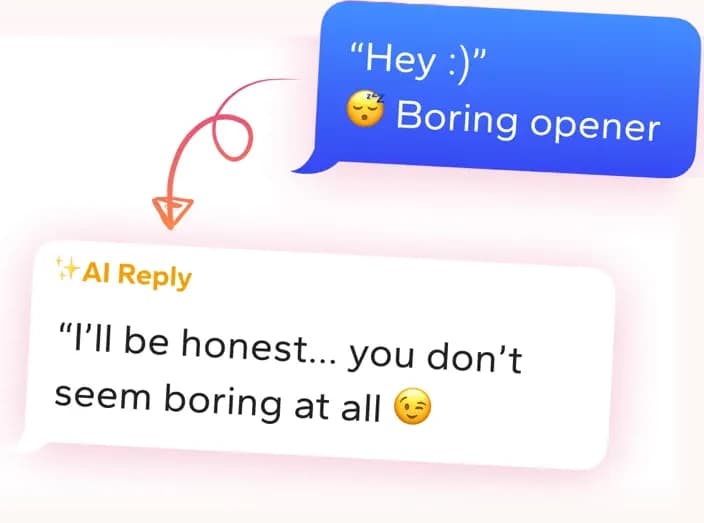
Get replies that sound like you
Screenshot the conversation in WingAI. It reads the vibe and gives you natural replies for this exact situation.
Try for freeRizz AI Screenshot the chat and get the next message for this person.
Talking stage in Spanish culture is actually honest
Spanish-speaking cultures tend to name this phase explicitly rather than pretend it doesn't exist. Someone saying 'estamos en la etapa de pláticas' is not avoiding you or being evasive in a bad way. They're being direct about the fact that you're still figuring each other out.
It's a middle ground. Not the first date, not a relationship. You're talking regularly, there's interest, but nobody's making promises. If someone brings this up, they usually mean it literally: we are in the stage where we talk, we see what happens. Nothing sinister is being hidden.
Match their directness without overexplaining
Your reply job is to show you get where things are without either clinging to it or acting like it bothers you. Acknowledge what they said. Keep things light. Don't launch into a speech about what talking stage means or what you want from it.
If they're comfortable saying it out loud, be comfortable hearing it. A one or two line response that agrees or gently moves forward works better than a paragraph defending the phase or asking what happens next.
Let the talking stage breathe before you push for clarity
The mistake is trying to move out of talking stage too fast by asking directly where things are heading. That usually backfires because you force a decision before the other person is ready.
Instead, keep doing what you're already doing. Text regularly, make plans, show up. In a few weeks or a month, things either naturally move toward commitment or they don't. If you're still stuck in the talking stage and they're avoiding any progression after a reasonable time (usually four to eight weeks), then you can gently ask if they see this going somewhere. Not before.
Why these replies fail
“Okay but just so you know I'm looking for something serious, not just talking to multiple people”
You're pitching your intentions at them when they were just naming the current phase, not questioning your motives
“What do you mean 'talking stage'? We're basically dating already”
You're denying what they said instead of accepting the actual status, which makes them defensive
“Cool, no pressure. I can wait as long as you need :) let me know when you're ready to commit”
You're pretending it doesn't matter to you while also putting an invisible timer on them, which is dishonest
Common mistakes
- Responding as if you're already in a relationship when the other person is clearly leaving room for ambiguity
- Getting defensive about the talking stage like it's an insult, when it's usually just stating fact
- Pretending you don't care about the pace when you actually do, then bringing it up later as resentment
- Asking what they 'want' too early instead of letting the talking stage run its course
- Acting casual to match their vagueness while secretly expecting exclusivity
Questions people ask
- Does talking stage mean they're not interested in a relationship?
- Not necessarily. It usually means they're interested but want more time to be sure, or they're unsure about compatibility. Some people move fast, some move slow. Talking stage is just the name for the slower path. Give it time before assuming indifference.
- How long does the talking stage usually last?
- Typically four to twelve weeks, depending on how often you see each other and how quickly things feel natural. If it's been three months of regular contact and no conversation about moving forward, that's a sign to ask where it's going.
- Is it okay to date other people during the talking stage?
- Technically yes, since nobody's committed. But in practice, if you're texting regularly and making plans with one person, seeing others gets complicated fast. Most people stick with one person during talking stage even if it's not officially exclusive.
- What's the difference between talking stage and just being friends?
- Talking stage has romantic interest and physical attraction. You're making plans one-on-one, the conversation is more personal, and there's obvious flirtation. Friends don't typically text someone all day or see them with romantic interest.
What people say after using WingAI
“I overthink every text. Having three options and picking the one that sounds like me cut that spiral short.”
Sam R.
“I was skeptical at first. Then I tried it on a dry chat and the replies actually sounded like me, not a chatbot.”
Mazoonx
“Didn't think it would be this good. The funny options actually get responses, which is wild.”
Nico_dang
Get replies that sound like you
Screenshot the conversation in WingAI. It reads the vibe and gives you natural replies for this exact situation.
Try for free