What it means when she says she's done
She said she's done. Here's what that actually signals and how to respond without making it worse.
When she says she's done, it's almost always the end of a conversation or the relationship, not a negotiation. She's not testing you or waiting for you to convince her otherwise. She's made a decision and told you. The words themselves are clear, but people still hear them as an opening for debate.
The real question is what led to that message. Was it the last in a long chain of friction, or did it come after one thing went wrong? Either way, her saying she's done means she's reached a point where staying feels worse than leaving. A good reply in this moment acknowledges that without trying to undo it. It doesn't plead, doesn't ask for another chance unprompted, and doesn't pretend she didn't mean it.
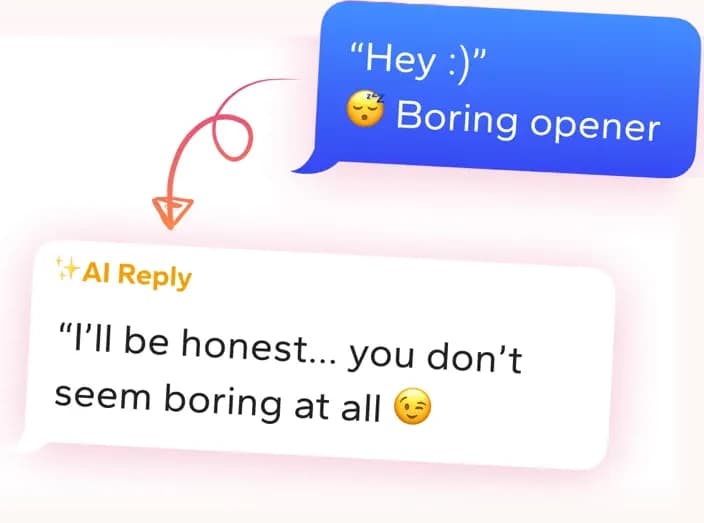
Get replies that sound like you
Screenshot the conversation in WingAI. It reads the vibe and gives you natural replies for this exact situation.
Try for freeRizz AI Screenshot the chat and get the next message for this person.
She has already decided before sending it
The 'I'm done' message is not a cry for help or a last warning. It's the decision, stated out loud. By the time she writes it, she has probably thought about leaving multiple times. She might have talked to friends about it. She has crossed the line from frustration to resolution.
What often makes people miss this: they focus on the words as if the problem is communication. But the problem is not that she hasn't explained herself. The problem is that she has decided the relationship is not working. Understanding this changes everything about how you read the situation and what a reply should try to do.
A reply has to do two things and only two things
First, it shows that you heard her and take it seriously. You don't minimize it, don't reframe it, don't ask her to explain. You just acknowledge that she said it and it means something.
Second, it keeps a door open for a real conversation later, if she wants one. Not by asking her to stay or by listing reasons to try again. By leaving space and showing you respect the boundary she just set. That might mean agreeing to give each other time, or saying you'll talk when things are calmer, or just accepting it and wishing her well. The specific words depend on your history, but the move is the same: you step back.
Send one message, then wait for her to move
Send your reply within a few hours of her message. Not immediately when you are reacting, but not so late that it looks like you have been thinking of counterarguments. Keep it short. Five to eight sentences maximum.
After you send it, do not send another message. Not in three days, not in a week. If she wants to talk, she will. If she doesn't, pushing will only prove her point. The hardest part is actually stopping. Most people send a second message because the silence feels like failure, but the silence is her answer. If she changes her mind or wants to work things out, she will reach back. If she doesn't, you already know what her answer was.
Why these replies fail
“Wait, can we talk about this? I don't think you really mean it. Let's just take a break for a few days and see how we feel.”
It treats her decision as something to negotiate around instead of something to accept, and it pushes for what you want instead of hearing what she said.
“OK fine. Enjoy being alone. You'll regret this.”
It punishes her for setting a boundary and practically guarantees she won't reconsider or respond.
“I'm so sorry. What did I do? Please tell me what I did wrong so I can fix it.”
It makes the moment about you needing reassurance instead of her needing space, and it forces her to replay the entire conflict to satisfy you.
Common mistakes
- Replying immediately with apologies or reasons why she shouldn't leave
- Asking what you did wrong, forcing her to relitigate the whole thing
- Going silent forever without one clear message
- Sending multiple texts over days trying different angles
- Treating it like a fight to win instead of a boundary to respect
Questions people ask
- Does she really mean it, or is she just angry?
- Assume she means it. Even if anger triggered the message, the underlying decision to leave is real. People don't say they're done unless they have thought about it before that moment. If you assume it is not final, you will wait too long to respond or respond in a way that makes things worse.
- Should I give her space or reach out?
- Send one message, then give space. Your message should acknowledge what she said and show you respect it. After that, the next move is hers. Reaching out more than once after she said she's done usually pushes her further away, not closer.
- What if I haven't done anything wrong?
- Whether you did something wrong or not, the fact remains that she is unhappy enough to leave. Your reply is not the place to defend yourself or prove your innocence. That conversation, if it happens, comes later. Right now, focus on showing you understand she is serious.
- How long should I wait before I try to fix things?
- Let at least a week pass, maybe two. The goal is not to wait until she forgets why she left. The goal is to let both of you step back from the emotional moment. If she wants to talk before then, she will reach out. If you reach out first, you are not giving space, you are just trying again.
What people say after using WingAI
“I overthink every text. Having three options and picking the one that sounds like me cut that spiral short.”
Sam R.
“I was skeptical at first. Then I tried it on a dry chat and the replies actually sounded like me, not a chatbot.”
Mazoonx
“My openers used to be boring. Now I reference something from her profile and people actually write back.”
Aiden K.
Get replies that sound like you
Screenshot the conversation in WingAI. It reads the vibe and gives you natural replies for this exact situation.
Try for free