What it means when she says love you instead of i love you
She said 'love you' not 'I love you'. Here's what the difference signals and how to reply without overthinking it.
When someone says 'love you' instead of 'I love you', it's usually casual. Not cold, just less formal. The difference matters more in how it sits in the conversation than in the words themselves. 'Love you' often feels like something you say in a text before heading out, or how you'd close a call with someone you're comfortable around. It's abbreviated. Natural.
'I love you' is a declaration. It's deliberate. It takes up more space and it asks you to sit with it. So when she switches to 'love you', she's usually just being looser with you, not pulling back.
The trap is reading tone into text. You can't hear her voice. She might say 'love you' because that's how she texts everyone. Or because the moment felt easier and less formal. Or because she wasn't thinking about the phrasing at all. Your reply should reflect that this is still good, still warm, and still worth meeting halfway.
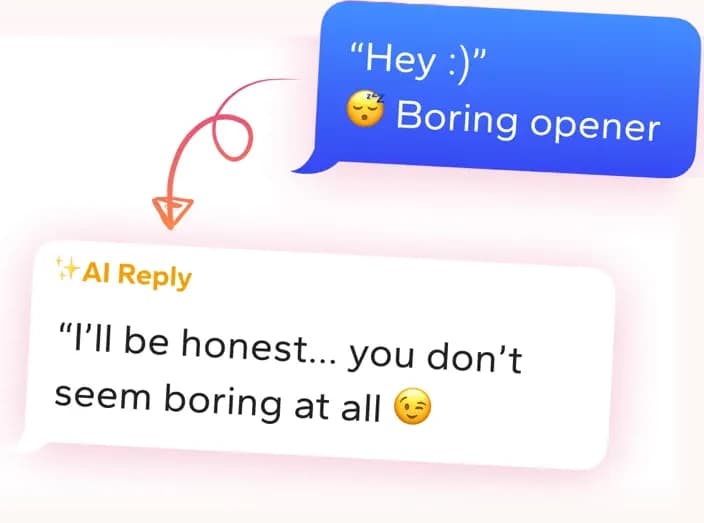
Get replies that sound like you
Screenshot the conversation in WingAI. It reads the vibe and gives you natural replies for this exact situation.
Try for freeRizz AI Screenshot the chat and get the next message for this person.
She's relaxed, not distant
The shift from 'I love you' to 'love you' usually signals comfort, not doubt. When someone stops performing for you, when they text faster and drop the formalities, that's a sign they feel safe around you. She's not weighing each word. She's just sending what comes naturally.
What matters is the pattern. One message doesn't tell you much. If she's been saying 'I love you' clearly and then slides into 'love you', that's just how the conversation is flowing that day. If everything else stays warm and she's still initiating, still showing up, then this is noise. The only time the phrasing matters is if the whole tone shifts around it. Cold response. Slower replies. Less of her in the messages. That's the real signal, not the grammar.
Meet her pace without matching her distance
Your reply needs to do two things. First, receive what she said without making it weird. Don't suddenly text like a robot or go overly sentimental. Second, keep your own baseline. If you usually say 'I love you', keep saying it that way. Not as a correction to her. Just as how you are.
The move is to stay consistent and warm. If you start scrambling to match her formality level, you're telling her you're keeping score. You're not. She matters to you the way you normally express it. She's allowed to express it the way that feels right to her in that moment. Respond to what she said, not to what you think the phrasing means.
Don't wait to see if she escalates back
The worst move is leaving her message on read or sitting with it while you figure out what it signifies. That creates distance. If you're unsure, act like the person who isn't keeping receipts of word choices. Send your reply when you'd normally reply. Keep the conversation moving. Act like someone who feels secure.
If you want more clarity later, you get it by consistency. By her seeing that one casual text didn't make you withdraw. By continuing to show up the same way. Don't bring it up. Don't test her. If the relationship is real, the phrasing will sort itself out naturally over time. If you're early and this is the first time she's said it in any form, that's the thing to feel good about, not the grammar.
Why these replies fail
“Love you too x”
Mirrors her exact phrasing, which signals you're copying her energy instead of showing up as yourself.
“I love you more”
Sounds like you're competing or correcting her word choice, which makes the moment uncomfortable.
“...”
Leaving it unread or replying hours later makes her think the message landed wrong, when it probably didn't.
Common mistakes
- Matching her formality drop by going even more casual, which reads as you pulling away
- Overexplaining or justifying your own feelings to counter what you think she meant
- Staying stiff and formal on purpose because you're second-guessing the message
- Asking her what she meant instead of just responding
- Going silent because you're waiting to see if she'll say the longer version next time
Questions people ask
- Does 'love you' mean she loves me less than if she said 'I love you'?
- Not necessarily. Phrasing is usually about comfort level and how fast someone is texting, not about the depth of feeling. If she's warm otherwise and showing up for you, the word choice is just style. The pattern matters more than one message.
- Should I text back 'I love you' if she said 'love you'?
- Yes. Say it the way you normally would say it. If you usually say 'I love you', keep saying that. You're not supposed to perform a different version of yourself based on her text formatting.
- What if she said 'love you' and now I'm paranoid she's losing interest?
- Check the rest of the conversation. Is she still texting back? Still making plans? Still being affectionate? One word change doesn't override everything else. If only the phrasing shifted and nothing else did, you're probably reading into it.
- How long should I wait before replying to 'love you'?
- Reply when you'd normally reply. Don't use the timing as a way to test her or make a point. Waiting on purpose just creates awkwardness. Respond naturally and keep the conversation going.
What people say after using WingAI
“I overthink every text. Having three options and picking the one that sounds like me cut that spiral short.”
Sam R.
“I was skeptical at first. Then I tried it on a dry chat and the replies actually sounded like me, not a chatbot.”
Mazoonx
“I'm busy and half the profiles give you almost nothing to work with. WingAI gets me a solid first line fast without me staring at the screen for ten minutes.”
Ralph
Get replies that sound like you
Screenshot the conversation in WingAI. It reads the vibe and gives you natural replies for this exact situation.
Try for free