How to reply when she says she's going through changes
Get a reply you can send tonight, without overthinking it.
She needs perspective, not a pep talk. Here's how to text back without overstepping or disappearing when she's vulnerable.
When someone tells you she's going through changes and needs perspective, she's signaling two things at once: she trusts you enough to mention something real, and she's not asking you to fix it. The gap between those is where most replies fail. You'll either come across as trying to solve her problems (which makes it about you being helpful) or you'll go silent and seem like you didn't care enough to respond.
A good reply acknowledges that something is shifting in her life without pretending you know what it is. It keeps the door open for her to share more if she wants to, but doesn't demand she become your emotional project. The best move here is to signal that you're present and listening, then let her set the pace of what comes next.
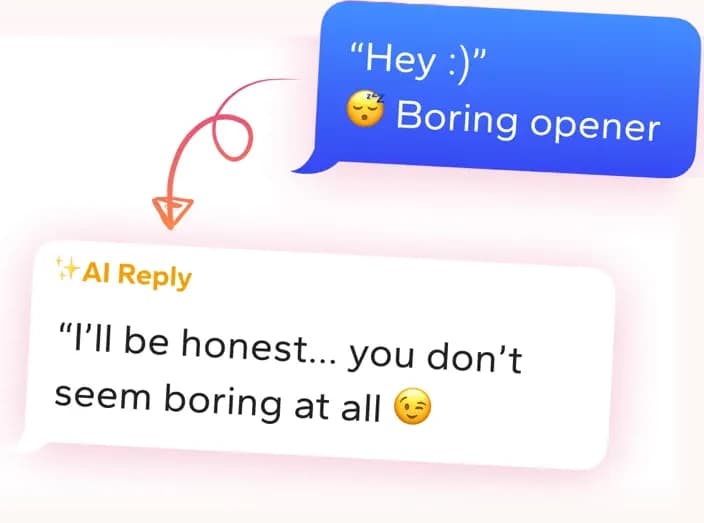
Your reply for this exact chat, tonight, in your own words
Take the 2-minute quiz. WingAI learns how you text and writes replies that sound like you, not like AI.
“I was skeptical at first. Then I tried it on a dry chat and the replies actually sounded like me, not a chatbot.”
First week free. Cancel anytime.
What 'needs perspective' actually signals
When someone says they need perspective, they usually mean they're inside something confusing and can't see it clearly. It's not a call for your opinion yet. It's her flagging that her own view is limited right now. What matters is that she reached out to tell you this, which means she sees you as someone worth trusting with the unfinished version of her situation.
She might be dealing with a career shift, family stuff, a friendship ending, burnout, or something about who she is. You don't need to guess. The fact that she said 'changes' and not 'problems' is significant. She's not necessarily asking for solutions. She's naming something in motion.
Show you heard it, then step back
A good reply does two specific things. First, it shows you actually registered that she said something real. A simple acknowledgment works. Second, it opens the door without pushing through it. You're saying I'm here if you want to talk about this, but I'm not going to demand you make this about us or turn it into an emotional labor exchange.
Don't ask five questions. Don't pivot to how you can help. Don't make assumptions about what kind of perspective she needs. Just confirm you heard her and give her room to decide what comes next. Short replies often work better here than long ones.
Give her 3-4 days before you check in again
After you reply, she's going to tell you more or she isn't. If she doesn't respond in the next day or two, don't panic or fill the silence with another message. She said she's going through changes. That's inherently disruptive. She might need time to figure out what she even wants to say.
If she goes quiet for more than three days and hasn't responded to your first reply, one light check-in is fair. Keep it short. Something that doesn't require a big explanation from her. But if she still doesn't bite after that, don't keep pushing. She either needs more time or she's decided this isn't the moment. Respect that boundary.
Why these replies fail
“Wow that sounds really tough. Whatever you're going through, I'm here for you no matter what. Just let me know if you need to talk. Seriously, anytime.”
It's performative and makes the conversation about reassuring you that you're a good person, not about her actual situation.
“What's going on? What kind of changes? When did this start? Do you think it's temporary?”
Too many questions at once feel like an interrogation and put pressure on her to have answers when she already said she needs perspective.
“That's why I think you should focus on yourself right now. Don't rush into anything and just take time to figure things out.”
You're giving advice about a situation you know nothing about, which comes across as dismissive of her actual complexity.
Common mistakes
- Launching into advice or positivity before she's even told you what's happening
- Making it about reassuring yourself that you're a good person ('I'm always here for you')
- Going radio silent because you're worried about saying the wrong thing
- Asking a barrage of follow-up questions that feel like an interrogation
- Shifting the conversation back to dating or logistics too quickly
Questions people ask
- Should I ask what kind of changes she's going through?
- Not in your first reply. Let her volunteer that information. A single open-ended prompt works better than a list of questions. Something like 'I'm listening' or 'Tell me more when you're ready' gives her the choice without pressure.
- What if she never expands on it after I reply?
- That's useful information. Some people mention something heavy and then aren't ready to talk about it in text. That doesn't mean she regrets telling you. One gentle follow-up after a few days is fair, but after that, let it be. She knows you're available.
- Is it weird to bring this up in person later?
- Not at all. If you see her in person, you can say something like 'Hey, you mentioned going through some changes. I didn't want to push it over text, but I'm here if you want to talk about it.' That's actually better than forcing a text conversation.
- How long should I wait before asking her out again?
- Wait for her to come back to normal texting first. If she's been quiet about big stuff, jumping straight to date plans can feel tone-deaf. Let a few normal conversations happen, then ease back into it. She'll signal when she's ready.
It doesn't sound like a bot
“I overthink every text. Having three options and picking the one that sounds like me cut that spiral short.”
Sam R.
“She went cold mid-week and I had no idea what to say. The reply I sent felt natural and she picked the chat back up.”
Marcus T.
“Used it for a couple hours and set up a date the same night. Not even kidding.”
Nikola2214
Your reply for this exact chat, tonight, in your own words
Take the 2-minute quiz. WingAI learns how you text and writes replies that sound like you, not like AI.
Try for freeFirst week free. Cancel anytime.