Signs he is hurting after the breakup and what to do
Recognize when an ex is struggling post-breakup. Learn what his behavior signals and how to respond without making things worse.
When someone is hurting after a breakup, their texting and social behavior often shifts in specific ways. He might reach out erratically, double-text, or go silent for days. His posts might hint at sadness or he might suddenly like all your content. These aren't manipulative moves. They're just the noise of someone processing loss.
A good reply acknowledges what's actually happening without calling it out directly, keeps a firm boundary, and doesn't pretend the breakup didn't happen. You're not trying to comfort him or convince him you can be friends yet. You're being clear and honest in a way that lets him move forward instead of getting stuck in limbo.
Get replies that sound like you
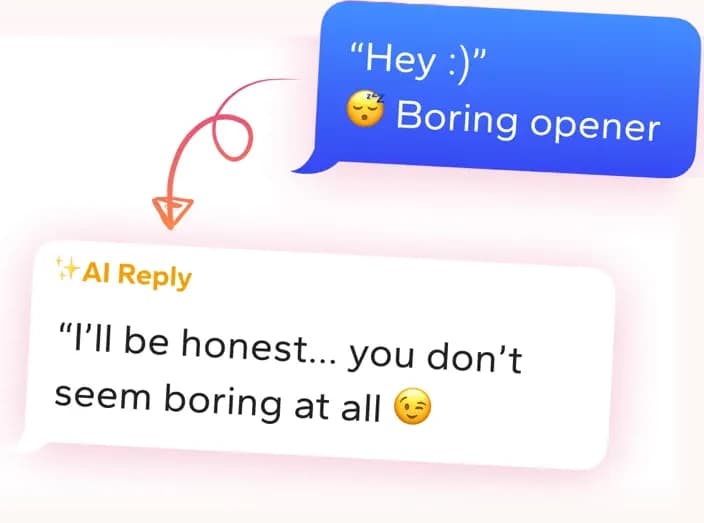
Screenshot the conversation in WingAI. It reads the vibe and gives you natural replies for this exact situation.
Try for freeGrief cycles disguised as nostalgia and sudden attention
Post-breakup pain follows a pattern. Early on, he'll oscillate between trying to reconnect and pulling back. A 11pm message about things you shared together, sudden likes on your posts, or unexpected texts about small memories are all signs he's cycling through stages of grief. He's not necessarily plotting to win you back. He's looking for any signal that the connection still exists because losing it is still fresh.
The pattern matters. The more sporadic his contact, the more likely he's struggling. Someone who's moved on goes quiet and stays quiet. Someone hurting reaches out, gets no encouragement, then waits and does it again weeks later. Watch the pattern, not just individual messages.
How to acknowledge him without reopening what ended
Your reply has two jobs. First, it stops the loop by confirming the breakup is real and the old closeness is gone, without cruelty. You're not cold, but you're not opening a conversation about your relationship or the life you shared. Second, it keeps the door slightly open for eventual friendship if that becomes possible, but only after real time passes.
The move. Keep it brief, acknowledge something true in what he said, and redirect. If he misses talking about specific things, you can say that makes sense, but you can't be the person he processes that with right now. Don't apologize. Don't soften it with 'I hope you're okay' or 'we can talk someday.' Just clean.
Breaking the spiral when he won't accept silence
Respond during the day when you're clear-headed, not late at night when his emotion feels more immediate. Take at least a few hours, even if you see it right away. One short reply per message is the limit. If he sends three texts before you respond to one, answer only the first one.
If he keeps reaching out after a clear reply, the boundary gets firmer. Your second reply can be shorter and doesn't need to re-explain anything. By a third contact, you can stop replying for a longer stretch. A week of silence is better than a month of going back and forth. He needs to feel the distance to move through it. No contact is the only thing that actually works.
Why these replies fail
“I miss talking to you too. I've been thinking about you a lot. We were really good at talking about deep stuff.”
It mirrors his emotional vulnerability and reignites the intimacy he's seeking, trapping both of you in the breakup instead of moving past it.
“I understand you're hurting and I'm here to talk if you need someone. I care about you.”
It positions you as his support system during his healing, which blurs the boundary and gives him false permission to lean on you.
“Wow, I can't believe you're reaching out like this. You broke up with me, remember?”
It triggers defensiveness and starts a fight instead of letting him accept the reality on his own timeline.
Common mistakes
- Matching his emotional energy and getting pulled back into deep conversations, which delays his healing
- Being overly kind or encouraging in a way that signals you might get back together
- Ignoring the message entirely, leaving him wondering and more likely to reach out again
- Over-explaining why you can't talk to him, which opens a negotiation he'll try to win
- Texting back late at night or in long messages, which breaks the boundary you need right now
Questions people ask
- How do I know if he's actually hurting versus just trying to get back together?
- The pattern matters more than any single message. If he reaches out, disappears for weeks, then reaches out again about different things, that's cycling through grief. If every message hints at reconnecting or references your future together, he's strategizing. Hurting people are messy and random. People trying to win you back are consistent and goal-oriented.
- Should I block him if he keeps texting after I've made my boundary clear?
- Not immediately. One gentle boundary, then one firmer one, then silence is the sequence. If it's been two clear replies and he's still reaching out multiple times a week, blocking or muting his messages (not him) is reasonable. You don't owe him unlimited chances to respect your no.
- What if I still have feelings for him and reading his messages makes it harder for me?
- Your job is to protect yourself first. You can reply briefly and compassionately without staying in conversation. But if reading his texts derails you, unfollow or mute him for a few months. Protecting your own healing is not mean. It's necessary. You can't be his lifeline while you're still hurting.
- Is it wrong to ignore his message completely instead of replying?
- Not wrong, but one short reply is often cleaner. Silence can feel like rejection or give false hope that if he keeps trying you might eventually respond. A 20-word reply saying you need space makes the boundary concrete. Then silence after that is real and he understands it.
What people say after using WingAI
“I overthink every text. Having three options and picking the one that sounds like me cut that spiral short.”
Sam R.
“I always freeze on the first sentence. This gets me past that blank box so I actually hit send.”
joejoe4567
“I was skeptical at first. Then I tried it on a dry chat and the replies actually sounded like me, not a chatbot.”
Mazoonx
Get replies that sound like you
Screenshot the conversation in WingAI. It reads the vibe and gives you natural replies for this exact situation.
Try for free