Respond when she texts less often during the day
She's shifted from constant texting to evenings only. Learn what this means and how to reply without pushing her away.
When someone goes from texting you throughout the day to only in the evenings, something has changed. It could be work got busier, she's pulling back emotionally, she's seeing someone else, or she's testing whether you'll chase her. The shift itself is the message.
Your reply needs to show you noticed without making it weird or needy. You're not ignoring the change and pretending things are normal. You're also not confronting her about it. The goal is to stay relaxed, keep her engaged when she does reach out, and figure out through actions whether this is temporary or a sign she's losing interest.
How you respond now sets the tone for whether this fizzles or whether you two find a rhythm that actually works.
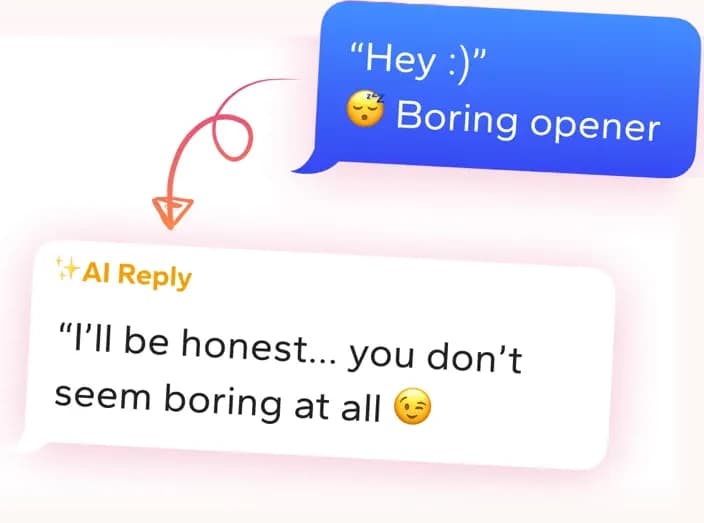
Get replies that sound like you
Screenshot the conversation in WingAI. It reads the vibe and gives you natural replies for this exact situation.
Try for freeWhy daytime texting just stopped
A drop from all day to evenings is almost never random. Either her schedule changed, her interest shifted, or she's testing your reaction. The pattern matters more than the excuse. If she's previously been available all day and suddenly isn't, something is different about how she's prioritizing you or her time.
Don't assume the worst, but don't ignore it either. An evening text from someone who used to text constantly can mean she still likes you but is setting a boundary. It can also mean she's making space for someone else. Watch whether the evening texts are engaged or short and lazy. That tells you more than the timing does.
Keep replies short and match her effort level
If she's only texting evenings, your replies should be the kind that work in evening conversations. That usually means shorter messages, lighter tone, and something that invites a quick response without demanding a long answer. You're not trying to pull her back into all-day texting. You're staying in the conversation on her current terms.
If her evening message is casual and brief, match that energy. Don't suddenly write paragraphs. If she's asking questions or being warm, you can open up a bit more. The move is to seem unbothered by the shift while still being there when she texts. This shows confidence and flexibility, not desperation.
Wait through the silence, then decide by week two
If she's only texting you in the evening, that's your window. Don't text her during the day expecting a response. If she does text during the day, that's her choosing to break her own pattern for you, which is a good sign.
Give it two weeks to see if this becomes her new normal or if she bounces back. By then you'll know whether she's just busy or less interested. If after two weeks she's only reaching out evenings and her replies are getting shorter, start pulling back yourself. Don't ghost, just become less available and less interested in the outcome. If she picks up, great. If she doesn't, you have your answer.
Why these replies fail
“Hey, noticed you've been kinda quiet during the day. Everything okay?”
Calling out the change makes you look like you're keeping score and waiting for her to fix it.
“Good morning! How's work treating you today? Let me know when you get a break so we can catch up :)”
Texting her in the morning when she's clearly chosen not to text you then comes across as needy and ignores her signal.
“Cool cool, talk later I guess”
Matching her reduced effort with coldness or sarcasm kills the conversation and looks like you're hurt.
Common mistakes
- Calling out the change directly like 'you've been quiet lately' makes you look insecure and gives her a reason to withdraw more
- Overcompensating by texting her more during the day when she's already gone quiet pushes her away faster
- Waiting to reply to her evening texts to match her energy comes across as bitter and kills the conversation
- Asking where she's been or what she's been doing feels accusatory and puts her on the defensive
- Sending long messages when she's sending short ones shows you're not reading the room
Questions people ask
- Should I ask her why she's texting less?
- No. Asking directly puts her on the defensive and makes you look insecure. If there's a real reason, she'll tell you. If she's pulling back, asking makes it worse. Watch her actions instead.
- Is she losing interest if she only texts at night?
- Maybe. It depends on what those evening texts look like and whether she's been busy. One week of evening-only texts is not enough data. Two weeks of short, disengaged evening messages is worth taking seriously. Context matters.
- Should I text her during the day to remind her I exist?
- No. You'll just add to the pile of things she's not responding to. Let her set the pace for now. If she texts you in the daytime, that means she chose to. That's progress.
- What if she never goes back to texting throughout the day?
- Some people are just evening texters. That's different from someone who switched. If she's engaged, warm, and consistent in the evenings, this might just be how she operates. Only worry if she's also pulling back emotionally.
What people say after using WingAI
“I was skeptical at first. Then I tried it on a dry chat and the replies actually sounded like me, not a chatbot.”
Mazoonx
“I overthink every text. Having three options and picking the one that sounds like me cut that spiral short.”
Sam R.
“Used it for a couple hours and set up a date the same night. Not even kidding.”
Nikola2214
Get replies that sound like you
Screenshot the conversation in WingAI. It reads the vibe and gives you natural replies for this exact situation.
Try for free