How to reply when she says she doesn't love you anymore
What to say when she's lost feelings. Good replies acknowledge the weight, avoid panic moves, and leave room for clarity.
When someone tells you they don't love you anymore, the message is usually final. She's not testing you or looking for reassurance. She's telling you the relationship is over.
Your reply has one real job: accept what she said without fighting it, collapsing, or trying to fix her feelings in the next message. Desperation and negotiation make it worse. So does pretending it doesn't matter.
A good reply is short, respectful, and human. It shows you heard her. It doesn't ask her to reconsider, doesn't beg, doesn't explode into anger. It also doesn't disappear into "I understand, be well" robot mode.
After you send it, you wait. You don't follow up unless she reaches out first. If she doesn't, that's your answer about what comes next.
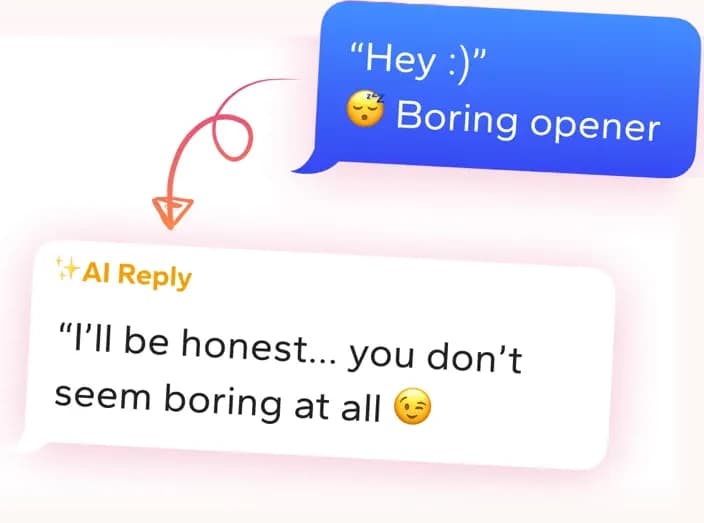
Get replies that sound like you
Screenshot the conversation in WingAI. It reads the vibe and gives you natural replies for this exact situation.
Try for freeShe has already decided this is over
When someone says they don't love you anymore, that's not a cry for help or a negotiation opener. It's usually the end of a longer internal process. She's thought about this. She's let feelings slip away over time and reached a point where she had to say it out loud.
Your job isn't to reverse it or understand exactly when it happened. Asking 'why' or 'when did this start' keeps you in the past tense, trying to find the moment you could have fixed. She's already in the future tense. Meet her there.
Acknowledge what you heard and step back
A good reply does two things. First, it shows you actually heard her instead of immediately shifting into self-protection mode. Second, it closes the conversation without slamming the door on dignity, hers or yours.
Don't defend yourself. Don't ask her to reconsider. Don't list reasons she's wrong. Don't turn it into a negotiation about timing or whether you can stay friends. Just acknowledge the weight of what she said, say something true about what you're feeling, and let her go. Keep it to three or four sentences.
One message then complete silence
Send your reply within a few hours if you can think clearly, or wait until the next day. Don't send it at 2am. Don't craft it in anger and then re-read it five times.
After you send it, you're done. No follow-ups. No 'checking in' the next week. No 'just wanted to see how you're doing' messages. If she reaches out again, you can reply to that. But you don't initiate. Anything else looks like you didn't actually accept what she said, which makes it harder on both of you.
Why these replies fail
“I don't believe that. You said you loved me three weeks ago. We can work through this.”
It rejects her statement instead of hearing it, and tries to negotiate her out of a decision she's already made.
“Okay. I hope you find what you're looking for and I wish you all the best.”
It's cold and formal, which reads like you're angry or that you didn't care in the first place.
“I'm sorry I wasn't enough for you. I'll do better. Give me another chance and I promise things will change.”
It makes her feelings about her own choice become your fault to fix, and puts pressure on her to give you conditions.
Common mistakes
- Asking 'why' or 'what changed' like her feelings are a puzzle you can solve with the right question
- Promising to change or listing all the things you'll do differently
- Sending a long message defending yourself or the relationship
- Going silent completely instead of acknowledging what she said
- Following up the next day with a new angle after she's already told you it's over
Questions people ask
- Should I ask her what I did wrong or if there's someone else?
- Not in the first reply. She's told you the core thing: she doesn't love you. Asking for details keeps the conversation open and makes it seem like you're looking for a loophole. If you need to know those things later, ask in a separate conversation, not as part of accepting the breakup.
- What if I think she's making a mistake or acting on emotion?
- That might be true, but it's not your job to convince her otherwise. Your reply in this moment isn't the place to fight it. If you want to reach out weeks from now when things are calmer, that's different. But right now, you accept and move forward.
- Is it okay to say I'm heartbroken or that this hurts?
- Yes. Being honest about the impact is different from begging her to stay. One sentence about how you're feeling is fine. Just pair it with acceptance, not with a request for her to fix it.
- How long should I wait before reaching out again?
- At least a few weeks. Let the shock settle. If she reaches out first, you can talk then. If she doesn't, that silence is telling you something too. Reaching out after one week to 'check in' will only extend the pain.
What people say after using WingAI
“I was skeptical at first. Then I tried it on a dry chat and the replies actually sounded like me, not a chatbot.”
Mazoonx
“She went cold mid-week and I had no idea what to say. The reply I sent felt natural and she picked the chat back up.”
Marcus T.
“I overthink every text. Having three options and picking the one that sounds like me cut that spiral short.”
Sam R.
Get replies that sound like you
Screenshot the conversation in WingAI. It reads the vibe and gives you natural replies for this exact situation.
Try for free