Show you care without sounding like her therapist
Support her struggles over text by validating without fixing, asking without probing, and staying present without overdoing it.
When someone shares a problem or tough moment over text, the instinct is often to jump straight into problem-solving mode or pile on reassurance. That can land as if you don't trust her to handle it, or worse, that you're uncomfortable with her having a hard time.
A supportive reply acknowledges what she's dealing with without treating her like she's broken. It stays grounded in what she actually said instead of spiraling into bigger statements about her resilience or worth. The move is subtle: you're saying 'I see this sucks' and 'I'm here,' not 'let me fix this' or 'you're stronger than you think.'
This matters because it keeps her feeling like an equal who happens to be going through something, not someone you've mentally moved into a caretaker role with.
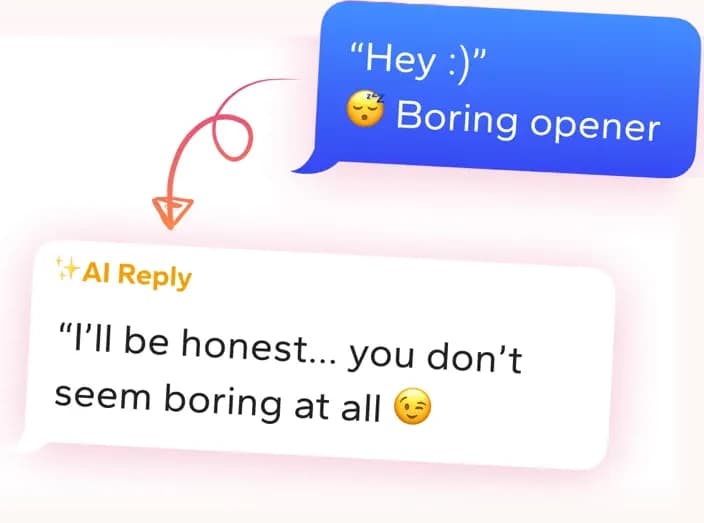
Get replies that sound like you
Screenshot the conversation in WingAI. It reads the vibe and gives you natural replies for this exact situation.
Try for freeThe difference between venting and asking for a fix
When someone texts about a bad situation, you need to know what mode they're in. Are they processing something that happened, or are they stuck and need help thinking through next steps? The signal is usually in the phrasing. 'That sounds frustrating' messages often just need acknowledgment. 'I don't know what to do about' signals they might want to talk it through.
If she's still in vent mode and you start offering solutions, it feels like you're not listening to what she actually said. You're pivoting to 'let me make this better' when she just needed you to understand it sucked. Watch for whether she's describing a situation or asking you for input.
Validate the moment, not her entire life outlook
Support without patronizing means you're reacting to what happened right now, not making grand statements about her strength or future. 'That situation was unfair' lands differently than 'You're going to bounce back from this.' One acknowledges the actual thing. The other projects ahead and can feel like you're uncomfortable sitting with her having a rough time.
Your job is to show you understood what she said and that it makes sense it bothers her. That's it. Don't expand it into a character assessment or a prediction. Keep your reply tethered to what she actually described.
When to ask a follow-up and when to wait
If she's venting, hold back on questions right away. Let her have the last word and see if she comes back. A small question is fine if it shows you were listening to a detail she mentioned, but don't fire off three questions like you're taking notes. She needs to feel like you're present, not interrogating.
If she doesn't reply for a few hours or a day, don't send another message checking in. Let her have space to process. If she circles back to the topic later, that's your cue to follow up then. If she switches to something else or goes quiet, it's done. Don't keep pulling on a thread she's moved past.
Why these replies fail
“Honestly that sounds like a you problem. He's your boss, you should have asked what he wanted before diving in”
It shifts blame to her instead of validating that the situation was unclear, and kills the trust she just showed by texting you.
“This is actually great because now you know what he thinks and you can fix it! You're going to come back from this so strong”
It skips over the bad feeling she's having and jumps straight to forced positivity, making it seem like you're uncomfortable with her being upset.
“That's so unfair. You deserve better. Honestly I think you should start looking for a new job because he clearly doesn't appreciate you”
You're building a narrative way bigger than what she said. She mentioned one rough meeting, not that her whole job is wrong.
Common mistakes
- Jumping to 'You're going to be fine' or 'Things will work out' before she's finished venting
- Asking a question that sounds like you're interviewing her emotional state instead of just listening
- Over-correcting by completely ignoring what she said so you don't seem like you pity her
- Treating one setback as a referendum on her abilities or future
- Texting a novel of reassurance when a shorter, steadier reply works better
Questions people ask
- How much should I ask about what happened?
- One question at most, and only if it shows you were listening to something she said. Skip it entirely if she seems like she's done talking about it. You're not gathering information. You're showing you cared about what she told you.
- Is it okay to share a similar thing that happened to me?
- Only if you keep it short and don't make it about you. 'I had a boss like that once' followed by listening to her is fine. 'Oh that reminds me of this time I...' and then launching into your own story makes it feel like you're one-upping her or turning her moment into about you.
- What if I actually think she could have done something differently?
- Not the time. If you're right, she'll figure it out or ask for your take later. Right now she needs to feel like you're on her side, not auditing her choices. You can have a smarter conversation about it in a few days if it comes up again.
- How do I know if I'm being too supportive and seeming fake?
- You're being too much if you sound nothing like how you normally text her. Keep your tone and language normal. A simple 'that sounds rough' from you is better than a paragraph of perfect supportive language that sounds like someone else wrote it.
What people say after using WingAI
“Used it for a couple hours and set up a date the same night. Not even kidding.”
Nikola2214
“She went cold mid-week and I had no idea what to say. The reply I sent felt natural and she picked the chat back up.”
Marcus T.
“I overthink every text. Having three options and picking the one that sounds like me cut that spiral short.”
Sam R.
Get replies that sound like you
Screenshot the conversation in WingAI. It reads the vibe and gives you natural replies for this exact situation.
Try for free