How to be caring and supportive over text
Show care over text by listening, validating feelings, and offering specific help. Learn what supportive texting actually looks like.
Being supportive over text means doing more than saying 'that sucks.' It means reading what she's actually telling you, naming what you hear, and either offering concrete help or just staying present without trying to fix everything.
Most guys either disappear when things get hard or pivot immediately to problem-solving, which can feel dismissive. The middle ground is acknowledging her situation first, then asking what she needs. That shift alone changes how she experiences the conversation.
Careful text support also means not making it about you. Don't share your own similar story right away. Don't get performative about how much you care. Just read her message, feel it, and respond to what's actually there.
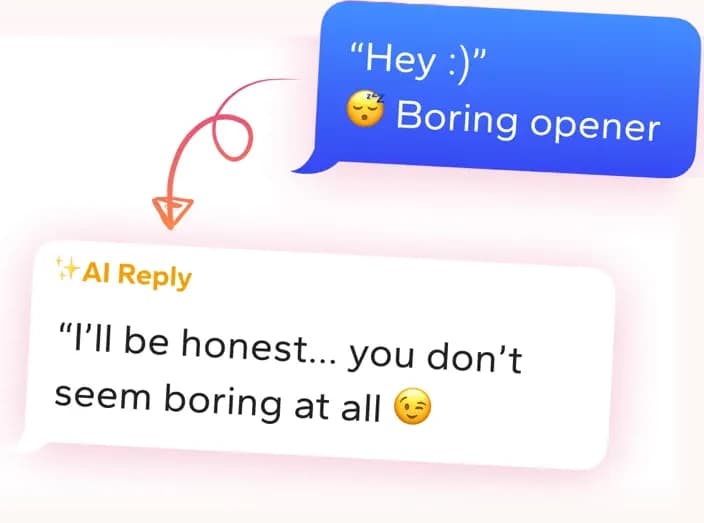
Get replies that sound like you
Screenshot the conversation in WingAI. It reads the vibe and gives you natural replies for this exact situation.
Try for freeWhen she admits exhaustion, she's already taken a risk
If someone texts that they're having a rough week and admits to being distant, they're testing whether you'll stay or treat them differently. The rough week is real. The apology signals she cares about you noticing the distance. Both things matter.
She's not asking for cheerleading or toxic positivity. She's signaling that something has weight and she wanted you to know instead of pretending. That's the moment to stop and actually read what's in front of you rather than rush into fix mode.
Name what you heard before you offer anything
A supportive reply first reflects back what she said in your own words, so she knows you actually understood the specifics. Not 'that sounds bad' but 'work sounds like it's crushing you right now.' Then, give her the choice of what she needs. Some people want a listening ear. Some want practical help. Some want company doing nothing. Ask her. Let her tell you what support looks like to her instead of guessing.
Send it soon, but don't push for an answer
Reply within a few hours of her message, while it still feels like a real conversation. But once you send something caring, don't expect an immediate response. She might be managing a lot. She might need time. Don't follow up with 'are you okay?' or double-check that she got it. That turns support into pressure.
If she goes silent for more than a few days after you've shown up, send one more simple message letting her know you're around. Then step back. Persistence when someone is drowning can feel like a demand, not a comfort. After that, wait for her to reengage.
Why these replies fail
“That's rough. But honestly you're stronger than you think, you've got this!”
It dismisses her actual tiredness by reframing it as a motivational moment about her strength, which makes it feel like you didn't really hear that she's exhausted.
“Oh yeah I get it, last month my boss was a nightmare too and I just stopped caring what he thought. Here's what I did...”
Pivoting to your own story centers you when she just opened up, and it makes the conversation about your competence instead of her struggle.
“Don't be sorry! I didn't even notice you were distant lol. You're fine.”
It invalidates both her stress and her apology, leaving her feeling like what she shared doesn't actually matter or wasn't serious enough to acknowledge.
Common mistakes
- Jumping straight to solutions ('Have you tried X?' or 'You should just...') without acknowledging the weight of what she said.
- Making it about reassuring yourself that she's okay so you don't have to sit with the discomfort.
- Being too casual or jokey when she's being vulnerable, which reads as dismissal.
- Asking follow-up questions immediately instead of letting her land the admission first.
- Disappearing for a day after she opens up, which signals you can only handle good moods.
Questions people ask
- Should I tell her my own similar story when she opens up?
- Not first. Let her finish and feel heard. Later, if it comes up naturally and serves her, not you, it's fine. But right now she needs to know you get how hard this specific thing is for her, not that you've also had hard things.
- What if I don't know what to say when she's going through something?
- Name what you're noticing and ask what she needs. 'I can see this week has been heavy. What would actually help right now, even something small?' That honesty is better than a canned response. It also takes the pressure off you to have all the answers.
- Is it okay to give advice if she doesn't ask for it?
- Not usually. It can read as you not trusting her to handle her own situation. If advice seems urgent, ask first. 'Can I throw an idea at you?' Mostly just listen. People often figure out their own next step once they've been heard.
- How long should I wait if she doesn't reply after I support her?
- Give it three to five days before checking in again. If she's in the thick of it, she might need space or simply not have energy to text. A low-pressure follow-up is fine, but multiple messages or escalating concern will feel like you're making it about you needing her to be okay.
What people say after using WingAI
“She went cold mid-week and I had no idea what to say. The reply I sent felt natural and she picked the chat back up.”
Marcus T.
“I overthink every text. Having three options and picking the one that sounds like me cut that spiral short.”
Sam R.
“I was skeptical at first. Then I tried it on a dry chat and the replies actually sounded like me, not a chatbot.”
Mazoonx
Get replies that sound like you
Screenshot the conversation in WingAI. It reads the vibe and gives you natural replies for this exact situation.
Try for free