How to be supportive over text without overdoing it
Get a reply you can send tonight, without overthinking it.
Learn to text support that actually lands. Read what she's signalling, match her energy, and know when to step back.
When someone shares something hard over text, your reply can either land or fall flat. Supportive doesn't mean piling on advice, fixing things, or making it about you. It means you heard her, you're not minimizing what she said, and you're leaving room for her to feel what she feels without turning it into a performance.
Good support over text does one simple job: it signals you're in her corner without being overbearing. The best replies acknowledge the weight of what she shared, maybe ask one honest question if there's space for it, and then stop. Longer isn't better. Intensity isn't better. Presence is.
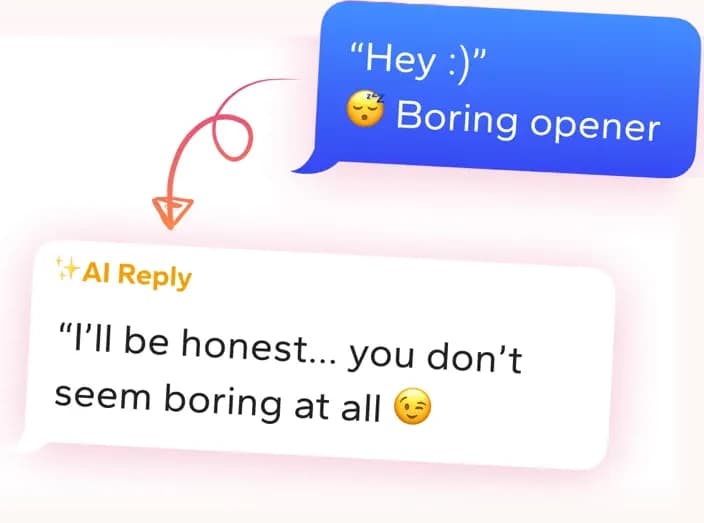
Your reply for this exact chat, tonight, in your own words
Take the 2-minute quiz. WingAI learns how you text and writes replies that sound like you, not like AI.
“I was skeptical at first. Then I tried it on a dry chat and the replies actually sounded like me, not a chatbot.”
First week free. Cancel anytime.
When she brings it up, she's asking you to hold space
She's not venting to a group chat. She's telling you something vulnerable. The signal here is that she trusts you enough to say the messy part out loud. When someone shares something hard over text, she's usually not looking for cheerleading or a pep talk. She's looking for someone to say 'I hear you, that's real, and you're not alone in this.' She might be testing whether you'll take it seriously or brush it off.
Pay attention to her tone. If she's matter-of-fact, she wants you calm. If she's spiraling, she needs you steady. If she's angry, she doesn't need you to make it better right now. She needs you to name that it was unfair.
A good support text does two things and stops
First, it tells her you got it. Name the thing she said. Show her you actually read and understood. This is not the time for vagueness. 'That's rough' works if it's followed by something specific about what she shared. Second, it signals you're there. That can be 'I'm here if you want to talk' or 'This is not okay' or 'That's on him, not you.' One or two sentences. That's it.
Don't ask questions unless there's a real reason to know more and it's actually safe for her to answer right then. Don't offer fixes. Don't tell her what to do next. Let her come to you with what she needs.
Give her space to respond at her own pace
After you send your support text, don't follow up with another one in five minutes. Don't send a string of messages. You've said what you needed to say. Now you wait. If she doesn't reply for hours or even a day, that doesn't mean it didn't land. She might need time to sit with it. She might be too tired to text back.
If you still haven't heard from her a full day later and she usually replies fast, send one short check-in. Something simple: 'Still thinking of you.' Then actually stop. If she goes quiet after that, respect it. She might need to be alone for a bit. Come back to her when you have something real to say that's not checking on her feelings.
Why these replies fail
“omg that's awful!!! are you okay?? what happened exactly?? did you push back?? you should tell HR immediately!!!”
It's loud, it asks too much, and it turns her problem into a rescue mission instead of letting her be upset first.
“honestly something similar happened to me once and i just laughed it off. some people are just toxic lol, you'll get over it”
It centers you and invalidates her by suggesting it's not a big deal, which is the opposite of support.
“:”
It signals discomfort or judgment. Silence when someone shares something hard reads as cold, not thoughtful.
Common mistakes
- Jumping straight to solutions or silver linings instead of just sitting with her for a second
- Making her struggle the opening to tell your own similar story
- Texting a wall of emojis or exclamation marks that reads as panic instead of calm support
- Asking too many questions right away, which feels like an interrogation not care
- Going silent, which she reads as judgment or discomfort with her upset
Questions people ask
- Should I text right away or wait?
- Text soon enough that she knows you saw it, not so fast it looks like panic. If she sent it an hour ago, reply within a couple hours max. If it's late at night, morning is fine. The point is she knows it landed, not that you're on standby.
- What if I don't know what to say?
- Name what you heard and say you're here. 'That was humiliating and I'm sorry that happened to you' works. You don't need to be eloquent. You need to be present. Simple and honest beats trying to sound wise.
- Is it okay to ask her what she needs?
- Only if you actually mean it and can deliver. 'What do you need right now?' is a good move if you're ready to listen or help. But don't ask it just to fill space. Some people know what they need, some don't. Let her tell you.
- When should I bring it up again if she doesn't mention it?
- If a few days pass, a simple 'Thinking about you after what happened' is fine. But don't keep circling back. She'll tell you if she wants to talk about it more. Your job was to show up the first time, not to manage her recovery.
It doesn't sound like a bot
“I overthink every text. Having three options and picking the one that sounds like me cut that spiral short.”
Sam R.
“Used it for a couple hours and set up a date the same night. Not even kidding.”
Nikola2214
“She went cold mid-week and I had no idea what to say. The reply I sent felt natural and she picked the chat back up.”
Marcus T.
Your reply for this exact chat, tonight, in your own words
Take the 2-minute quiz. WingAI learns how you text and writes replies that sound like you, not like AI.
Try for freeFirst week free. Cancel anytime.