How to respond when he says he's afraid of commitment
He said he fears commitment. Learn what that actually means and how to reply without pushing him away or accepting breadcrumbs.
When a guy tells you he's afraid of commitment early on, he's usually signaling something: either he isn't ready for a relationship right now, or he likes you but wants to keep his options open. Sometimes it's both. The phrase itself is honest enough, but the real information is what comes next. How he behaves. Whether he's willing to work through it with you. What he's actually asking permission to do.
A good reply doesn't try to fix his fear or convince him he's wrong about himself. It also doesn't pretend you're fine with ambiguity when you're not. Instead, it clarifies what he means and what you need, then gives him room to either step up or step back. This protects you by forcing clarity instead of letting things drift into a gray zone where you're investing more than he is.
The replies that work here are usually short, direct, and they ask a follow-up question rather than make a speech. You're not diagnosing his issues. You're finding out if his fear is something he wants to work on with you, or if it's a boundary he needs to keep.
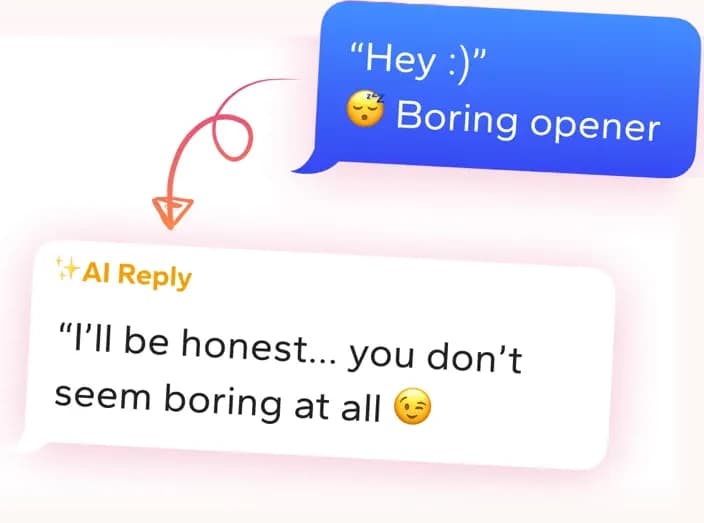
Get replies that sound like you
Screenshot the conversation in WingAI. It reads the vibe and gives you natural replies for this exact situation.
Try for freeThe difference between fear and preference
When someone says they're afraid of commitment, they might mean it. But sometimes 'I'm scared' is what they say when they mean 'I don't want to commit to you.' The fear can be real and the reluctance can both be true. The only way to know is to watch what he does next.
If he's actually afraid but interested, he'll usually want to keep seeing you and might ask what would help him feel safer. If he's using fear as a reason to avoid exclusivity or effort, he'll back away from plans or go quiet. Pay attention to his actions over the next week or two. That tells you whether the fear is something he's working through or something he's hiding behind.
Ask what he wants instead of what he fears
Your reply should skip over the fear itself and go straight to what he's actually proposing. Does he want to keep dating casually? Does he want to pause and reconnect later? Is he saying he needs months of slow-burn dating before he'd consider exclusivity? Get specific. Vague fear language can hide a lot of different intentions, and you need to know which one he means.
Your question should make him choose. Either clarify what arrangement he's asking for, or admit he doesn't know. Either answer gives you real data. 'What does that look like for you?' or 'So what are you wanting right now?' forces him to move from abstract emotion to actual behavior.
Set your own boundary before waiting to hear his response
Don't reply and then spend three weeks hoping he texts back. Decide now what you're willing to do. Are you okay with casual dating while he figures himself out? Do you need him to commit within a timeframe or you're moving on? Are you comfortable being in touch but not seeing him for a while?
Your reply should hint at your boundary without ultimatums. This isn't about forcing him to choose you. It's about you being clear with yourself so you don't slip into waiting mode. If he asks what you need and you have no answer, you'll negotiate down to whatever he offers. Know your line first. Then his response either fits or it doesn't.
Why these replies fail
“That's okay, I'm not in a rush. We can take things slow and see where it goes.”
Signals you'll wait indefinitely and accept whatever pace he sets. Which often means he'll never feel pressure to progress.
“I understand. What are you scared of? Maybe I can help you work through it.”
Frames his dating hesitation as your problem to solve. This shifts focus away from what you need and puts you in a support role.
“You're not ready? Okay, well let me know when you are. Good luck figuring yourself out.”
Comes across as passive-aggressive and closes the door instead of getting clarity on whether he wants to keep seeing you or not.
Common mistakes
- Reassuring him that it will be fine and you're 'not like other girls'. Makes you sound like you'll accept less than he's willing to give.
- Getting defensive or angry about his fear. Pushes the conversation away from what you actually need to know.
- Asking 'what are you scared of?' in a therapy voice. Treats his dating preference like a problem to solve together.
- Saying 'okay, no pressure' and staying in contact. Signals you'll wait indefinitely for him to change his mind.
- Bringing it up again after he's said it. Asks him to repeat himself instead of forcing him to clarify what he wants from you.
Questions people ask
- Should I try to convince him that he's not actually afraid?
- No. If he says he's afraid, accept that as true for him. Your job is to find out if he wants to work through it with you or if it's a dealbreaker for you. Don't spend energy trying to change his mind about his own emotions.
- How long should I wait to see if he changes his stance on commitment?
- Give it three to four weeks of regular contact and dates. If his behavior hasn't shifted toward more effort, planning, or openness, it's not changing. His actions in those few weeks will show you whether the fear is real hesitation or just a way to keep things loose.
- What if he says he's afraid but still wants to keep dating me?
- That's workable. Ask him what he needs from you to feel less afraid, or what timeline he's thinking about. If he has answers, he's thinking about it seriously. If he has none, he's just asking to keep dating without commitment, which is fine as long as you're also okay with that.
- Is it worth staying in touch if he doesn't text back after I reply?
- Not really. If he said something that vulnerable and you replied thoughtfully, silence from him suggests he wasn't actually looking for a real conversation about it. You can reach out once more after a week if you want closure, but after that, assume he's not interested in clarifying things with you.
What people say after using WingAI
“I overthink every text. Having three options and picking the one that sounds like me cut that spiral short.”
Sam R.
“I was skeptical at first. Then I tried it on a dry chat and the replies actually sounded like me, not a chatbot.”
Mazoonx
“Used it for a couple hours and set up a date the same night. Not even kidding.”
Nikola2214
Get replies that sound like you
Screenshot the conversation in WingAI. It reads the vibe and gives you natural replies for this exact situation.
Try for free