Love you vs I love you: What the difference really means
Understand the gap between casual 'love you' and formal 'I love you' in texts and relationships. Learn what each signals.
The difference between 'love you' and 'I love you' matters because one is directional and the other is declarative. 'Love you' is often a reflex, something you say when ending a call with a close friend or family member. It's warm and habitual. 'I love you' is a statement of fact about your internal state. It's intentional and personal.
In relationships, this gap shows up most when someone says 'love you' but hasn't said 'I love you' yet. She might be testing whether you'll push it further or pulling back because she's not ready to name it that way. The person reading it needs to understand what territory they're actually in. A good reply doesn't force a moment that isn't there, and it doesn't pretend the distinction doesn't exist.
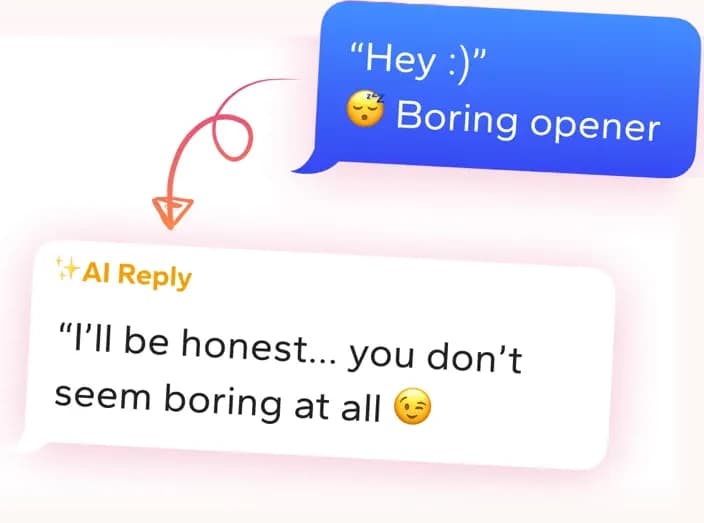
Get replies that sound like you
Screenshot the conversation in WingAI. It reads the vibe and gives you natural replies for this exact situation.
Try for freeWhat casual love you actually signals
When someone says 'love you' in passing, they're usually not declaring relationship status. They're saying you matter to them and they feel safe enough to say it. The casualness is not coldness. It's closeness without the formal weight.
But timing matters. If she's said 'I love you' first and then drops to 'love you' randomly, that's different from never having said 'I love you' at all. Early on, 'love you' can mean she likes you enough to use that word but isn't ready to separate it from how she talks to friends. Later in a relationship, it often just means the same thing as 'I love you' said in a hurry. Pay attention to context and progression, not just the phrasing.
Matching her level without sounding cold
If you reply with nothing but a heart emoji or 'love you too', you're meeting her energy. That's usually the move early on or when the moment isn't heavy. But if you actually feel 'I love you' about her and she's only at 'love you', you have two jobs: acknowledge what she said without faking lightness, and show her who you are without forcing a moment.
This means you can say 'love you' back, then add something that shows intent or depth. A follow-up text asking her about her day or checking in after she lands does more than words. You're showing up consistently, which is what someone is really testing when they use softer language.
Respond same day, then let her move at her pace
Reply within hours, not days. Waiting to respond to affection, even casual affection, reads as avoidant. Same-day reply shows you received it and it mattered. If you're going to match her tone with 'love you' back, do it quickly so it feels natural, not calculated.
If she's never said 'I love you' yet and you want to eventually, your replies should show consistency and presence over time, not push toward a confession. If she doesn't reply to an 'I love you' you do send, that's information. Don't send another one right after. Let her respond on her own timeline. Doubling down on big words after silence is what makes people retreat further.
Why these replies fail
“I love you too”
If she only said 'love you', this escalates the moment and can make her feel rushed or put on the spot about commitment.
“Lol ok”
Dismisses affection entirely and makes her regret opening up, even casually.
“You know there's a difference between love you and I love you, right?”
Turns affection into a logic puzzle and kills the warmth of the moment.
Common mistakes
- Replying with 'I love you' when she said 'love you', making the moment bigger than she intended
- Saying nothing back to avoid the weight of it, which reads as coldness
- Over-explaining the difference in your reply, turning affection into a debate
- Matching her casual tone when you actually want to move the relationship forward
- Waiting days to respond because you're overthinking what one phrase means
Questions people ask
- Does 'love you' mean she doesn't actually love me?
- Not necessarily. Early on, 'love you' often means she's comfortable with you but not ready to formally declare it. Later in a relationship, most people use both interchangeably. Context matters more than the exact phrasing. Consistent behavior tells you more than one word choice.
- Should I always say 'I love you' back even if she says 'love you'?
- No. Match her lead early on. If you say 'I love you' when she's only at 'love you', you're creating pressure. If you feel it, you can say it eventually, but don't force it to balance the scales immediately. She might match your level later.
- What if I say 'I love you' and she only replies with 'love you'?
- It means she heard you and isn't running, but she's not saying it back that way yet. Don't spiral. Move forward normally. If it keeps happening over weeks, that's a real conversation worth having. One reply doesn't tell you everything.
- Is it weird to ask her why she says one instead of the other?
- Yes, in text. It will feel defensive. If you want to know where she is emotionally, spend time together and let it come up naturally. Asking her to explain her word choice makes it awkward. Show up consistently instead.
What people say after using WingAI
“I overthink every text. Having three options and picking the one that sounds like me cut that spiral short.”
Sam R.
“I was skeptical at first. Then I tried it on a dry chat and the replies actually sounded like me, not a chatbot.”
Mazoonx
“My openers used to be boring. Now I reference something from her profile and people actually write back.”
Aiden K.
Get replies that sound like you
Screenshot the conversation in WingAI. It reads the vibe and gives you natural replies for this exact situation.
Try for free