What to say on Hinge when she posts about relationship dealbreakers
Stand out by agreeing thoughtfully, adding specificity, and turning dealbreakers into real conversation. Examples and mistakes inside.
When someone posts a dealbreaker prompt on Hinge, she's filtering. She wants to know you take relationships seriously and won't waste her time on incompatibility. A good opener shows you actually read it, agree on something real, and can talk about hard stuff without being preachy.
Most openers either ignore the prompt entirely, or they agree so broadly they could work on anyone's profile. Some guys try to be funny about dealbreakers when the prompt asks for seriousness. The move is to pick one dealbreaker, explain why you respect it, and add a small detail that makes it clear you've thought about it.
This isn't about listing your own dealbreakers back at her. It's about showing you're on the same page about what matters, then moving the conversation forward into something less binary.
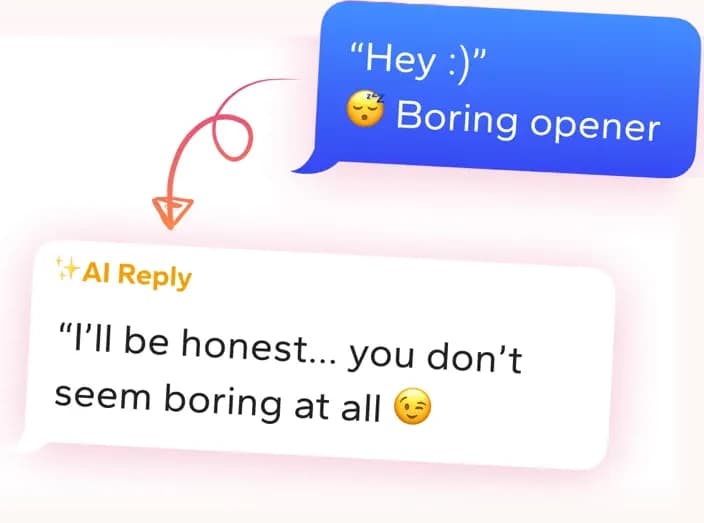
Get openers that sound like you
Screenshot the conversation in WingAI. It reads the vibe and gives you natural openers for this exact situation.
Try for freeHinge AI Screenshot the prompts and get a comment written for that profile.
She's telling you what won't work, not inviting a debate
A dealbreaker prompt is a hard line. When she says something like "can't handle confrontation" or "people who flake," she's not testing your persuasion skills. She's drawing a boundary. This is actually useful. It means if you're the type to avoid conflict or bail on plans, you already know it won't work.
The tone matters too. If her dealbreakers sound serious, infidelity, addiction, cruelty, she's taking relationships seriously. If they're lighter, bad taste in music, doesn't like dogs, she's probably more playful. Match that energy. Don't be glib about things she clearly cares about.
Land on one dealbreaker and show you think the same way
Pick the dealbreaker that hits you most, not the easiest one to talk about. Then explain briefly why you respect it or agree. Add one specific detail that proves you've actually considered what that dealbreaker means in real life, not just in theory.
For example, if she says she can't be with someone dishonest, don't just say "honesty is important." Say something about what honesty means to you in a real context. Then transition into an actual question or observation that moves past the dealbreaker into who she is.
Send it within a day, don't wait for the perfect moment
Dealbreaker prompts tend to be evergreen. She's not posting it fresh every day, so waiting a week doesn't matter. Send it when you've thought through what you want to say, not when you're tired or distracted. Daytime usually lands better than late night because you sound more thoughtful.
If she doesn't reply within three days, move on. No follow-up. If she does reply, keep it going by answering questions she asks, not by sending her dealbreakers back. You've both established you're on the same page. Now talk like people, not like filters.
Why these openers fail
“Haha I'm the same way. Can't stand dishonest people. Or people who don't like dogs. Or people who are late all the time. Anyway you seem cool, what do you do for work?”
It lists dealbreakers like a checklist, sounds robotic, and pivots away from her specific answer without saying anything real.
“I actually disagree that neediness is a dealbreaker. I think everyone's needy sometimes and it's about communication. What's your take?”
It contradicts her stated boundary and makes the conversation about convincing her instead of connecting with her values.
“Not gonna lie, that third one got me. But real talk the dishonesty thing is huge for me too.”
It trivializes her serious dealbreakers and then rushes into agreement without adding anything new or specific.
Common mistakes
- Ignoring the dealbreaker prompt and asking her something generic about her weekend
- Listing your own dealbreakers without acknowledging hers first
- Making light of serious dealbreakers with a joke when she clearly isn't joking
- Agreeing so broadly ("I hate dishonesty too") that it adds no new information
- Asking her to explain her dealbreakers instead of showing you understand them
Questions people ask
- Should I list my own dealbreakers in my reply?
- Not in the first message. Acknowledge hers, show alignment, then ask a real question about her. If she's interested and you're messaging back and forth, your dealbreakers will come up naturally. Leading with your own list makes it feel transactional.
- What if I don't agree with one of her dealbreakers?
- Pick a different one. If you fundamentally disagree with all of them, she's not your person and that's fine. Don't open a philosophical debate about why her dealbreaker is unreasonable. She'll see right through it.
- Can I make a joke about dealbreakers?
- Only if the tone of her prompt was already playful. If she's listing serious things like infidelity or dishonesty, don't joke. Light dealbreakers, bad at cooking, doesn't like camping, have more room for humor. But even then, agree first and joke second.
- How long should my reply be?
- Three to five sentences. Pick one dealbreaker, explain why you respect it in a specific way, then ask something that moves past the dealbreaker itself. Don't write a paragraph. Keep it short enough that she'll actually read it.
What people say after using WingAI
“I'm busy and half the profiles give you almost nothing to work with. WingAI gets me a solid first line fast without me staring at the screen for ten minutes.”
Ralph
“I always freeze on the first sentence. This gets me past that blank box so I actually hit send.”
joejoe4567
“My openers used to be boring. Now I reference something from her profile and people actually write back.”
Aiden K.
Get openers that sound like you
Screenshot the conversation in WingAI. It reads the vibe and gives you natural openers for this exact situation.
Try for free